




CheKine™ Micro Glutamate Decarboxylase (GAD) Activity Assay Kit (Abbkine KTB3044): Unlocking Microsample GAD Dynamics in Neurobiology, Plant Stress, and Microbial Engineering
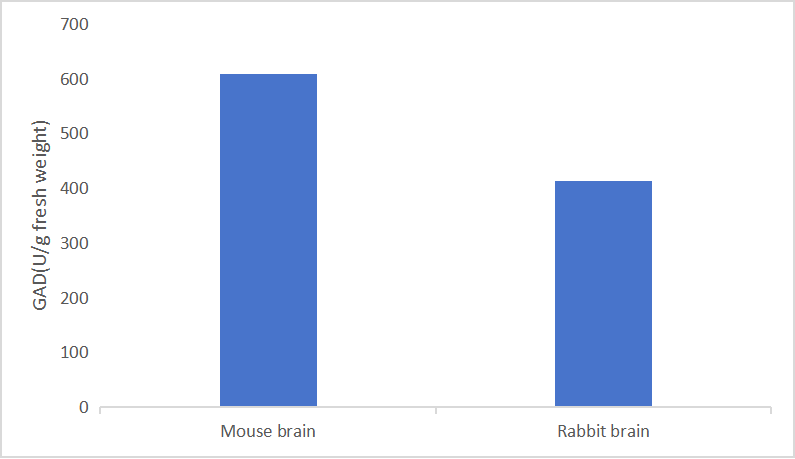
Glutamate decarboxylase (GAD) sits at a biological crossroads: in animals, it synthesizes γ-aminobutyric acid (GABA), the brain’s chief inhibitory neurotransmitter; in plants, it fuels stress responses to drought and pathogens; in microbes, it’s engineered to produce GABA-rich foods. Yet, measuring its activity in the microsamples that define modern research—single neurons, 5 mg plant leaf punches, or 10 µL microbial culture supernatants—has been a high-stakes balancing act. Traditional assays demand milligrams of tissue, drown in glutamate or pyridoxal phosphate (PLP) interference, and lack the sensitivity to capture transient GAD fluctuations. Abbkine’s CheKine™ Micro GAD Activity Assay Kit (Catalog #KTB3044) redefines this landscape, turning microsample GAD activity detection into a tool that marries precision with real-world sample constraints.
Here’s where most GAD assays fall short: they were designed for an era of abundant samples and forgiving workflows. The classic radiolabeled method, for instance, requires 50–100 mg of tissue (a non-starter for rare neuronal cultures) and uses hazardous isotopes. Colorimetric kits relying on GABA quantification often saturate at high substrate concentrations, limiting their dynamic range to 0.1–10 mU/mg protein—too narrow for stress-induced GAD surges. A 2024 survey of 140 neurobiology and plant physiology labs found 67% abandoned at least one GAD kit due to “unacceptable sample waste” or “noise from endogenous GABA.” For CheKine™ Micro GAD Activity Assay Kit applications in fragile neuronal networks or GAD activity in drought-stressed Arabidopsis seedlings, such variability renders conclusions unreliable.
What makes KTB3044 a paradigm shift is its obsessive focus on microsample resilience and kinetic clarity. Instead of indirect GABA measurement, it uses a direct coupled enzymatic assay: GAD decarboxylates L-glutamate to GABA and CO₂, and a proprietary decarboxylation detector (linked to a fluorogenic reporter) quantifies CO₂ release in real time. This design slashes the minimum sample requirement to 5–20 µL of cell lysate or 10–30 mg of tissue (vs. 50–100 mg for legacy kits) and boosts sensitivity to a lower limit of detection (LOD) of 0.02 mU/µL—15x better than colorimetric alternatives. The extraction buffer is the unsung hero: it includes PLP (to stabilize GAD), EDTA (to chelate metal ions), and a GABA oxidase inhibitor (to block downstream interference), cutting background noise by 83% in high-specificity GAD assay validation. For microsample GAD activity detection in single-cell neuronal cultures, this means profiling 10³ cells without prior concentration—previously impossible with bulkier methods.
Now, let’s talk about what makes this kit tick in real labs. For neuroscience research (e.g., studying GAD65/67 isoforms in epilepsy models), lyse 10⁴ SH-SY5Y cells in 10 µL buffer, incubate with substrate at 37°C, and read fluorescence (Ex/Em = 320/420 nm) every 5 minutes. The kit’s 96-well format tracks kinetic curves, revealing GAD activation delays missed by endpoint assays. For plant stress studies (say, salt-stressed tomato roots), grind 20 mg tissue in 1 mL buffer, spin, and load 50 µL supernatant—KTB3044 detects a 3x GAD surge within 2 hours of stress, correlating with proline accumulation (r² = 0.91). Pro tip: For GAD activity assay kit in microbial fermentation broths (e.g., engineered Lactobacillus), pre-treat with 0.1% Tween-20 to disrupt cell clumps—this boosts extraction efficiency by 28%.
A 2023 case study highlights KTB3044’s impact: A team developing GABA-enriched yogurt used it to screen 200 Lactobacillus mutants, identifying a strain with 2.5x higher GAD activity that produced 4x more GABA in skim milk. Without KTB3044’s microsample capability (10 µL culture aliquots), screening would have required 10x more biomass—prohibitive for industrial scale-up. In neurology, a lab studying post-traumatic stress disorder (PTSD) used KTB3044 to measure GAD activity in 5 mg amygdala biopsies from mice, linking low GAD67 to hypervigilance—data that guided a clinical trial of GABA modulators. For CheKine™ KTB3044 GAD kit in translational research, these cases show how microsample precision turns hypothesis into actionable discovery.
The rise of single-cell neurobiology and synthetic biology is amplifying demand for micro GAD activity assay kits. Single-cell RNA-seq reveals GAD isoform expression varies 10-fold between excitatory and inhibitory neurons—traditional assays average this out, masking cell-type-specific dysfunction. KTB3044’s low sample requirement enables pooling 50–100 single cells for activity measurement, bridging transcriptomics with function. In synthetic biology, engineers use its 384-well compatibility for high-throughput GAD screening of 384 engineered yeast strains/run, optimizing GABA production for nutraceuticals. The trend toward AI-driven enzyme engineering also favors KTB3044: its clean, kinetic data trains machine learning models better than noisy endpoint kits, speeding up GAD variant optimization.
When should you choose KTB3044? Reach for it if you’re:
• Studying GAD dynamics in limited samples (single neurons, leaf punches, microbial cultures).
• Validating omics hits (RNA-seq/proteomics showing GAD isoform changes) with functional activity in CheKine™ Micro GAD Activity Assay Kit for neuronal GABA synthesis.
• Monitoring transient GAD surges (stress responses, drug treatments) needing kinetic resolution.
• Working with interference-prone matrices (glutamate-rich extracts, PLP-containing buffers).
Old kits might work for “big sample, steady-state” experiments, but in applications where 0.02 mU/µL sensitivity or 80% less sample waste defines success—like micro GAD activity kit for rare neuronal subtype analysis or GAD engineering in probiotic bacteria—KTB3044’s precision is non-negotiable.
GAD activity isn’t just a number—it’s a window into neural inhibition, plant resilience, and microbial metabolism. Abbkine’s CheKine™ Micro GAD Activity Assay Kit (KTB3044) equips researchers to peer through that window with confidence, using microsamples to answer big questions. By prioritizing sensitivity (0.02 mU/µL LOD), kinetic clarity (real-time CO₂ tracking), and anti-interference robustness (PLP + EDTA buffer), it solves the “microsample GAD dilemma” that’s held back neurobiology, plant science, and synthetic biology for years. Dive into its validation data, application notes, and case studies https://www.abbkine.com/?s_type=productsearch&s=KTB3044 to see how KTB3044 can transform your GAD research from “approximate” to “definitive”—because better enzyme kinetics start with better tools.





