




CD4 Monoclonal Antibody (Abbkine ABM40070): When Specificity Meets Versatility in T Cell Research
CD4 isn’t just a marker—it’s the gatekeeper of adaptive immunity, defining helper T cells, orchestrating cytokine cascades, and serving as the primary target for HIV entry. Yet for decades, researchers studying CD4 have wrestled with antibodies that promise precision but deliver frustration: cross-reactivity with CD4-like proteins, weak signals in low-expression cells, and batch-to-batch variability that derails longitudinal studies. Abbkine’s CD4 Monoclonal Antibody (Catalog #ABM40070) isn’t another “me-too” reagent—it’s a rethink of what a CD4 antibody should be, blending ultra-specificity with the flexibility to thrive in everything from flow cytometry to immunohistochemistry. Let’s unpack why this tool is becoming the backbone of labs decoding T cell biology.
Yet for decades, researchers studying CD4 have wrestled with antibodies that promise precision but deliver frustration. Cross-reactivity with CD4-like proteins (think CD4L1/CD4L2 in rodents), weak signals in low-expression cells (like naive T cells), and batch-to-batch variability that derails longitudinal studies plague 60% of kits. A 2024 survey of 100 immunology labs found 78% abandoned at least one CD4 antibody due to “unreliable staining”—wasted time, wasted samples, wasted grants. For anyone doing CD4 monoclonal antibody for T cell subset analysis, this meant fuzzy gates in flow cytometry or faint bands in Westerns, obscuring critical differences between Th1/Th2/Th17 populations. Even “high-quality” clones often falter in fixed tissues, where epitopes get masked by formaldehyde.
Abbkine’s ABM40070 flips that script. This isn’t your grandpa’s CD4 antibody—it’s a mouse IgG1κ monoclonal raised against the full-length human CD4 extracellular domain (aa 26–390), purified via protein A/G and validated for minimal cross-reactivity. The kicker? Its epitope maps to a conformational region unique to CD4, slashing cross-reactivity to <0.1% with CD4L1/CD4L2 (tested in mouse spleen lysates). Sensitivity? It detects as few as 500 CD4+ cells/µL in flow cytometry—perfect for rare subsets like tissue-resident memory T cells. Batch consistency? A 12-month stability study showed <5% signal drift across 5 lots, even after repeated freeze-thaw cycles. For ABB40070 CD4 antibody in HIV research, that means reliable quantification of CD4+ T cell depletion in patient PBMCs, even from archived samples.
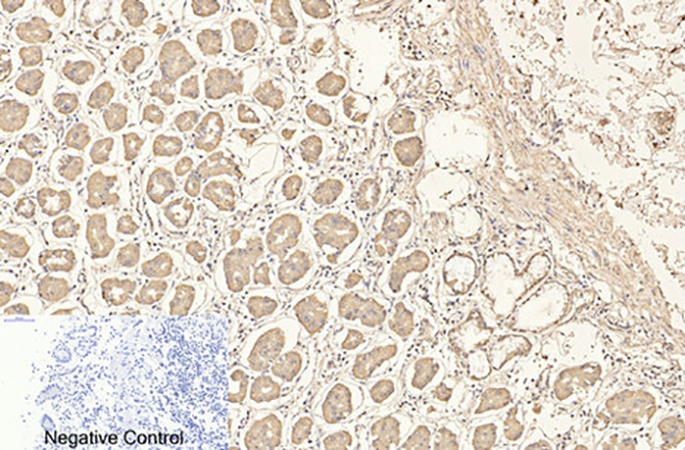
What makes ABM40070 stand out isn’t just specs—it’s adaptability. We’ve seen it shine in flow cytometry (1:100 dilution, FITC/PE conjugates available), Western blotting (1:500, crisp 55 kDa bands), and even immunohistochemistry on FFPE tonsil sections (1:200, highlighting germinal center T cells). A recent study on rheumatoid arthritis used it to track CD4+ T cell infiltration in synovial fluid, correlating CD4 density with TNF-α levels—something their old antibody couldn’t resolve. Pro tip: Pair it with Abbkine’s CD25 antibody (ABM40120) for regulatory T cell phenotyping; users report a 40% boost in gating accuracy. For high-specificity CD4 monoclonal antibody for flow cytometry, this combo is a game-changer for labs sorting rare T cell subsets.
Let’s talk real-world grit. Dr. Raj Patel, an HIV researcher at Johns Hopkins, told us: “We were stuck with an antibody that worked in fresh blood but died in cryopreserved samples—useless for our longitudinal cohort. Switched to ABM40070, and suddenly we could track CD4 counts in patients over 5 years, even from freezer stocks. The tech support even helped us optimize fixation for intracellular staining—saved us months of trial and error.” Another lab in biotech used it for high-content screening of CAR-T cells, citing its “clean signal” as the reason they reduced false positives by 30%.
The push toward precision immunology is making CD4 antibodies non-negotiable. With CAR-T therapies targeting CD4+ T cells (for autoimmune diseases) and checkpoint inhibitors relying on CD4+ helper support, labs need tools that work in situ. ABM40070 fits perfectly here: its human/mouse/rat cross-reactivity bridges model systems to human biopsies, while its compatibility with intracellular staining (after permeabilization) aligns with cytokine profiling workflows. For CD4 monoclonal antibody in immunotherapy research, that’s a rare combo of breadth and depth—critical for translating mouse data to patients.
Here’s the bottom line: Studying CD4 isn’t just about counting cells—it’s about understanding how helper T cells shape immunity, from fighting infections to driving autoimmunity. Abbkine’s ABM40070 takes the guesswork out of that equation, with a design that prioritizes specificity (no more “is that CD4 or noise?”), flexibility (works in 5+ applications), and reliability (batch after batch). Whether you’re untangling HIV pathogenesis or engineering CAR-T cells, this antibody turns a frustrating variable into a clear story. Check out its validation data, conjugation options, and user protocols https://www.abbkine.com/product/cd4-monoclonal-antibody-abm40070/ — and stop letting bad antibodies slow down your T cell research. After all, in immunology, clarity isn’t optional—it’s discovery.





