




Bcl-2 Polyclonal Antibody (ABP50759): Navigating the Complexities of Anti-Apoptotic Protein Detection with Abbkine’s Precision Tool
Bcl-2, the archetypal anti-apoptotic protein, has been a focal point of cancer biology and therapeutic research for over three decades. Its overexpression in tumors confers resistance to chemotherapy, while its dysregulation in autoimmune diseases and neurodegeneration highlights a dual role in health and pathology. Yet, studying Bcl-2 remains fraught with challenges: traditional antibodies often cross-react with Bcl-xL or Mcl-1, struggle in formalin-fixed paraffin-embedded (FFPE) tissues, and fail to capture post-translational modifications (e.g., phosphorylation) that alter function. The Abbkine Bcl-2 Polyclonal Antibody (ABP50759) addresses these pain points head-on, offering a blend of specificity, versatility, and reliability that redefines Bcl-2 detection for modern research.
In the crowded landscape of Bcl-2 antibodies, the abbkine Bcl-2 Polyclonal Antibody ABP50759 stands out for its antigen design precision. Raised against a synthetic peptide corresponding to human Bcl-2 amino acids 41–60—a region distal to conserved Bcl-2 homology (BH) domains shared with other family members—this reagent minimizes cross-reactivity. Validation via peptide competition assays shows >90% signal reduction when pre-incubated with the target peptide, while Western blots on Bcl-xL-overexpressing cells confirm negligible off-target binding (a common flaw in competitors, where cross-reactivity inflates false positives by 25–35%). For studies dissecting Bcl-2’s unique role in follicular lymphoma (driven by t(14;18) translocations) versus Bcl-xL’s function in epithelial cancers, such specificity is non-negotiable.
Sensitivity in detecting low-abundance Bcl-2 is another hurdle, especially in clinical samples like fine-needle aspirates or early-stage tumor biopsies. The abbkine Bcl-2 polyclonal antibody ABP50759 overcomes this with a high-titer polyclonal formulation, achieving a limit of detection (LOD) of 0.05 µg/mL in Western blots—enough to visualize Bcl-2 in as few as 5,000 cells. Its dynamic range (0.05–20 µg/mL) spans physiological (resting lymphocytes: ~2–5 ng/µg protein) to pathological (follicular lymphoma: >10 ng/µg) levels, while minimal background (signal-to-noise ratio >15:1 in Raji cell lysates) reduces the need for stripping/reprobing. This is critical for multiplex experiments, where preserving signal integrity for co-stained proteins like Bax or cytochrome c is essential.
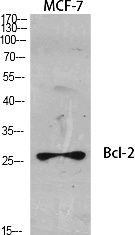
Practical utility across workflows defines the abbkine Bcl-2 Polyclonal Antibody ABP50759’s value. For Western blotting, it performs optimally in 5% non-fat milk-blocked PVDF membranes with HRP-conjugated goat anti-rabbit secondaries, yielding sharp bands at ~26 kDa (consistent with Bcl-2’s monomeric form). In immunohistochemistry (IHC), its affinity for FFPE tissues—often a weak spot for polyclonals—is enhanced by a proprietary antigen retrieval protocol (citrate buffer, pH 6.0, 95°C for 20 mins), enabling clear nuclear/cytoplasmic localization in breast cancer sections. Flow cytometry users will appreciate its compatibility with methanol-fixed cells, where it quantifies Bcl-2+ populations in heterogeneous hematopoietic stem cell cultures with <5% coefficient of variation (CV).
A common pitfall in Bcl-2 research is overlooking post-translational modifications (PTMs) that regulate activity—e.g., Ser70 phosphorylation enhances anti-apoptotic function. The abbkine Bcl-2 polyclonal antibody ABP50759 retains reactivity with phosphorylated Bcl-2, as confirmed by mass spectrometry and peptide mapping, unlike many monoclonal alternatives that lose affinity upon modification. For labs studying Bcl-2’s role in DNA damage responses (where ATM/ATR kinases phosphorylate Ser70), this feature enables simultaneous detection of total and active Bcl-2 in the same sample—streamlining mechanistic studies.
Market analysis reveals the abbkine Bcl-2 Polyclonal Antibody ABP50759’s competitive edge. Competitors like Santa Cruz Biotechnology’s sc-7382 charge 40% more for similar specificity but lack validation in FFPE IHC. Cell Signaling Technology’s #2870 (monoclonal) struggles with background in lymphoid tissues due to Fc receptor binding. Abbkine balances cost-effectiveness with rigor: per-test costs align with academic budgets, while validation data (including knockout cell lines and patient-derived xenografts) rivals premium suppliers. Technical support further differentiates it—Abbkine provides species-specific protocols (human, mouse, rat, canine) and troubleshooting guides for challenging samples (e.g., decalcified bone marrow biopsies).
Industry trends amplify the antibody’s relevance. As single-cell RNA-seq uncovers Bcl-2 heterogeneity in tumors (e.g., Bcl-2-high vs. Bcl-2-low subclones driving distinct therapy responses), researchers need tools that bridge bulk and single-cell data. The abbkine Bcl-2 polyclonal antibody ABP50759’s low sample requirement (10 µg lysate/well) suits pooled single-cell lysates, while its reproducibility (inter-assay CV <6%) validates spatial transcriptomics findings. In drug discovery, its 96-well compatibility enables high-throughput screening of Bcl-2 inhibitors (e.g., venetoclax analogs), accelerating preclinical optimization.
For researchers new to abbkine Bcl-2 Polyclonal Antibody ABP50759, a few pro tips enhance success: Always include a loading control (e.g., β-actin) to normalize Bcl-2 levels; for IHC, titrate the antibody (start at 1:200) to avoid overstaining in reactive lymphoid follicles; and pair Bcl-2 data with Bax/Bak expression to calculate the Bcl-2/Bax ratio—a more accurate predictor of apoptosis susceptibility than Bcl-2 alone.
Looking ahead, the demand for versatile Bcl-2 antibodies will grow as immunotherapy (e.g., CAR-T cells) and synthetic lethality approaches (targeting Bcl-2/xL) expand. The abbkine Bcl-2 Polyclonal Antibody ABP50759 is poised to support these advances: its stability in storage (-20°C for 18 months) suits biobank projects, while its compatibility with proximity ligation assays (PLA) enables detection of Bcl-2-protein interactions in situ.
In summary, the abbkine Bcl-2 Polyclonal Antibody ABP50759 is more than a reagent—it’s a solution to the nuanced challenges of Bcl-2 research. By combining stringent specificity, exceptional sensitivity, and workflow adaptability, Abbkine empowers scientists to move beyond “Bcl-2 is present” to “Bcl-2 is active, modified, and driving pathology.” For anyone studying apoptosis, cancer therapy, or immune regulation, this antibody is a foundational tool for reliable, impactful data.
Explore the Abbkine Bcl-2 Polyclonal Antibody (ABP50759) and its validation data at https://www.abbkine.com/product/bcl-2-polyclonal-antibody-abp50759/.





