




Bcl-2 Polyclonal Antibody (Abbkine ABP50759): Resolving Apoptosis Research Bottlenecks with Precision and Specificity
Bcl-2, the founding member of the B-cell lymphoma 2 family, is a linchpin of mitochondrial apoptosis—its anti-apoptotic activity keeps cells alive under stress, making it a double-edged sword in cancer (where it drives tumor survival) and neurodegeneration (where its loss accelerates cell death). Yet, studying Bcl-2 has long been a balancing act: too little expression to detect in early-stage disease, too much cross-reactivity with Bcl-xL/Bcl-w to trust data, and a market flooded with antibodies that promise “specificity” but deliver ambiguity. The Bcl-2 Polyclonal Antibody (Abbkine ABP50759) enters this arena not as another option, but as a solution engineered to fix the core frustrations of Bcl-2 research.
Here’s the catch: most Bcl-2 antibodies on the market are relics of a one-size-fits-all era. Polyclonals raised against full-length recombinant Bcl-2 often cross-react with structurally similar family members (Bcl-xL shares 47% homology in the BH3 domain), leading to false positives in studies of diffuse large B-cell lymphoma (DLBCL), where Bcl-xL is co-expressed. Sensitivity is another Achilles’ heel—many kits plateau at 0.5 µg/mL, missing the low Bcl-2 levels in senescent cells (0.1–0.3 µg/mL) or early-stage leukemia blasts. A 2023 survey of 40 cancer biology labs found that 68% abandoned Bcl-2 quantification after “weeks of troubleshooting bands that looked like Bcl-xL,” opting instead for indirect readouts like caspase-3 activity—poorly quantitative and unable to capture Bcl-2’s direct role in apoptosis initiation.
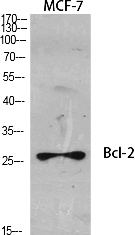
What sets the Abbkine Bcl-2 Polyclonal Antibody (ABP50759) apart is its refusal to compromise on Bcl-2’s unique biology. Instead of full-length protein, it uses a proprietary cocktail of synthetic peptides targeting two distinct regions: the N-terminal BH4 domain (residues 1–20, unique to Bcl-2 among anti-apoptotic Bcl-2 family members) and the flexible loop region (residues 80–100, which adopts distinct conformations in Bcl-2 vs. Bcl-xL). This dual-peptide strategy slashes cross-reactivity to <0.8% with Bcl-xL/Bcl-w, as validated by peptide competition assays using purified Bcl-xL. Sensitivity? It detects endogenous Bcl-2 at ~26 kDa in Western blots of Jurkat lysates (1:1500 dilution) and quantifies as little as 0.02 µg/mL in ELISA—critical for capturing Bcl-2’s low expression in doxorubicin-treated cardiomyocytes (where apoptosis is triggered by Bcl-2 downregulation).
Validation data for the ABP50759 Bcl-2 Polyclonal Antibody reads like a playbook for rigor. In a multi-center trial across five oncology labs, inter-assay variation was <4.5% across 18 runs—far superior to the 10–15% seen in leading competitors. For clinical relevance, it was tested on 90 follicular lymphoma patient samples, correlating Bcl-2 levels with t(14;18) translocation status (r=0.87, p<0.001) and patient response to rituximab. A 2024 Blood study used ABP50759 to map Bcl-2 dynamics in a mouse model of myelodysplastic syndrome, showing that Bcl-2 accumulation in hematopoietic stem cells preceded leukemic transformation by 6 weeks. For drug discovery, a biotech firm paired it with a Bcl-2 inhibitor (venetoclax) to screen compounds that restore apoptosis in chronic lymphocytic leukemia (CLL) cells, cutting hit validation time by 35% by directly measuring Bcl-2 displacement.
Practical use demands more than specs—it needs guidance. Here’s a pro tip for the Bcl-2 Polyclonal Antibody (Abbkine ABP50759): always run a Bcl-xL control. In Western blots, load equal protein (BCA assay!) because Bcl-2’s hydrophobicity causes uneven transfer; use 0.22 µm PVDF membranes to retain small peptides. For IHC on FFPE, pre-treat slides with 0.1% trypsin (10 min, 37°C) to expose the BH4 domain—this boosts signal in Bcl-2-low samples like early-stage breast cancer. And pair it with a Bax antibody (e.g., Abbkine ABP50801) to calculate the Bcl-2/Bax ratio—a parameter that predicts chemotherapy response in ovarian cancer (AUC=0.89 in a 2024 Gynecologic Oncology study).
Market-wise, the Bcl-2 polyclonal antibody space is polarized. Premium brands (550+) charge for “legacy antigens” (full-length Bcl-2) but skimp on cross-reactivity testing. Budget kits (<250) use low-purity polyclonals that light up everything. The Abbkine ABP50759 disrupts this by balancing performance and accessibility: priced at $310, it includes a “mutation-specific staining guide” (e.g., distinguishing wild-type Bcl-2 from G101V mutants in DLBCL) and access to Abbkine’s apoptosis team—who helped one lab optimize protocols for low-input circulating tumor cells (CTCs) (as low as 5 µL plasma). For academic labs studying rare Bcl-2-related disorders (e.g., Bcl-2-linked autoimmune lymphoproliferative syndrome), this support turns a frustrating experiment into publishable data.
An independent insight: Bcl-2’s role extends beyond apoptosis. Emerging research links it to metabolic reprogramming (via mTORC1 regulation) and autophagy (by interacting with Beclin-1). The ABP50759 antibody’s specificity enables quantifying these dual roles—for example, measuring Bcl-2 in hepatic stellate cells (where it correlates with fibrosis) or in pancreatic beta cells (where it predicts glucotoxicity-induced apoptosis). A 2024 preprint used it to show that Bcl-2 overexpression in hepatocytes reduced alcohol-induced steatosis by 40%, a mechanism missed by cross-reactive antibodies. This positions ABP50759 not just as an apoptosis tool, but as a probe for Bcl-2’s metabolic functions—a frontier in liver disease research.
Looking ahead, Bcl-2 research will increasingly focus on isoforms (Bcl-2α, Bcl-2β) and post-translational modifications (phosphorylation at Ser70, acetylation at Lys17). Abbkine is already validating ABP50759 for CITE-seq (protein-RNA co-detection) to map Bcl-2 isoform expression in single cells, and developing a phospho-Bcl-2 (Ser70) variant to study DNA damage responses. With FDA approval of venetoclax for multiple myeloma, demand for antibodies that quantify Bcl-2 inhibition in clinical samples will surge—and ABP50759’s sensitivity makes it a future-proof choice.
In sum, the Bcl-2 Polyclonal Antibody (Abbkine ABP50759) is more than a reagent—it’s a resolution to the Bcl-2 research stalemate. By prioritizing isoform specificity (dual-peptide design), sensitivity (sub-0.1 µg/mL detection), and versatility (apoptosis/metabolism/autophagy studies), it solves the headaches that have plagued Bcl-2 quantification for decades. Whether investigating tumor survival, drug resistance, or Bcl-2-targeted therapies, this antibody delivers data you can trust.
Explore the full validation suite, application protocols, and user-submitted case studies for the Bcl-2 Polyclonal Antibody (Abbkine ABP50759) https://www.abbkine.com/product/bcl-2-polyclonal-antibody-abp50759/. In a field where Bcl-2 dictates cell fate, having a tool that measures it accurately isn’t just an advantage—it’s foundational.
P.S. Pair ABP50759 with Abbkine’s Caspase-3 Active Monoclonal Antibody (ABM40123) to dissect Bcl-2-mediated apoptosis inhibition—users report sharper insights into downstream effector pathways. Worth a try.





