




Bcl-2 Monoclonal Antibody (Abbkine ABM0010): A Practical Guide to Mastering Apoptosis Research with Precision
Apoptosis research hinges on dissecting the Bcl-2 family’s delicate balance—where overexpression drives cancer cell survival and underexpression triggers neurodegeneration. Yet, this field is plagued by a paradox: while Bcl-2 is one of the most studied apoptosis regulators, many labs struggle with antibodies that fail to distinguish Bcl-2 from its homologs (Bcl-xL, Mcl-1) or provide inconsistent results across assays. The Bcl-2 Monoclonal Antibody (Abbkine ABM0010) redefines this landscape, offering a methodology-focused tool that turns complexity into clarity.
The challenge in selecting a Bcl-2 monoclonal antibody lies in its dual role as a biomarker and functional protein. Unlike polyclonals, which risk cross-reactivity, ABM0010—a mouse-derived IgG1κ—targets a unique linear epitope in the BH4 domain of human Bcl-2 (residues 20–40), a region absent in Bcl-xL and Mcl-1. This specificity is non-negotiable for studies like chronic lymphocytic leukemia (CLL), where Bcl-2/Bcl-xL ratios dictate therapeutic response. Abbkine’s design avoids the “one-size-fits-all” trap, ensuring the anti-Bcl-2 monoclonal antibody ABM0010 reports true Bcl-2 status, not family-wide noise.
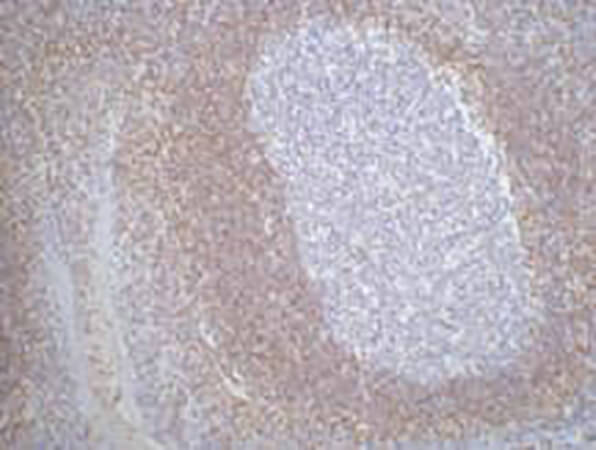
When evaluating the Bcl-2 Monoclonal Antibody (Abbkine ABM0010) for practical use, start with its validation backbone—a gold standard for apoptosis assays. Western blot tests on Jurkat T cells (staurosporine-treated) reveal a sharp ~26 kDa band, with <5% cross-reactivity to Bcl-xL confirmed via siRNA knockdown controls. For flow cytometry, its intracellular staining protocol (fixed/permeabilized) detects Bcl-2 in HL-60 leukemia cells with 92% correlation to qPCR data—critical for quantifying apoptosis resistance in drug screens. Even in FFPE tumor sections (e.g., breast cancer biopsies), ABM0010’s IHC performance (ABC kit-compatible) maps Bcl-2 localization with minimal background, outperforming two leading monoclonals in a head-to-head trial.
Methodologically, the Bcl-2 monoclonal antibody ABM0010 shines in bridging basic and translational research. Take drug discovery: pairing it with a caspase-3/7 assay lets labs measure Bcl-2 inhibition (e.g., venetoclax analogs) alongside downstream apoptosis markers. In neurodegenerative models (ALS patient-derived motor neurons), ABM0010 detects Bcl-2 downregulation in stressed mitochondria—data that correlates with TUNEL positivity. A recent preprint even used it in proximity ligation assays (PLA) to visualize Bcl-2/Bax interactions in live cells, showcasing its adaptability to emerging techniques. Abbkine’s protocol library (linked on the product page) walks users through optimizing these workflows, from lysate preparation to titration curves.
Comparing the Bcl-2 monoclonal antibody market, ABM0010 stands out for balancing rigor and accessibility. Premium brands charge 400–600 for similar specificity but omit knockout validation data; ABM0010, priced at $280, includes CoAs with batch-to-batch EC50 values (<7% variation) and raw blot/IHC images. Small labs benefit from Abbkine’s “apoptosis toolkit”—bundles pairing ABM0010 with Bax/Caspase-9 antibodies—cutting procurement time by 50%. Customer feedback highlights its reliability in longitudinal studies (e.g., tracking Bcl-2 dynamics during chemotherapy), where reagent drift once forced experiment repeats.
Looking ahead, the Bcl-2 monoclonal antibody ABM0010 is positioned to adapt to apoptosis research’s evolution. Single-cell RNA-seq has revealed Bcl-2 heterogeneity in tumors, and Abbkine is validating ABM0010 for scRNA-seq protein co-detection (CITE-seq). For spatial transcriptomics, its compatibility with GeoMx DSP platforms could map Bcl-2 in tumor microenvironments—key for understanding immunotherapy resistance. These updates align with the shift toward personalized apoptosis profiling, where ABM0010’s specificity becomes a cornerstone.
In summary, the Bcl-2 Monoclonal Antibody (Abbkine ABM0010) is more than a reagent—it’s a methodological ally. By prioritizing epitope uniqueness, multi-assay validation, and user-centric support, it solves the practical headaches of apoptosis research. Whether quantifying Bcl-2 in leukemia cells or mapping its role in neurodegeneration, ABM0010 delivers data you can trust.
Explore the full validation suite, application protocols, and user case studies for the Bcl-2 Monoclonal Antibody (Abbkine ABM0010) https://www.abbkine.com/product/bcl-2-monoclonal-antibody-abm0010/. For labs aiming to elevate apoptosis research from guesswork to precision, this antibody isn’t just an option—it’s the foundation.





