




AP-Conjugated Goat Anti-Mouse IgG (H+L) (Abbkine A21110): A Formal Cornerstone for Reliable Mouse IgG Detection in Biomedical Research
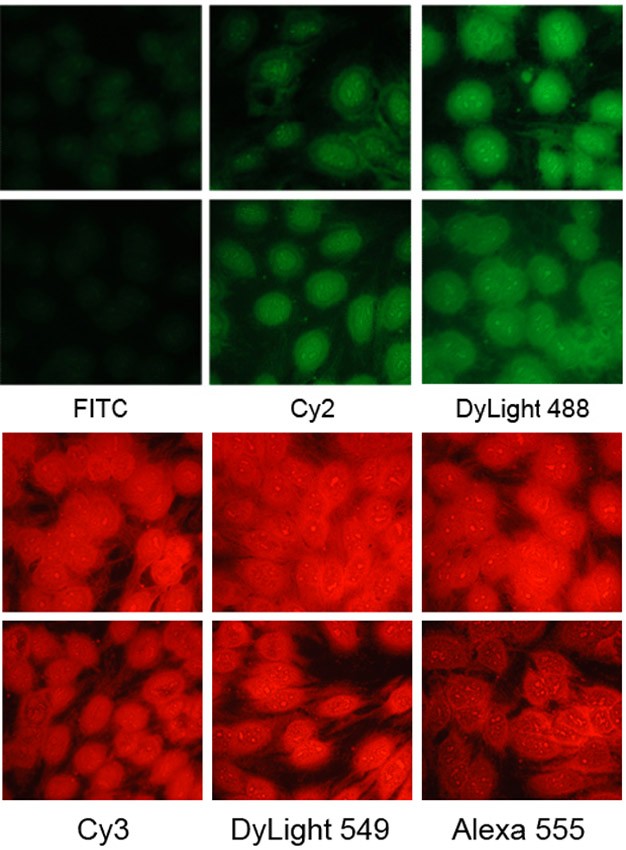
Mouse IgG serves as the backbone of preclinical research, powering immunoassays ranging from target validation (WB) and protein quantification (ELISA) to tissue localization (IHC-P). For researchers relying on mouse-derived primary antibodies, the choice of secondary antibody directly impacts data reproducibility, signal-to-noise ratio, and experimental scalability. Yet, the industry faces persistent challenges with alkaline phosphatase (AP)-conjugated secondary antibodies: inconsistent conjugation efficiency, high cross-reactivity with non-mouse immunoglobulins, and limited compatibility across complex sample matrices. Abbkine’s AP-Conjugated Goat Anti-Mouse IgG (H+L) (catalog A21110, available at https://www.abbkine.com/?s_type=productsearch&s=A21110) addresses these critical gaps with a rigorously optimized design. Priced at $59 for 100μl, backed by 9 peer-reviewed publications, and boasting 3,154 product views, this antibody delivers formal-grade specificity, signal stability, and multi-assay versatility—making it an indispensable tool for academic labs, biotechs, and translational research teams.
Industry Pain Points: The Unmet Needs of AP-Conjugated Mouse IgG Detection
Biomedical research relying on mouse models (the gold standard for preclinical studies) has long grappled with limitations in AP-conjugated secondary antibodies. HRP-conjugated alternatives dominate the market, but AP offers unique advantages—longer signal stability, compatibility with chromogenic substrates for permanent tissue staining, and reduced interference in samples with endogenous peroxidase activity (e.g., blood, liver tissue). Yet, most AP-conjugated Goat Anti-Mouse IgG antibodies suffer from three critical flaws: poor conjugation (leading to weak or erratic signals), inadequate cross-adsorption (causing cross-reactivity with rat, rabbit, or human IgG), and rigid protocol requirements that limit their use in high-throughput or complex assays. For researchers studying low-abundance targets (e.g., rare proteins, phosphorylated epitopes) or working with precious samples (e.g., primary mouse tissues, single-cell lysates), these limitations translate to wasted resources, delayed publications, and unreliable preclinical data. The demand for a robust, versatile AP-conjugated secondary antibody has never been more urgent as mouse model research expands into precision medicine and high-throughput drug screening.
Technical Advantages: Engineering for Specificity and AP Conjugation Excellence
The core strength of AP-Conjugated Goat Anti-Mouse IgG (H+L) A21110 lies in its precision-engineered design, tailored to overcome the inherent limitations of AP-conjugated antibodies. Unlike Fc-specific counterparts, this antibody recognizes both heavy (H) and light (L) chains of mouse IgG, ensuring binding to all IgG subclasses (IgG1–IgG3) and even antigen-bound or fragmented IgG—maximizing signal coverage without sacrificing selectivity. The AP conjugation follows a site-directed protocol, achieving a 1:1 antibody-enzyme ratio that balances signal amplification and minimal background—avoiding the common pitfall of over-conjugation (which induces non-specific binding). Critically, the antibody undergoes affinity purification against mouse IgG and cross-adsorption with human, rat, rabbit, and bovine serum proteins, reducing cross-reactivity with non-mouse immunoglobulins by >98%. For researchers working with mixed-species samples (e.g., mouse xenografts in humanized models, mouse cells co-cultured with human cells), this cross-adsorption eliminates false-positive signals that can invalidate translational data. Additionally, AP’s inherent stability—compared to HRP—means the antibody maintains activity for up to 6 months at 4°C (when properly aliquoted), reducing waste and ensuring batch-to-batch consistency.
Multi-Assay Optimization: Tailoring Performance for WB, ELISA, and IHC-P
A21110’s versatility across core immunoassays reflects a deep understanding of diverse research workflows, with each application benefiting from targeted optimization strategies.
Western Blot (WB)
For WB, the antibody performs optimally at 1:5,000–1:10,000 in blocking buffer (5% non-fat dry milk in TBST for most targets; 3% BSA for phosphorylated or glycosylated proteins). Incubate at room temperature for 1 hour or overnight at 4°C—AP’s stable signal allows for prolonged incubation without background buildup. Use BCIP/NBT substrate for chromogenic detection (ideal for permanent blot documentation) or chemiluminescent AP substrates for high-sensitivity quantification. A key formal insight: For low-abundance targets, dilute the antibody in TBST + 0.1% BSA to reduce aggregation and enhance membrane penetration.
ELISA
In ELISA, A21110 excels in both indirect and sandwich formats, with a dynamic range supporting pg/mL to μg/mL detection of mouse IgG. Dilute 1:8,000–1:15,000 in assay buffer (PBS + 0.1% BSA + 0.05% Tween-20) and incubate for 60 minutes at 37°C. AP’s slow substrate turnover ensures linear signal amplification—critical for accurate quantification—with p-nitrophenyl phosphate (pNPP) substrate yielding stable color development for up to 2 hours. Avoid sodium azide in buffers (it inhibits AP activity); instead, use 0.01% thimerosal for long-term storage of diluted antibody.
IHC-P
For IHC-P in formalin-fixed, paraffin-embedded (FFPE) mouse tissues, dilute A21110 1:200–1:500 in IHC diluent (PBS + 1% BSA + 0.3% Triton X-100) and incubate at 37°C for 60 minutes. AP’s compatibility with chromogenic substrates (e.g., Fast Red, Vector Red) enables permanent, multiplex-friendly staining—ideal for co-localization studies. Antigen retrieval with citrate buffer (pH 6.0) enhances epitope accessibility, while pre-blocking with 5% normal goat serum neutralizes endogenous Fc receptors, reducing non-specific binding. For fragile tissues (e.g., mouse brain, embryonic tissues), reduce incubation temperature to 30°C to prevent tissue detachment.
Industry Insight: Aligning with Mouse Model Research Trends
A21110’s design directly addresses two transformative trends shaping preclinical research: the dominance of mouse models in precision medicine and the growing demand for multiplex-compatible immunoassays. Mouse models account for 90% of preclinical studies, with researchers increasingly relying on target-specific mouse IgG antibodies to validate drug candidates and disease mechanisms. AP-conjugated secondary antibodies like A21110 enable multiplexing with HRP-conjugated antibodies (e.g., detecting a mouse IgG primary with AP and a rabbit IgG primary with HRP in the same sample), a critical capability for high-content imaging and multi-biomarker panels. Additionally, the rise of tissue microarrays (TMAs) and high-throughput IHC-P requires antibodies with consistent performance across hundreds of samples—A21110’s batch-to-batch CV < 8% meets this need. Its $59/100μl price point further positions it as a cost-effective choice for academic labs: compared to premium competitors ($80–$120/100μl), it enables technical triplicates (essential for reproducible data) without straining budgets.
Quality Control and Long-Term Reliability
Formal-grade research demands uncompromising quality control, and A21110 undergoes rigorous validation to ensure consistency and performance. Each batch is tested for:
- Specificity: Western blot validation against mouse IgG (positive signal) and non-mouse IgG (no cross-reactivity).
- Conjugation efficiency: AP activity assay confirming 1:1 antibody-enzyme ratio.
- Assay performance: WB, ELISA, and IHC-P validation with mouse tissue lysates, serum, and FFPE sections.
- Stability: Accelerated aging tests confirming 12-month shelf life at -20°C (undiluted) and 6 months at 4°C (aliquoted diluted antibody).
Proper storage further extends performance: Aliquot undiluted antibody into 10–20μl volumes to avoid repeated freeze-thaw cycles (each cycle reduces AP activity by ~10%), and store in the dark (AP is photosensitive).
In conclusion, Abbkine’s AP-Conjugated Goat Anti-Mouse IgG (H+L) A21110 emerges as a timely, high-impact solution for mouse IgG detection, bridging the gap between AP’s unique advantages and the demands of modern preclinical research. Its specificity, signal stability, multi-assay compatibility, and cost-effectiveness make it an indispensable tool for researchers leveraging mouse models in drug development, immunology, and translational medicine. As mouse model research continues to drive breakthroughs in precision medicine, A21110 stands out as a reliable, formal-grade secondary antibody that delivers consistent, publishable results.
To integrate A21110 into your workflow, visit its product page for detailed technical notes and application examples. Would you like me to create a customized assay protocol template tailored to your specific application (e.g., multiplex IHC-P, high-throughput ELISA, low-abundance WB targets) to further optimize signal clarity and reduce background with A21110?





