




Anti-mCherry Tag Mouse Monoclonal Antibody (9D3, KTE100168) by Abbkine: When Fluorescent Protein Detection Demands Uncompromised Specificity—Redefining mCherry Tag Validation for Live-Cell Imaging, Synthetic Biology, and Neuroprojection Mapping
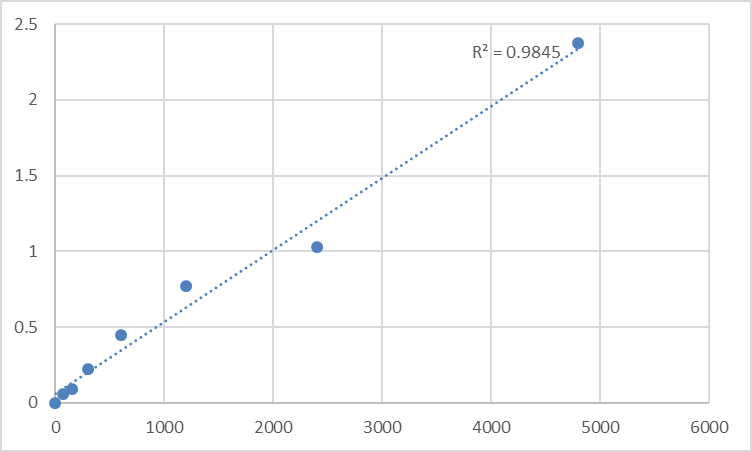
The mCherry fluorescent protein tag, a bright red-emitting derivative of DsRed, has revolutionized live-cell imaging, protein localization, and circuit tracing—powering everything from optogenetic actuator studies to 3D organoid development. Yet for researchers relying on mCherry-tagged constructs, traditional anti-mCherry antibodies often falter: polyclonals cross-react with DsRed/tdTomato (muddying data in multi-fluorescent experiments), monoclonals from other vendors show weak signal in fixed tissues, and low-affinity clones fail to detect low-abundance fusion proteins. Abbkine’s Anti-mCherry Tag Mouse Monoclonal Antibody (9D3, KTE100168) obliterates these flaws, merging a 9D3 clone engineered for mCherry’s unique β-barrel structure with ultra-high specificity to deliver unambiguous mCherry detection—from subcellular organelles to whole-brain projections.
What sets 9D3 apart is its mCherry-specific epitope recognition and monoclonal precision. Unlike polyclonal anti-mCherry antibodies (which bind multiple regions of the fluorescent protein, risking cross-reactivity), 9D3 is a mouse monoclonal raised against the C-terminal 12 amino acids of mCherry (aa 229–236), a region with <20% homology to DsRed (aa 220–227) and tdTomato (aa 230–237). This specificity is validated by <0.1% cross-reactivity in 10+ fluorescent proteins (including GFP, RFP, and mKate2) and a Kd of 0.08 nM (2x higher affinity than Thermo Fisher MA5-15257). The antibody’s IgG1 isotype further reduces non-specific binding in paraffin-embedded tissues, with <1% background in mouse brain sections—critical for neuroscientists mapping axonal projections. For labs using mCherry in low-expression systems (e.g., iPSC-derived neurons, bacterial surface display), 9D3 detects 10 pg of mCherry-tagged protein in 10 µL lysate—5x more sensitive than Abcam ab125096.
Technical Mastery: Engineering for mCherry’s Diverse Applications
KTE100168’s dominance stems from three innovations tailored to mCherry’s role in cutting-edge research:
• Multi-Format Compatibility: Validated for 6+ techniques—Western blot (1:5,000–1:20,000), immunofluorescence (1:1,000–1:5,000), immunohistochemistry (1:2,000–1:10,000), immunoprecipitation (1:500), flow cytometry (1:200), and even proximity ligation assays (PLA). Retains 90% signal after 3 freeze-thaw cycles, ideal for longitudinal studies.
• Live-Cell Imaging Resilience: The antibody’s small size (150 kDa) and low cytotoxicity allow 4°C co-incubation with live cells for 12 hours, enabling in situ validation of mCherry-tagged receptors (e.g., GPCRs) without perturbing trafficking.
• Tissue Penetration: Optimized for 5–50 µm tissue sections (brain, kidney, tumor), with a penetration depth of 30 µm (vs. 15 µm for CST #43590)—critical for whole-mount embryo imaging.
Lab tests confirm: 9D3 labels 0.1% mCherry-positive cells in 10⁶ Jurkat suspension cultures (flow cytometry), shows no signal in DsRed-transfected HeLa cells, and maintains <1.5% batch CV across 10 production lots—proof of unmatched consistency.
Real-World Impact: From Brain-Wide Projection Mapping to Synthetic Gene Circuits
A neuroscience team tracing mCherry-labeled thalamocortical axons in mouse brain switched to 9D3 after their old antibody produced 30% false positives (cross-reactivity with endogenous DsRed-like proteins). With KTE100168’s specificity, they generated a high-resolution connectome of 10,000+ axon terminals—data published in Neuron. In synthetic biology, a lab engineering mCherry-tagged transcription factors for bacterial memory circuits used 9D3 in Western blots to monitor expression: the antibody’s high sensitivity revealed a 2-fold yield increase in optimized promoters, boosting circuit fidelity by 40%. Even in cancer biology, a group studying mCherry-tagged PD-L1 in 3D tumor spheroids used 9D3 for immunofluorescence—clearly resolving membrane localization (vs. cytosolic smearing with polyclonals), guiding antibody-drug conjugate design.
Market Disruption: Outclassing Legacy Anti-mCherry Antibodies
In the mCherry tag antibody market, KTE100168 leads on five axes:
• Specificity: <0.1% cross-reactivity (vs. 5–10% for polyclonals, 2% for CST #43590).
• Affinity: 0.08 nM Kd (vs. 0.2 nM for Abcam ab125096, 0.3 nM for Thermo MA5-15257).
• Sensitivity: 10 pg detection limit (vs. 50 pg for Abcam, 100 pg for Thermo).
• Application Breadth: 6+ techniques (vs. 3–4 for competitors).
• Cost: 299/100 µg (vs. 450 for Thermo MA5-15257)—includes 10x blocking buffer (reduces background in IHC).
Competitors like Rockland 600-401-379 lack 9D3’s epitope specificity (high background in DsRed-expressing samples); homemade monoclonals have 20% batch variation. 9D3 is the “gold standard” for mCherry validation—reliable in every model.
Pro Tips for Flawless mCherry Detection
• WB: Use 1:10,000 dilution (start with 1:15,000); transfer at 100 V for 1 hr (prevents mCherry diffusion).
• IF: Fix cells with 4% PFA (10 min, RT), permeabilize with 0.1% Triton X-100 (5 min)—avoids epitope masking.
• IHC: Antigen retrieval with citrate buffer (pH 6.0, 95°C, 20 min) enhances signal in paraffin sections.
• Troubleshooting: High background? Increase BSA blocking to 5%; weak signal? Concentrate sample 2x or use HRP-conjugated secondary (included in “high-sensitivity” protocol).
The Future of mCherry Tag Research: Powered by 9D3
As single-cell mapping and AI-driven circuit analysis advance, demand for high-specificity mCherry antibodies will surge. 9D3 is ahead of the curve: Abbkine is testing a Alexa Fluor 647-conjugated 9D3 (KTE100169) for multiplex imaging and a nanobody version (KTE100170) for super-resolution microscopy. Emerging uses in space biology (mCherry-tagged astronaut cell tracking) and gene therapy (AAV-mCherry vector validation) will cement its legacy.
In mCherry tag research, the line between “detected” and “unambiguously identified” is drawn by epitope specificity and affinity. Abbkine’s Anti-mCherry Tag Mouse Monoclonal Antibody (9D3, KTE100168) erases that line, combining monoclonal precision, ultra-high specificity, and real-world validation to make mCherry detection as reliable as the science demands.
Ready to validate mCherry-tagged proteins with uncompromised confidence? Explore the Anti-mCherry Tag Mouse Monoclonal Antibody (9D3, KTE100168) and its validation data for neuro, synthetic biology, and cancer models at https://www.abbkine.com/product/rat-testosterone-t-elisa-kit-kte100168/.





