




Anti-HA Tag Mouse Monoclonal Antibody (4F6) by Abbkine (Catalog ABT2040): A Cornerstone for Reliable HA-Tagged Protein Research
In the dynamic landscape of molecular biology and protein science, HA (Hemagglutinin) tags have emerged as a versatile and widely adopted tool for protein quantification, localization, and interaction studies. Their small molecular weight, minimal interference with protein structure or function, and high immunogenicity make them indispensable across academic research, biotech drug development, and pharmaceutical validation. However, the success of any HA-tagged experiment hinges on the specificity, sensitivity, and versatility of the detection antibody—and this is where Abbkine’s Anti-HA Tag Mouse Monoclonal Antibody (clone 4F6), catalog number ABT2040 (available at https://www.abbkine.com/?s_type=productsearch&s=ABT2040), establishes itself as a standout reagent. Labeled “Hot” for its growing popularity among researchers, this monoclonal antibody combines rigorous epitope recognition, cross-system reactivity, and validation across three key applications (IF, IP, WB) to address the core demands of modern protein research. As the industry increasingly prioritizes reproducibility and efficiency, ABT2040 redefines what researchers can expect from an HA tag detection tool—let’s explore its technical advantages, industry insights, and the value it brings to diverse experimental workflows.
Monoclonal specificity is the foundation of ABT2040’s reliability, and the 4F6 clone is engineered to bind exclusively to the HA tag with exceptional precision. Unlike polyclonal antibodies that recognize multiple epitopes (and carry inherent risks of cross-reactivity with endogenous proteins), monoclonal antibodies target a single, well-characterized epitope on the HA tag—ensuring that signals detected in experiments originate solely from the HA-tagged protein of interest. Abbkine’s rigorous clone selection process for 4F6 involves screening hundreds of hybridomas to identify the variant with the highest affinity, lowest off-target binding, and consistent performance across sample types. This process is followed by validation against non-HA-tagged proteins in both mammalian (e.g., HEK293, CHO, HeLa) and bacterial (e.g., E. coli, Bacillus subtilis) lysates, eliminating the background noise that plagues less refined antibodies. For researchers, this translates to cleaner data, more accurate quantification, and reduced time spent troubleshooting—directly addressing the industry’s critical focus on data integrity and experimental reproducibility, a priority increasingly emphasized by journals and funding agencies.
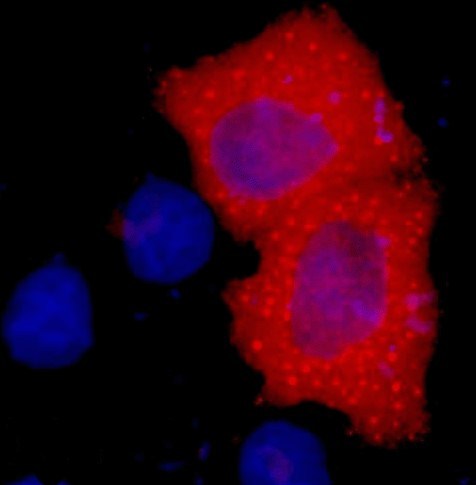
The multi-application validation of ABT2040—spanning Immunofluorescence (IF), Immunoprecipitation (IP), and Western Blot (WB)—positions it as a versatile workhorse for comprehensive HA-tagged protein studies. In WB, the gold standard for protein expression analysis, the 4F6 antibody delivers sharp, dose-dependent bands with minimal background, even in complex sample matrices or low-abundance protein samples. For IF, a technique central to subcellular localization studies, it exhibits bright, specific staining that clearly delineates HA-tagged proteins in fixed cells, without cross-reacting with nuclear or membrane components. Most notably, its validation for IP—an essential tool for protein-protein interaction studies—highlights its ability to efficiently pull down HA-tagged proteins and their binding partners, preserving protein complexes for downstream analysis. This triad of applications eliminates the need for researchers to source multiple antibodies for different stages of a project, streamlining workflows and ensuring consistency across experiments. In an industry where experimental complexity is constantly increasing, this versatility aligns with the growing demand for “all-in-one” reagents that reduce workflow friction and minimize variability.
Cross-system reactivity to mammals and bacteria is a strategic design feature of ABT2040 that addresses a common pain point in recombinant protein research. Many labs operate across dual expression systems: bacterial systems for high-yield protein purification and mammalian systems for functional validation or localization studies. Traditional antibodies often require separate reagents for each system, adding cost, storage complexity, and the risk of inconsistent results when switching between experiments. Abbkine’s ABT2040 is validated to perform equally well in both, recognizing HA-tagged proteins in bacterial lysates (including soluble fractions and inclusion bodies) and mammalian cell extracts (adherent or suspension cultures). This compatibility ensures that researchers can use the same antibody to confirm protein expression in E. coli via WB, study its subcellular localization in mammalian cells via IF, and identify binding partners via IP—all without compromising on performance. This cross-system utility reflects a key industry trend: reagents that adapt to diverse research needs are becoming increasingly valuable as labs seek to optimize resources and accelerate project timelines.
The balance of performance and affordability in ABT2040 makes it accessible to labs of all sizes, a critical advantage in an era of constrained research budgets. Priced at $79 for 50μl, this antibody offers professional-grade quality without the premium price tag of some competitors. When evaluating antibody value, it’s essential to consider not just upfront cost but also long-term efficiency: cheaper antibodies may require higher working concentrations (increasing reagent consumption) or result in failed experiments (wasting time, samples, and resources), while ABT2040’s high affinity allows for working dilutions of 1:1000–1:5000 for WB, 1:200–1:1000 for IF, and 1:50–1:200 for IP—extending the lifespan of each vial to dozens of assays. For academic labs, early-career researchers, and high-throughput facilities, this translates to significant cost savings without sacrificing data quality. Moreover, Abbkine’s commitment to quality control—each batch of ABT2040 undergoes rigorous testing for specificity, sensitivity, and consistency—ensures that researchers get reliable results every time, further enhancing its value proposition. This alignment of performance and affordability addresses a core industry need: access to high-quality reagents that don’t break the bank.
From an industry perspective, ABT2040 reflects two key trends shaping the antibody market: the shift toward clone-specific reagents and the growing emphasis on application-focused validation. Clone-specific antibodies (like the 4F6 clone in ABT2040) offer greater transparency and reproducibility than generic anti-HA antibodies, as researchers can reference the exact clone used in published studies, enabling better experiment replication—a critical requirement for scientific progress. Additionally, the antibody’s validation across IF, IP, and WB demonstrates a move away from “one-size-fits-all” reagents toward tools tailored to specific experimental workflows. As protein research becomes more specialized—with a focus on complex interactions, dynamic localization, and quantitative analysis—antibodies that are validated for multiple, complementary applications are becoming indispensable. Abbkine’s ABT2040 is at the forefront of this trend, providing researchers with a reliable, specific, and versatile tool that supports the full spectrum of HA-tagged protein studies. This focus on specialization and reproducibility positions ABT2040 as a future-proof reagent, aligned with the evolving needs of the molecular biology community.
Practical considerations for maximizing ABT2040’s performance further enhance its utility for researchers. For WB, optimal results are achieved by loading 20–50μg of total protein per lane, resolving on a 10–12% SDS-PAGE gel, and using a 1:2000–1:5000 dilution of ABT2040 with overnight incubation at 4°C—this ensures strong signal detection while minimizing background. For IF, fixing cells with 4% paraformaldehyde and permeabilizing with 0.1% Triton X-100 (for cytoplasmic or nuclear HA-tagged proteins) paired with a 1:300–1:800 antibody dilution delivers bright, specific staining. For IP, using 1–2μg of ABT2040 per 500μg of cell lysate, along with protein A/G beads, ensures efficient pull-down of HA-tagged complexes without non-specific binding. Storage best practices include aliquoting the antibody into small volumes to avoid repeated freeze-thaw cycles (which can degrade activity) and storing at -20°C, where it maintains performance for up to 12 months. These practical guidelines, combined with the antibody’s inherent technical strengths, make ABT2040 accessible to researchers of all experience levels, from graduate students to senior scientists.
In conclusion, Abbkine’s Anti-HA Tag Mouse Monoclonal Antibody (4F6) (catalog ABT2040) is more than a detection reagent—it’s a precision-engineered tool that empowers researchers to conduct reliable, comprehensive HA-tagged protein studies. Its monoclonal specificity eliminates background noise, multi-application validation streamlines workflows, cross-system reactivity spans key expression systems, and its affordable price point makes it accessible to labs worldwide. As the molecular biology industry continues to prioritize reproducibility, efficiency, and specialization, ABT2040 aligns perfectly with these goals—delivering consistent, publishable results while reducing workflow complexity and cost. Whether you’re quantifying protein expression via WB, visualizing subcellular localization via IF, or identifying protein interactions via IP, this antibody delivers the performance and reliability that modern research demands. To integrate ABT2040 into your lab toolkit, visit its product page at https://www.abbkine.com/?s_type=productsearch&s=ABT2040—and elevate your HA-tagged protein research to the next level.
For researchers seeking a trustworthy, versatile, and cost-effective solution for HA tag detection, ABT2040 stands out as a leader in its class. Its technical advantages, industry-aligned design, and practical utility make it an essential asset for any lab working with recombinant proteins—proving that when it comes to antibody selection, precision, versatility, and value are the keys to success.





