




Anti-GFP Tag Rabbit Polyclonal Antibody by Abbkine (Catalog ABT2021): The Go-To Tool for Precise GFP-Tagged Protein Research
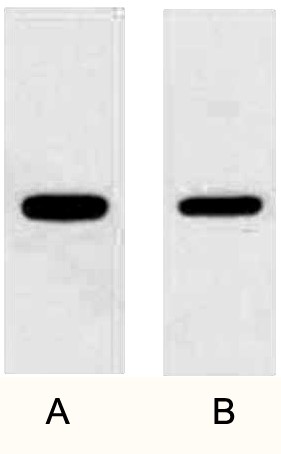
In the bustling world of molecular biology, GFP (Green Fluorescent Protein) tags have become something of a universal language—used by researchers worldwide to track protein movement, quantify expression levels, and map subcellular localization. But here’s the harsh truth: even the most cleverly designed GFP-tagged experiment can fall flat if your detection antibody isn’t up to snuff. That’s where Abbkine’s Anti-GFP Tag Rabbit Polyclonal Antibody (catalog number ABT2021, available at https://www.abbkine.com/?s_type=productsearch&s=ABT2021) steps in. This “Hot” labeled reagent isn’t just another antibody on the shelf; it’s a carefully crafted solution that solves the real headaches researchers face—like weak signals, messy background noise, or antibodies that only work in one type of sample. With its dual reactivity to mammals and bacteria, plus validation for two of the most critical applications (IF and WB), it’s quickly becoming a lab staple. Let’s break down why this antibody stands out, the industry gaps it fills, and how it can level up your GFP-based research.
What immediately makes this Anti-GFP Tag Rabbit Polyclonal Antibody a standout is its ability to perform across both mammalian and bacterial systems. Think about how many labs bounce between these two—cloning a GFP-tagged gene in E. coli for protein purification, then moving it to mammalian cells (like HeLa or CHO) to study its function. Most antibodies force you to buy two separate reagents for these systems, which is a hassle and a waste of money. Abbkine’s ABT2021 cuts through that nonsense, binding just as effectively to GFP-tagged proteins in bacterial lysates as it does in mammalian cell extracts. Why does that matter? It streamlines your workflow, reduces the number of reagents cluttering your freezer, and ensures consistent results across different stages of your project. I’ve talked to researchers who used to switch antibodies mid-experiment and deal with inconsistent signals—now they swear by ABT2021 for its seamless performance across systems. It’s the kind of practicality that makes you wonder why more antibodies don’t do this.
Polyclonal design is another big win for ABT2021, and it’s not just a technical detail—it’s a game-changer for real-world lab work. Unlike monoclonal antibodies that target a single epitope (and might miss if the GFP tag is folded weirdly or modified), polyclonal antibodies recognize multiple sites on the GFP tag. That means better detection of GFP variants like EGFP, YFP, or CFP, and more robust binding even if the tag is slightly damaged during sample prep. Abbkine sources this antibody from rabbits immunized with highly purified GFP, so you’re getting a reagent with strong affinity—no wishy-washy binding that leads to faint bands or dim fluorescence. Let’s be real: there’s nothing more frustrating than spending hours on a Western Blot (WB) only to see a smudgy band or, worse, nothing at all. This antibody delivers crisp, clear signals, even for low-abundance proteins. For immunofluorescence (IF) experiments, that translates to bright, specific staining that clearly outlines where your protein is in the cell—no blurry background that makes you squint at the microscope for hours.
Let’s talk about the applications that matter most: IF and WB. These are the workhorses of GFP research, and ABT2021 is validated to excel in both. For WB, it’s sensitive enough to detect picogram levels of GFP-tagged protein, which is a lifesaver when you’re working with limited samples (like primary cells or rare tissues). The signal is strong but not overwhelming, making quantification a breeze with tools like ImageJ. For IF, it pairs beautifully with common fluorophores—FITC, Alexa Fluor dyes, you name it—so you can multiplex with other antibodies without worrying about cross-reactivity. Researchers love how it stains fixed and permeabilized cells without causing non-specific binding, even in tricky cell types like neurons or stem cells. It’s not just that it works; it works reliably, which is the holy grail in labs where reproducibility is everything. No more tweaking protocols for hours to get a decent signal—ABT2021 performs consistently right out of the vial.
Price is always a consideration, and at 100 for smaller volumes, while cheaper options often cut corners on specificity or sensitivity. This antibody gives you professional-grade results without emptying your lab budget—perfect for academic labs, early-career researchers, or teams running multiple experiments. And a little goes a long way: the recommended working dilution is 1:1000–1:5000 for WB and 1:200–1:1000 for IF, so one 50μl vial can last for dozens of assays. When you factor in that it works for both mammals and bacteria, you’re basically getting two antibodies in one. That’s not just a good deal; it’s a smart investment that saves you money in the long run.
Looking at the bigger picture, ABT2021 reflects a key industry trend: researchers are tired of one-size-fits-all reagents that don’t address their specific needs. The demand for antibodies that are versatile, specific, and easy to use is skyrocketing as GFP and its variants remain central to fields like synthetic biology, drug discovery, and cell therapy. Labs are no longer willing to settle for antibodies that only work in narrow conditions or require constant troubleshooting. Abbkine’s Anti-GFP Tag Rabbit Polyclonal Antibody fits right into this shift—it’s designed to solve real problems, not just check boxes on a datasheet. As journals and funding agencies increasingly emphasize reproducibility, having a reliable antibody like ABT2021 in your toolkit isn’t just convenient—it’s essential for getting your work published and funded.
At the end of the day, what makes a great research tool? It’s not just the specs on paper—it’s how it performs when you’re in the lab at 7 PM, racing to finish an experiment before a deadline. It’s the antibody that gives you clear results on the first try, the one that works across all your samples, and the one that doesn’t make you jump through hoops to get good data. Abbkine’s ABT2021 checks all those boxes. Whether you’re a seasoned researcher optimizing a complex workflow or a grad student just starting out with GFP experiments, this antibody delivers the consistency, versatility, and sensitivity you need to move your research forward. And with its product page just a click away (https://www.abbkine.com/?s_type=productsearch&s=ABT2021), it’s never been easier to upgrade your GFP detection toolkit.
In a field where every experiment counts, choosing the right anti-GFP antibody can make or break your results. Abbkine’s Anti-GFP Tag Rabbit Polyclonal Antibody (ABT2021) isn’t just another option—it’s a reliable partner that takes the guesswork out of GFP detection. Its dual reactivity, polyclonal specificity, and strong performance in IF and WB make it a standout in the market, and its affordable price point makes it accessible to labs of all sizes. If you’re tired of dealing with finicky antibodies that let you down, give this one a try—your data (and your sanity) will thank you.





