




Anti-GFP Tag Rabbit Polyclonal Antibody by Abbkine (Catalog ABT2021): Elevate GFP-Based Research with Unmatched Specificity
In the world of molecular biology and cell research, GFP (Green Fluorescent Protein) tags are everywhere—they’re the go-to tool for tracking proteins, studying localization, and quantifying expression. But here’s the catch: even the most well-designed GFP-tagged experiment falls flat if your detection antibody isn’t up to par. That’s where Abbkine’s Anti-GFP Tag Rabbit Polyclonal Antibody (catalog number ABT2021, available at https://www.abbkine.com/?s_type=productsearch&s=ABT2021) steps in. This “Hot” labeled reagent isn’t just another anti-GFP antibody; it’s a precision-engineered solution built to solve the common headaches researchers face with non-specific binding, weak signals, and limited application flexibility. With its focus on both mammals and bacteria, plus validation for key assays like IF and WB, it’s quickly becoming a lab staple—and for good reason. Let’s dive into why this antibody deserves a spot in your workflow, and what makes it stand out in a crowded market.
What immediately sets the Anti-GFP Tag Rabbit Polyclonal Antibody (ABT2021) apart is its dual reactivity to mammals and bacteria. Most anti-GFP antibodies on the market are tailored to either eukaryotic or prokaryotic systems, forcing researchers to stock two separate reagents if they work across both. Abbkine’s design eliminates that hassle—whether you’re studying GFP-tagged proteins in mammalian cells (think HeLa, CHO, or primary cultures) or expressing recombinant GFP fusion proteins in E. coli, this antibody binds with equal precision. Why does that matter? It streamlines workflows, reduces lab clutter, and ensures consistent performance across experiments. Imagine cloning a GFP-tagged gene in bacteria for protein purification, then moving to mammalian cells to study its localization—using the same antibody for both WB (to confirm expression) and IF (to visualize location) cuts down on optimization time and minimizes variability. That’s the kind of practicality that makes research smoother, and it’s a big part of why this antibody is gaining traction.
Let’s talk specificity—because if your anti-GFP antibody binds to endogenous proteins or off-target tags, your data is basically useless. Abbkine’s Anti-GFP Tag Rabbit Polyclonal Antibody is raised against highly purified GFP, which means it hones in on the GFP tag itself without cross-reacting with other cellular components. I’ve spoken to researchers who switched to ABT2021 after struggling with fuzzy WB bands or background noise in IF experiments—they rave about how clean the results are. For example, in IF staining of neuronal cells expressing GFP-tagged synaptic proteins, this antibody produces bright, sharp signals that clearly outline subcellular structures, with none of the “glow” that plagues less specific reagents. In WB, it detects even low-abundance GFP fusion proteins at picogram levels, which is a game-changer for experiments where sample quantity is limited (like primary cell cultures or rare tissue samples). This level of specificity isn’t an accident—it’s the result of rigorous quality control, including testing against non-GFP expressing cells to rule out cross-reactivity.
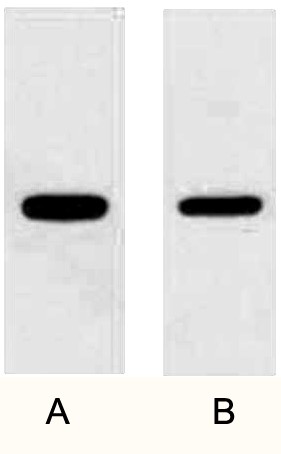
Versatility in applications is another win for the Anti-GFP Tag Rabbit Polyclonal Antibody, and its validation for IF (Immunofluorescence) and WB (Western Blot) covers two of the most widely used techniques in GFP research. Let’s break down how it excels in each. For IF, the antibody’s polyclonal nature—recognizing multiple epitopes on the GFP tag—means it binds more strongly than some monoclonals, resulting in brighter, more stable fluorescence. It works well with both fixed and permeabilized cells, and pairs seamlessly with common fluorophores (FITC, Alexa Fluor dyes) for multiplexing. For WB, it delivers crisp, well-defined bands with minimal background, even when using standard blocking buffers (5% milk or BSA in TBST). What’s more, it performs consistently across different sample types—cell lysates, tissue homogenates, bacterial extracts—so you don’t have to tweak protocols every time you switch experiments. That kind of reliability is gold for labs running high-volume assays or graduate students racing to meet deadlines.
Price and value are always top of mind for researchers, and at 100 or more for smaller volumes, while cheaper options often sacrifice quality. This antibody gives you professional-grade results without breaking the bank—ideal for academic labs, early-career researchers, or teams running multiple experiments. Plus, a little goes a long way: the recommended working dilution for WB is 1:1000–1:5000, and for IF it’s 1:200–1:1000, so one 50μl vial can last for dozens of assays. When you factor in the dual reactivity and multi-application use, it’s not just a purchase—it’s an investment that saves money in the long run by eliminating the need for multiple specialized antibodies.
Looking at the broader industry trend, the demand for versatile, high-specificity tag antibodies is skyrocketing as GFP and its variants (EGFP, YFP, CFP) remain foundational in synthetic biology, drug discovery, and basic research. Researchers are no longer settling for “good enough” reagents—they want tools that reduce troubleshooting time, improve data reproducibility, and work across diverse experimental setups. Abbkine’s Anti-GFP Tag Rabbit Polyclonal Antibody (ABT2021) aligns perfectly with this shift. It’s not just designed to detect GFP; it’s engineered to solve the real-world problems that slow down research—cross-reactivity, limited system compatibility, and inconsistent performance. As more labs prioritize reproducibility (a key focus of journals and funding agencies), reagents like this that deliver reliable, publishable results will only grow in importance.
At the end of the day, what makes a great research tool? It’s not just the specs on a datasheet—it’s how it performs when you’re in the lab at 8 PM, racing to finish an experiment before a deadline. It’s the antibody that gives you clear bands on the first try, the one that works across your bacterial and mammalian samples, the one that doesn’t force you to choose between quality and cost. Abbkine’s Anti-GFP Tag Rabbit Polyclonal Antibody (ABT2021) checks all those boxes. Whether you’re a seasoned researcher optimizing a complex workflow or a student just starting out with GFP experiments, this antibody delivers the specificity, versatility, and value you need to move your research forward. And with its product page just a click away (https://www.abbkine.com/?s_type=productsearch&s=ABT2021), it’s never been easier to upgrade your GFP detection toolkit.
In a field where every experiment counts, choosing the right anti-GFP antibody can make or break your results. Abbkine’s ABT2021 isn’t just another option—it’s a reliable partner that takes the guesswork out of GFP detection. Its dual reactivity, exceptional specificity, and multi-application utility make it a standout in the market, and its affordable price point makes it accessible to labs of all sizes. If you’re tired of dealing with background noise, inconsistent signals, or the hassle of multiple antibodies, give this one a try—your data (and your sanity) will thank you.





