




Anti-GAPDH Mouse Monoclonal Antibody (2B5) by Abbkine (Catalog ABL1020): A Definitive Practical Guide for Reliable Immunoassay Internal Control
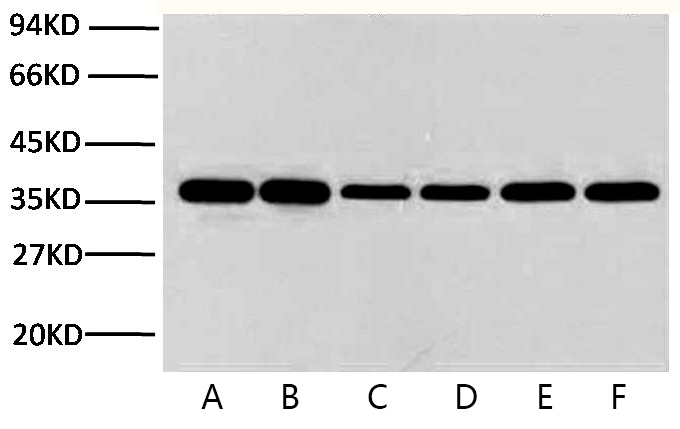
In the landscape of immunoassays—where data reproducibility and quantitative accuracy are paramount—internal controls serve as the backbone of experimental validity. GAPDH (Glyceraldehyde-3-Phosphate Dehydrogenase), a housekeeping enzyme essential for glycolysis, has emerged as the gold standard internal control due to its constitutive expression across most cell types and minimal variability under physiological or experimental conditions. Yet, the utility of GAPDH as a control hinges entirely on the performance of the detection antibody, and this is where Abbkine’s Anti-GAPDH Mouse Monoclonal Antibody (clone 2B5), catalog number ABL1020 (available at https://www.abbkine.com/?s_type=productsearch&s=ABL1020), distinguishes itself as an indispensable tool. Labeled “Hot” for its widespread adoption, this antibody combines exceptional cross-species reactivity, multi-application validation, and monoclonal specificity—addressing the core challenges researchers face when implementing internal controls. This practical guide will unpack the technical rationale behind ABL1020’s design, outline step-by-step optimization protocols for key applications (IF, IHC-P, WB), and share best practices to maximize its utility as a reliable internal control, empowering researchers to elevate the rigor of their immunoassay data.
Understanding the critical role of GAPDH internal controls in immunoassays is the first step toward leveraging ABL1020 effectively. In experiments ranging from protein expression quantification (WB) to subcellular localization (IF) and tissue staining (IHC-P), internal controls correct for variations in sample loading, protein transfer, antibody incubation efficiency, and tissue processing—variables that can otherwise lead to misinterpretation of target protein levels. GAPDH is ideal for this role because its expression is tightly regulated and unaffected by most experimental treatments (e.g., drug exposure, genetic manipulation, environmental stressors) across diverse organisms. However, not all anti-GAPDH antibodies are created equal: polyclonal antibodies may exhibit batch-to-batch variability, while poorly validated monoclonals often lack cross-species reactivity or fail in specific applications. Abbkine’s 2B5 clone addresses these gaps by targeting a conserved epitope on GAPDH, ensuring consistent binding across 11 species (Chicken, Dog, Hamster, Human, Monkey, Mouse, Pig, Rabbit, Rat, Sheep, Yeast) and validating performance in the three most common immunoassays. For researchers, this means a single antibody can serve as an internal control across multiple model systems and experimental workflows—reducing reagent complexity and ensuring data comparability.
Optimizing Western Blot (WB) protocols with Anti-GAPDH Mouse Monoclonal Antibody (2B5) is key to achieving accurate loading control and protein quantification. WB remains the most widely used technique for protein expression analysis, and ABL1020’s monoclonal specificity ensures minimal background interference, even in complex lysates. Start with sample preparation: ensure equal protein concentration across samples (quantified via BCA or Bradford assay) and denature in Laemmli buffer at 95°C for 5–10 minutes. For gel electrophoresis, load 20–50μg of total protein per lane (adjust based on cell type) and resolve on a 10–12% SDS-PAGE gel—GAPDH (≈37 kDa) migrates as a distinct band that should be clearly separated from target proteins of interest. Following transfer to a PVDF or nitrocellulose membrane, block with 5% non-fat milk in TBST for 1 hour at room temperature (avoid over-blocking, as this can reduce signal intensity). Dilute ABL1020 at 1:5000–1:10000 in blocking buffer (start with 1:8000 for initial optimization) and incubate overnight at 4°C with gentle shaking. After washing, incubate with a HRP-conjugated anti-mouse secondary antibody (1:10000) for 1 hour at room temperature, then develop with chemiluminescent substrate. A strong, sharp GAPDH band across all lanes indicates uniform loading—if bands vary in intensity, normalize target protein signals to GAPDH using densitometry software (e.g., ImageJ). This protocol leverages ABL1020’s high affinity to minimize antibody usage while ensuring consistent, quantifiable signals.
For Immunofluorescence (IF) experiments, Anti-GAPDH Mouse Monoclonal Antibody (2B5) serves as a reliable cytoplasmic marker, enabling normalization of target protein fluorescence intensity. IF requires antibodies that balance specificity with signal brightness, and ABL1020’s monoclonal design delivers both—binding to cytoplasmic GAPDH without cross-reacting with nuclear or membrane proteins. Begin with cell preparation: seed cells on coverslips, fix with 4% paraformaldehyde for 15 minutes at room temperature, and permeabilize with 0.1% Triton X-100 in PBS for 10 minutes (skip permeabilization for surface antigens). Block non-specific binding with 1% BSA in PBS for 30 minutes, then incubate with ABL1020 diluted 1:200–1:500 in blocking buffer for 1 hour at 37°C (or overnight at 4°C for sensitive cell types). After washing, incubate with a fluorophore-conjugated anti-mouse secondary antibody (e.g., Alexa Fluor 488, 1:1000) for 30 minutes at room temperature in the dark. Counterstain nuclei with DAPI (1μg/ml) for 5 minutes, then mount coverslips with anti-fade mounting medium. When imaging, GAPDH fluorescence should appear as uniform cytoplasmic staining—use this to normalize target protein signals (e.g., if target protein fluorescence varies between cells, divide by GAPDH intensity to account for differences in cell size or antibody penetration). ABL1020’s cross-species reactivity is particularly valuable here, as it works seamlessly with commonly used model organisms (e.g., mouse, rat, human) and even non-mammalian systems like yeast and chicken.
Immunohistochemistry-Paraffin (IHC-P) presents unique challenges due to tissue fixation and paraffin embedding, but Anti-GAPDH Mouse Monoclonal Antibody (2B5) is validated to retain binding affinity in formalin-fixed, paraffin-embedded (FFPE) tissues. IHC-P requires antigen retrieval to unmask epitopes hidden by cross-linking during fixation, and ABL1020’s recognition of a conserved GAPDH epitope ensures compatibility with standard retrieval methods. Process FFPE tissue sections (4–5μm) by deparaffinizing in xylene (3×5 minutes) and rehydrating through graded alcohols (100%, 95%, 70%, 50%; 2 minutes each). For antigen retrieval, incubate sections in citrate buffer (pH 6.0) at 95°C for 20 minutes, then cool to room temperature for 20 minutes. Block endogenous peroxidase activity with 3% H₂O₂ in methanol for 10 minutes, followed by blocking with 5% BSA in PBS for 30 minutes. Dilute ABL1020 at 1:300–1:800 in blocking buffer and incubate overnight at 4°C in a humidified chamber. After washing, apply a biotinylated anti-mouse secondary antibody (1:500) for 30 minutes, then incubate with streptavidin-HRP conjugate (1:1000) for 20 minutes. Develop with DAB substrate until brown staining is visible (3–5 minutes), counterstain with hematoxylin, dehydrate, and mount. In IHC-P, ABL1020 stains cytoplasm uniformly across tissue sections—use this to normalize target protein staining intensity, especially in heterogeneous tissues (e.g., tumors, complex organs) where cell density or processing may vary. This validation makes ABL1020 a versatile tool for both basic research and translational studies involving FFPE samples.
Best practices for maximizing the reliability of Anti-GAPDH Mouse Monoclonal Antibody (2B5) extend beyond protocol optimization to storage, handling, and experimental design. First, storage: aliquot ABL1020 into small volumes (10–20μl) upon receipt and store at -20°C to avoid repeated freeze-thaw cycles, which can degrade antibody activity. Avoid storing at 4°C for extended periods (more than 1 week) as this may reduce affinity. Second, specificity controls: include a negative control (e.g., non-immune mouse IgG) at the same concentration as ABL1020 to rule out non-specific binding, especially in IF and IHC-P. Third, species matching: ensure the secondary antibody is specific for mouse IgG (ABL1020 is a mouse monoclonal) to avoid cross-reactivity with endogenous immunoglobulins in tissue samples. Fourth, experimental design: when comparing target protein levels across treatment groups, always include ABL1020 as a loading control on the same blot (WB) or same tissue section (IHC-P) to eliminate inter-sample variability. Finally, dilution optimization: while recommended dilutions work for most samples, adjust based on cell/tissue type (e.g., yeast may require higher antibody concentration than mammalian cells) and signal intensity—too high a dilution leads to weak signals, while too low causes background noise. Following these practices ensures that ABL1020 consistently delivers the reliable internal control data required for publishable research.
In the context of immunoassay quality control, Anti-GAPDH Mouse Monoclonal Antibody (2B5) (ABL1020) addresses a critical industry need for standardized, cross-compatible internal controls. As journals and funding agencies increasingly require rigorous validation of experimental methods, the demand for antibodies that deliver consistent results across species and applications has never been higher. Abbkine’s ABL1020 meets this demand by offering a single reagent that works for 11 species and three key immunoassays, reducing the risk of data inconsistency caused by switching between antibodies. Its competitive price point ($59/50μl) further enhances accessibility, making high-quality internal control available to academic labs, biotech companies, and clinical research teams alike. For researchers, the value of ABL1020 lies not just in its technical performance, but in the confidence it brings to experimental results—knowing that target protein data is normalized against a reliable, conserved internal control.
In conclusion, Abbkine’s Anti-GAPDH Mouse Monoclonal Antibody (clone 2B5) (catalog ABL1020) is a meticulously engineered tool that simplifies and strengthens internal control implementation in immunoassays. Its cross-species reactivity, multi-application validation, and monoclonal specificity make it a versatile solution for WB, IF, and IHC-P, while the practical protocols and best practices outlined here ensure researchers can maximize its utility. Whether you’re quantifying protein expression in mammalian cells, visualizing cytoplasmic markers in yeast, or normalizing staining in FFPE tissues, ABL1020 delivers consistent, reliable results that elevate the rigor of your research. As immunoassay techniques continue to evolve, the need for standardized internal controls remains constant—and ABL1020 stands out as a trusted partner for researchers seeking to produce reproducible, publication-quality data. To integrate this essential internal control into your workflow, visit its product page at https://www.abbkine.com/?s_type=productsearch&s=ABL1020 and take the first step toward more robust immunoassay results.





