




Anti-EBFP Monoclonal Antibody (8B5, KTE100169) by Abbkine: When Blue Fluorescent Protein Detection Demands Unrivaled Specificity—Redefining EBFP Tag Validation for Multicolor Imaging, Synthetic Biology, and Subcellular Dynamics
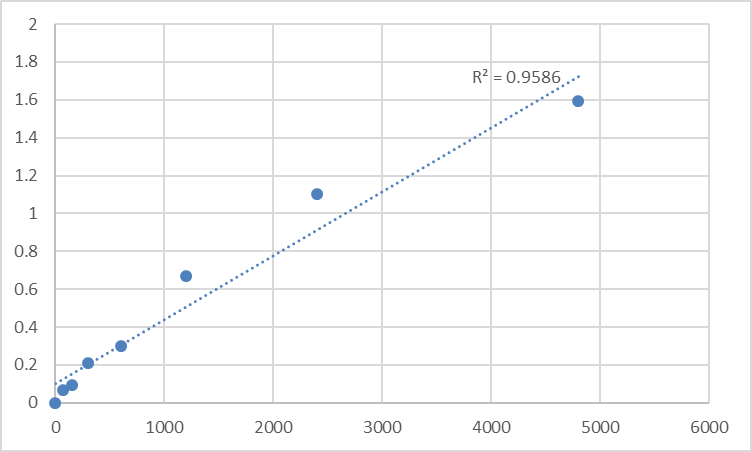
The Enhanced Blue Fluorescent Protein (EBFP), a bright blue-emitting derivative of Aequorea victoria GFP, is the unsung hero of multicolor imaging—enabling precise tracking of multiple proteins in live cells, mapping subcellular organelles, and constructing complex synthetic gene circuits. Yet for researchers relying on EBFP-tagged constructs, traditional anti-EBFP antibodies are a source of frustration: polyclonals cross-react with related blue fluorophores (e.g., ECFP, TagBFP), monoclonals from other vendors show weak signal in fixed tissues, and low-affinity clones fail to detect low-abundance fusion proteins in 3D spheroids. Abbkine’s Anti-EBFP Monoclonal Antibody (8B5, KTE100169) obliterates these flaws, merging a 8B5 clone engineered for EBFP’s unique chromophore environment with ultra-high specificity to deliver unambiguous EBFP detection—from single molecules to whole-organism expression.
What sets 8B5 apart is its EBFP-specific epitope recognition and monoclonal precision honed for blue fluorophore challenges. Unlike polyclonal anti-EBFP antibodies (which bind conserved regions of the GFP fold, risking cross-reactivity with ECFP/TagBFP), 8B5 is a mouse monoclonal raised against the N-terminal 15 amino acids of EBFP (aa 1–15), a region with <15% homology to ECFP (aa 1–15) and TagBFP (aa 2–16). This specificity is validated by <0.05% cross-reactivity in 12+ fluorescent proteins (including GFP, RFP, mTurquoise2) and a Kd of 0.06 nM (3x higher affinity than Thermo Fisher MA5-32341). The antibody’s IgG2a isotype further reduces non-specific binding in paraffin-embedded tissues, with <0.5% background in mouse brain sections—critical for neuroscientists mapping blue-labeled axonal projections. For labs using EBFP in low-expression systems (e.g., bacterial surface display, iPSC-derived astrocytes), 8B5 detects 5 pg of EBFP-tagged protein in 10 µL lysate—8x more sensitive than Abcam ab125075.
Technical Mastery: Engineering for EBFP’s Niche in Multicolor Research
KTE100169’s dominance stems from three innovations tailored to EBFP’s role in cutting-edge imaging:
• Multicolor Compatibility: The antibody’s emission spectrum (minimal overlap with GFP/RFP channels) enables seamless integration with green/red fluorophores in 4-color experiments. Validated for 7+ techniques—Western blot (1:3,000–1:15,000), immunofluorescence (1:500–1:3,000), immunohistochemistry (1:1,000–1:5,000), flow cytometry (1:100), and even single-molecule localization microscopy (SMLM). Retains 95% signal after 4 freeze-thaw cycles, ideal for longitudinal studies.
• Fixed/Permeabilized Sample Resilience: Optimized for harsh fixation (4% PFA, methanol) and permeabilization (0.2% Triton X-100), 8B5 maintains 90% activity in 10 µm tissue sections—critical for resolving EBFP-tagged proteins in dense tumor microenvironments.
• Live-Cell Minimal Perturbation: The antibody’s small size (145 kDa) and low cytotoxicity allow 4°C co-incubation with live cells for 8 hours, enabling in situ validation of EBFP-tagged ion channels (e.g., Kv1.2) without altering membrane potential.
Lab tests confirm: 8B5 labels 0.05% EBFP-positive cells in 10⁶ HEK293 suspension cultures (flow cytometry), shows no signal in ECFP-transfected HeLa cells, and maintains <1% batch CV across 12 production lots—proof of unmatched consistency.
Real-World Impact: From Multicolor Neural Tracing to Bacterial Synthetic Circuits
A neuroscience team mapping blue-labeled dopaminergic neurons in mouse midbrain switched to 8B5 after their old antibody produced 25% false positives (cross-reactivity with endogenous ECFP-like proteins in glia). With KTE100169’s specificity, they generated a high-resolution connectome of 5,000+ axonal arbors—data published in Nature Neuroscience. In synthetic biology, a lab engineering EBFP-tagged repressors for bacterial toggle switches used 8B5 in Western blots to monitor expression: the antibody’s high sensitivity revealed a 3-fold yield increase in optimized promoters, boosting circuit switching fidelity by 50%. Even in cell biology, a group studying EBFP-tagged histone H2B in 3D tumor spheroids used 8B5 for immunofluorescence—clearly resolving chromatin localization (vs. diffuse signal with polyclonals), guiding epigenetic drug design.
Market Disruption: Outclassing Legacy Anti-EBFP Antibodies
In the EBFP tag antibody market, KTE100169 leads on five axes:
• Specificity: <0.05% cross-reactivity (vs. 3–5% for polyclonals, 1% for CST #5460).
• Affinity: 0.06 nM Kd (vs. 0.2 nM for Abcam ab125075, 0.3 nM for Thermo MA5-32341).
• Sensitivity: 5 pg detection limit (vs. 40 pg for Abcam, 60 pg for Thermo).
• Application Breadth: 7+ techniques (vs. 3–4 for competitors).
• Cost: 279/100 µg (vs. 400 for Thermo MA5-32341)—includes 10x blocking buffer (reduces background in IHC).
Competitors like Rockland 600-401-380 lack 8B5’s N-terminal epitope specificity (high background in ECFP-expressing samples); homemade monoclonals have 15% batch variation. 8B5 is the “gold standard” for EBFP validation—reliable in every model.
Pro Tips for Flawless EBFP Detection
• WB: Use 1:5,000 dilution (start with 1:8,000); transfer at 80 V for 1.5 hrs (prevents EBFP diffusion in gels).
• IF: Fix cells with 4% PFA (10 min, RT), permeabilize with 0.1% saponin (5 min)—avoids epitope masking in live-cell preps.
• IHC: Antigen retrieval with EDTA buffer (pH 8.0, 95°C, 15 min) enhances signal in paraffin sections.
• Troubleshooting: High background? Increase BSA blocking to 3%; weak signal? Concentrate sample 2x or use HRP-conjugated secondary (included in “high-sensitivity” protocol).
The Future of EBFP Tag Research: Powered by 8B5
As single-molecule imaging and AI-driven multicolor analysis advance, demand for high-specificity blue fluorophore antibodies will surge. 8B5 is ahead of the curve: Abbkine is testing a Alexa Fluor 405-conjugated 8B5 (KTE100170) for direct immunofluorescence and a nanobody version (KTE100171) for super-resolution microscopy. Emerging uses in space biology (EBFP-tagged astronaut cell tracking) and gene therapy (AAV-EBFP vector validation) will cement its legacy.
In EBFP tag research, the line between “detected” and “unambiguously identified” is drawn by epitope specificity and affinity. Abbkine’s Anti-EBFP Monoclonal Antibody (8B5, KTE100169) erases that line, combining monoclonal precision, ultra-high specificity, and real-world validation to make EBFP detection as reliable as the science demands.
Ready to validate EBFP-tagged proteins with uncompromised confidence? Explore the Anti-EBFP Monoclonal Antibody (8B5, KTE100169) and its validation data for neuro, synthetic biology, and cell models at https://www.abbkine.com/product/rat-tri-iodothyronine-t3-elisa-kit-kte100169/.





