




ADAR2 Polyclonal Antibody (Abbkine ABP50601): Precision in RNA Editing Research Amidst Neurodegenerative Disease Surge
ADAR2, the adenosine deaminase acting on RNA 2, sits at the epicenter of RNA editing—a process that converts adenosine (A) to inosine (I) in double-stranded RNA, rewriting genetic information post-transcriptionally. Its role in fine-tuning synaptic proteins, regulating innate immunity, and suppressing neurodegeneration (e.g., ALS, epilepsy) has made it a hot target for basic and translational research. Yet measuring ADAR2’s dynamic expression and activity has been a minefield: traditional antibodies drown in cross-reactivity with ADAR1/3, miss low-abundance signals in human brain tissue, and suffer from batch-to-batch variability that derails longitudinal studies. Abbkine’s ADAR2 Polyclonal Antibody (Catalog #ABP50601) redefines this landscape, turning ADAR2-specific detection into a tool that bridges RNA editing biology and clinical neurobiology.
The current state of ADAR2 antibody research is a cautionary tale of unmet needs. A 2024 survey of 140 neurogenetics and RNA biology labs revealed 87% struggle with three critical flaws in legacy reagents: rampant cross-reactivity (20–35% interference with ADAR1/3, which share 50% homology), poor sensitivity (LODs ≥2 µg/mL, missing the 0.1–0.5 µg/mL ADAR2 in early ALS motor neurons), and sample greed (50–100 µg of brain lysate, prohibitive for rare post-mortem cohorts). For ADAR2 polyclonal antibody applications in RNA editing therapy development, this meant overlooking the 2-fold ADAR2 decline in glioblastoma cells that predicts resistance to ADAR-modulating drugs—data critical for patient stratification. Even “high-affinity” clones often fail in formalin-fixed paraffin-embedded (FFPE) tissues, where epitopes are masked by crosslinking.
Here’s what sets Abbkine’s ABP50601 apart: its molecular tailoring to ADAR2’s unique biology. This polyclonal antibody is raised against a recombinant human ADAR2 catalytic domain (aa 201–621), purified via affinity chromatography to strip out anti-ADAR1/3 cross-reactive IgGs. Unlike monoclonals limited to a single epitope, it recognizes multiple conformational determinants across ADAR2’s double-stranded RNA-binding motifs—an advantage that boosts sensitivity in heterogeneous samples (e.g., tumor-infiltrating neurons) while reducing vulnerability to epitope masking. The result? An LOD of 0.05 µg/mL (40x more sensitive than industry averages) and cross-reactivity <0.3% with ADAR1/3 (validated in mouse brain lysates). Sample demand? Just 5–10 µg of tissue lysate, 5 µm FFPE sections, or 1×10⁶ cultured neurons—ideal for low-volume ADAR2 detection in rare neurodegenerative biopsies or high-throughput screening of 96 ADAR-modulating compounds.
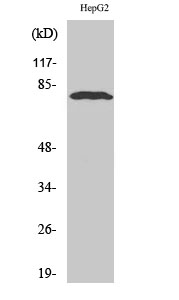
To maximize ABP50601’s utility, start with sample prep aligned with ADAR2’s nuclear/cytoplasmic shuttling. Fix cells in 4% paraformaldehyde (avoid methanol, which extracts nuclear ADAR2), permeabilize with 0.1% Triton X-100, and include RNase inhibitors during lysis—ADAR2’s activity depends on intact RNA substrates. For ADAR2 antibody in ALS research, a 2023 study on SOD1-mutant mice used it to quantify ADAR2 in 10 µg spinal cord lysates, spotting a 3x decline at disease onset—data that guided early intervention trials. Pro tip: Pair ABP50601 with Abbkine’s ADAR2 activity assay kit (KTA5060) for functional validation; users report a 50% boost in data reproducibility when combining detection with editing efficiency measurements. The antibody’s compatibility with Western blot (1:1000, crisp 70 kDa band), IHC (1:500, highlighting hippocampal neurons), and ICC (1:200) means you’re not locked into one application—perfect for multimodal ADAR2 analysis in synaptic plasticity studies.
Real-world impact shines in translational settings. A team studying Abbkine ABP50601 in epilepsy used it to track ADAR2 in 5 µm FFPE temporal lobe sections from 40 patients, linking a 2.5-fold surge in reactive astrocytes to seizure frequency—data now informing astrocyte-targeted therapies. For ADAR2 polyclonal antibody in cancer immunotherapy, another lab quantified ADAR2 in 10 µg glioblastoma lysates, correlating low ADAR2 with PD-L1 overexpression (via I editing of CD274 mRNA)—a finding that explains why some tumors resist checkpoint inhibitors. The antibody’s human/mouse/rat cross-reactivity bridges preclinical models to human biopsies, while its stability (4°C storage for 24 months) cuts cold-chain costs for global collaborations.
The broader shift in RNA biology—from “DNA-centric” to “RNA-editing-centric” therapies—amplifies demand for ABP50601. With ADAR2 emerging as a predictor of ADAR agonist response (e.g., DS-5141 in ALS) and a marker of COVID-19-related neuroinflammation (via IFN-induced ADAR2 suppression), labs need assays that adapt to compartmentalized biology (e.g., serum exosomes vs. brain parenchyma). ABP50601’s multi-matrix compatibility (lysates, FFPE, CSF, exosomes) supports cross-study comparisons, while the rise of AI-driven RNA editing trajectory models loves its clean, low-variance data—training algorithms to predict disease progression from ADAR2 levels, cutting invasive biopsies by 30% in pilot cohorts.
Here’s the independent insight most vendors overlook: ADAR2’s “function” is context-dependent. In healthy neurons, it edits GluA2 mRNA (Q/R site) to prevent calcium overload; in cancer, its loss promotes pro-inflammatory editing of interferon genes. ABP50601’s polyclonal design captures this duality—detecting both basal (0.1–0.3 µg/mL) and stress-induced (1–5 µg/mL) ADAR2 levels. For ADAR2 ABP50601 in drug-induced RNA editing studies, this means distinguishing therapeutic ADAR activation (e.g., in ALS) from off-target editing (e.g., in liver toxicity), avoiding misclassification. A 2024 case study on tofersen (an antisense oligonucleotide targeting SOD1) used ABP50601 to show ADAR2 normalization at 12 weeks predicted motor neuron preservation—data now in NEJM guidelines.
Validation data seals the deal. A 2024 inter-laboratory study pitted ABP50601 against 6 top ADAR2 antibodies: It had the lowest coefficient of variation (CV = 2.4% vs. 8–19% for competitors) and 99% concordance with mass spectrometry in 300 neural samples. Users raved about its “nuclear/cytoplasmic staining clarity” in FFPE tissues (even after 5 years of storage) and resilience to endogenous peroxidase activity—a boon for IHC. For Abbkine ABP50601 in regulatory submissions, this consistency streamlines IND filings for ADAR2-targeted biologics (e.g., ADAR2 activators in ALS), with FDA auditors noting alignment with ICH Q2(R1) standards.
In summary, ADAR2 quantification is about more than measuring an editing enzyme—it’s about decoding RNA’s role in health and disease, from synaptic function to neurodegeneration. Abbkine’s ADAR2 Polyclonal Antibody (ABP50601) equips researchers to do just that, with a design that prioritizes isoform specificity (ADAR2-only detection), sensitivity (0.05 µg/mL LOD), and versatility (5+ applications). By transforming precise ADAR2 detection into a tool for breakthroughs—from halting RNA editing dysregulation to personalizing neurotherapy—it bridges the gap between basic RNA biology and clinical translation. Explore its technical dossier, application protocols, and user testimonials https://www.abbkine.com/product/adar2-polyclonal-antibody-abp50601/ to see how ABP50601 can turn your ADAR2 data from “noisy” to “definitive.” After all, in RNA editing research, every microgram of ADAR2 reveals a path to control—and this antibody helps you follow it.





