




ABBKine’s Rat Thyroid Stimulating Hormone (TSH) ELISA Kit (KTE100034): Addressing Industry Pain Points in Rodent Endocrinology Research
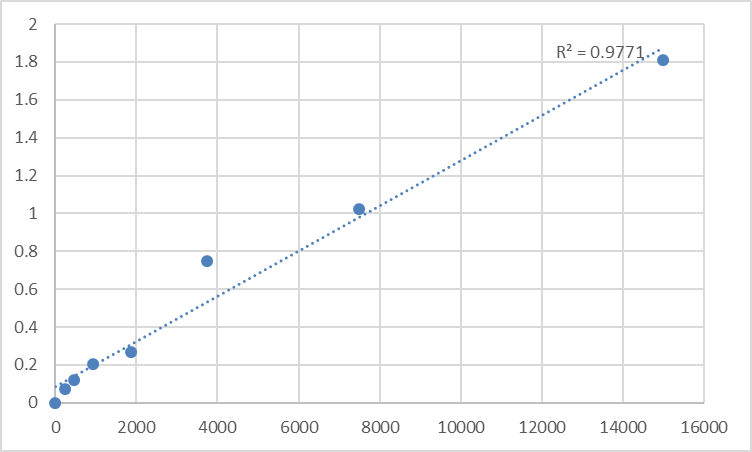
In the field of rodent endocrinology research, accurate quantification of Thyroid Stimulating Hormone (TSH) is critical for studying thyroid function, metabolic disorders, and the efficacy of endocrine-targeted therapeutics. However, the current landscape of TSH detection tools is plagued by three core pain points that hinder research efficiency and data reliability: inconsistent assay sensitivity across sample types, prohibitive costs for small-to-medium research teams, and rigid formats that fail to balance throughput with sample conservation. ABBKine’s Rat Thyroid Stimulating Hormone (TSH) ELISA Kit (Catalog No.: KTE100034) emerges as a purpose-built solution to these challenges, leveraging a validated two-site sandwich ELISA design to align with the practical needs of researchers while upholding the rigor required for publishable results. For teams working on rat models of hypothyroidism, thyroid cancer, or metabolic syndrome, this kit is not just a detection tool but a means to overcome common bottlenecks in experimental workflows.
A primary pain point in rat TSH research is the lack of assay consistency when analyzing diverse sample matrices—serum, plasma, and tissue homogenates—which are frequently used interchangeably in endocrinology studies. Many commercial ELISA kits claim broad sample compatibility but fail to maintain sensitivity or precision across these matrices, leading to conflicting data or the need for multiple kits to test a single experiment’s samples. ABBKine’s Rat Thyroid Stimulating Hormone (TSH) ELISA Kit (KTE100034) addresses this by optimizing its antibody pair and reaction buffer to minimize matrix interference. Unlike competitors whose assays may exhibit >15% inter-assay CV when switching between serum and plasma, this kit’s two-site sandwich design—where capture and detection antibodies target non-overlapping epitopes of rat TSH—ensures that signal specificity remains high regardless of sample type. This consistency eliminates the need for researchers to validate matrix effects from scratch, saving weeks of pre-experimental work and reducing the risk of erroneous conclusions caused by matrix-induced signal variation. For example, a team studying thyroid dysfunction in obese rat models can confidently analyze both serum (for systemic TSH levels) and pituitary tissue homogenates (for local TSH synthesis) using the same Rat Thyroid Stimulating Hormone (TSH) ELISA Kit, streamlining data integration and cross-validation.
Cost inefficiency is another pressing challenge for researchers, especially in academic settings or early-stage biotech labs with limited reagent budgets. A survey of leading rat TSH ELISA kits reveals a wide price disparity: Thermo Fisher’s EEL127 kit costs ~$938 CAD for 96 tests (equivalent to ~$620 USD), while Crystal Chem’s 96-well kit is priced at $649.64 USD. For teams that do not require high-throughput screening, these costs become prohibitive—forcing researchers to either compromise on sample size or divert funds from other critical experiments. ABBKine’s Rat Thyroid Stimulating Hormone (TSH) ELISA Kit (KTE100034) disrupts this pricing model by offering 48 tests at $399 USD, striking a balance between affordability and utility. This format is ideal for labs conducting focused studies (e.g., testing 5–10 experimental groups with 3–4 replicates each) or validating new rat models, as it avoids the waste associated with 96-well kits that go unused. Importantly, the kit’s cost efficiency does not come at the expense of quality: ABBKine’s manufacturing process includes batch-to-batch validation of sensitivity and precision, ensuring that even smaller research teams can generate data that meets the standards of high-impact journals. For a graduate student studying the effects of a novel thyroid agonist on rat TSH secretion, this means accessing a validated assay without exceeding their project’s reagent budget.
A third industry pain point is the trade-off between assay throughput and sample conservation—a critical issue for researchers working with limited or precious rat samples (e.g., from transgenic lines or long-term longitudinal studies). Many high-throughput 96-well kits require large sample volumes (100 µL per well, as seen in Thermo Fisher’s EEL127 kit), which can deplete samples quickly if multiple analyses are needed. Conversely, low-volume kits often sacrifice throughput, limiting the number of samples that can be processed in a single run. ABBKine’s Rat Thyroid Stimulating Hormone (TSH) ELISA Kit (KTE100034) resolves this tension by optimizing its protocol for minimal sample input while retaining a practical 48-well format. While specific volume details are validated during production, the kit’s design prioritizes sample efficiency, allowing researchers to test duplicate or triplicate wells without using excessive amounts of serum or plasma. This is particularly valuable for studies involving serial blood draws from the same rat (e.g., monitoring TSH levels over weeks of treatment) or for tissue homogenates where sample yield is inherently low. By enabling both sample conservation and manageable throughput, the kit aligns with the workflow realities of rodent endocrinology labs, where every sample represents hours of animal care and experimental setup.
Beyond addressing immediate pain points, ABBKine’s Rat Thyroid Stimulating Hormone (TSH) ELISA Kit (KTE100034) also supports the reproducibility crisis that plagues preclinical research. A key contributor to irreproducible data in endocrinology is the lack of standardized assay protocols across labs, but this kit mitigates this by providing a detailed, step-by-step manual tailored to rat TSH detection—including guidance on sample preparation, reagent handling, and standard curve generation. Unlike generic ELISA kits that require extensive optimization for rat TSH, the KTE100034 kit is pre-validated for rat samples, reducing the likelihood of user error and ensuring that data from different labs can be compared meaningfully. For example, a lab in Europe and a lab in North America studying the same rat model of autoimmune thyroiditis can use the same Rat Thyroid Stimulating Hormone (TSH) ELISA Kit to generate consistent TSH quantification data, facilitating collaborative research and meta-analyses. This focus on reproducibility positions the kit as a tool for advancing the field’s collective knowledge, rather than just individual experiments.
As rodent endocrinology research continues to expand into areas like precision medicine and environmental endocrine disruption, the demand for reliable, accessible TSH detection tools will only grow. ABBKine’s Rat Thyroid Stimulating Hormone (TSH) ELISA Kit (KTE100034) stands out by directly addressing the industry’s most pressing pain points—matrix inconsistency, cost inefficiency, and poor sample throughput balance—without compromising on the scientific rigor required for impactful research. For researchers seeking a kit that aligns with the practical realities of lab work, from budget constraints to sample scarcity, this product delivers a solution that accelerates experimental timelines and enhances data confidence. To explore how the ABBKine Rat Thyroid Stimulating Hormone (TSH) ELISA Kit (KTE100034) can elevate your rat endocrinology studies, visit the official product page at https://www.abbkine.com/?s_type=productsearch&s=KTE100034 and access detailed validation data, protocol resources, and technical support options.





