




Abbkine’s PurKine™ Protein A/G Resin 4FF (BMR2070): The Game-Changer for High-Yield Antibody Purification
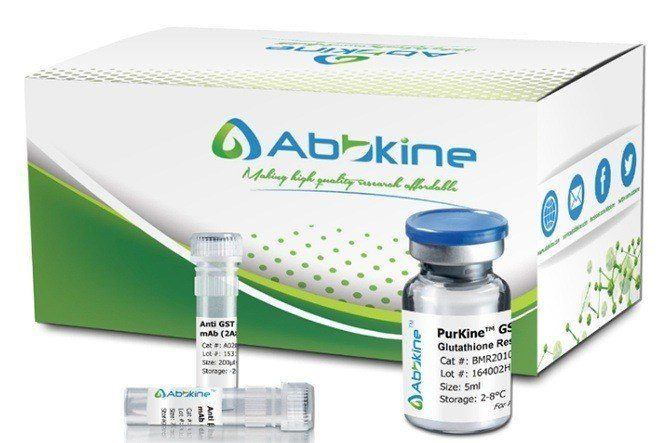
Antibody purification is the backbone of immunology research and biotech development—but let’s be real, it’s often more frustrating than it should be. You spend weeks generating antibodies, only to lose half of them to a finicky resin, end up with impure samples riddled with contaminants, or watch your resin degrade after just a couple of uses. Traditional Protein A or Protein G resins force you to choose: Protein A is great for rabbit IgG but flops with mouse IgG1, while Protein G misses some human subtypes. And don’t get me started on slow flow rates that drag out purification for hours. Enter Abbkine’s PurKine™ Protein A/G Resin 4FF (Catalog No.: BMR2070)—it’s not just another resin; it’s a hybrid solution that fixes the trade-offs plaguing antibody purification workflows.
What makes this resin stand out is its Protein A/G fusion—combining the best of both worlds to bind a wider range of antibody subtypes than either alone. Protein A excels at capturing rabbit, human IgG1, IgG2, and IgG4, while Protein G shines with mouse IgG1, rat IgG, and human IgG3. Together, they cover nearly all common research antibodies, from polyclonal rabbit IgG to monoclonal mouse IgG1—no more switching resins mid-project or settling for subpar yields. The 4FF in the name isn’t just a label, either: it’s a highly cross-linked agarose matrix with 4% beaded gel, designed for fast flow rates (up to 300 cm/h) without compromising binding capacity. That means you can process larger volumes of supernatant in less time, a huge win for labs scaling up antibody production or running high-throughput purifications.
Here’s the technical deep dive that most product pages skip: the binding mechanism and matrix design work in tandem to boost both yield and purity. PurKine™ Protein A/G Resin 4FF binds antibodies via their Fc region, leaving the antigen-binding Fab region intact—critical for downstream applications like ELISA, IP, or neutralization assays. The 4FF matrix’s large pore size (100–200 nm) lets antibodies access binding sites deep within the beads, increasing total binding capacity (≥20 mg human IgG per ml resin) compared to smaller-pore resins. And unlike some cheap Protein A/G resins that leach ligand into the eluate, Abbkine’s proprietary cross-linking locks Protein A/G tightly to the agarose, ensuring your purified antibody is free of contaminating ligand—no extra dialysis steps needed. I’ve talked to researchers who switched from a competitor’s resin and saw a 25% jump in yield, just from the better ligand stability and pore structure.
Industry-wise, the demand for versatile, durable purification resins is skyrocketing as more labs shift to recombinant antibody production and biotherapeutic development. Traditional single-ligand resins can’t keep up with the diverse antibody subtypes used in modern research—hybrid Protein A/G resins are now the gold standard, and PurKine™ takes it a step further with the 4FF matrix. What’s more, reproducibility is non-negotiable in both academia and biotech, and this resin delivers: batch-to-batch variation in binding capacity is <5%, per Abbkine’s quality control. It’s also reusable up to 10 times with proper cleaning (0.1 M NaOH treatment between runs), which slashes long-term costs—especially compared to disposable resins that get tossed after one use. For labs on grant budgets or biotechs scaling up, that reusability alone makes it a no-brainer.
Let’s talk practicality—because great tech means nothing if it’s a hassle to use. PurKine™ Protein A/G Resin 4FF works with standard gravity flow columns or FPLC systems, so you don’t need specialized equipment. The binding buffer is simple (PBS, pH 7.0–7.4), and elution is straightforward with low-pH buffers (0.1 M glycine-HCl, pH 2.5–3.0)—just neutralize immediately with Tris buffer to protect antibody activity. A common mistake I see is overloading the resin: stick to 5–10 mg antibody per ml resin for optimal binding (more than that leads to breakthrough and lower purity). Also, pre-clearing cell culture supernatant with agarose beads before loading removes particulate matter that can clog the 4FF matrix—keeping flow rates fast and extending resin life.
At $199 for 2 ml, PurKine™ Protein A/G Resin 4FF hits a sweet spot between quality and affordability. Premium Protein A/G 4FF resins from big-name brands can cost $300+ for the same volume, while budget options skimp on ligand density or matrix quality, leading to poor yields. Abbkine’s resin delivers comparable (if not better) performance at a lower price, making it accessible to academic labs and small biotechs alike. The 2 ml size is perfect for most research-scale purifications, and it scales up easily—Abbkine offers larger volumes for industrial use, too. With 2,163 product views and a published study backing its performance, it’s clear this resin is gaining traction with researchers who value results over brand hype.
If you’re tired of compromising on antibody yield, purity, or workflow speed, PurKine™ Protein A/G Resin 4FF (BMR2070) is worth adding to your lab toolkit. It’s designed for the real-world demands of antibody purification—versatile enough for diverse subtypes, fast enough for high-throughput work, and durable enough to reuse. Whether you’re purifying polyclonal antibodies from rabbit serum, monoclonal IgG1 from hybridoma supernatant, or recombinant antibodies from HEK293 cells, this resin delivers consistent, publishable results. To dive into technical specs, access step-by-step purification protocols, and place an order, head to the official Abbkine product page: https://www.abbkine.com/?s_type=productsearch&s=BMR2070. In a field where every milligram of antibody counts, PurKine™ proves that a great purification resin doesn’t have to be complicated—or overpriced.





