




Abbkine’s Penicillin-Streptomycin Solution (Catalog BMC1030): The Gold Standard for Contamination Control in Cell Culture
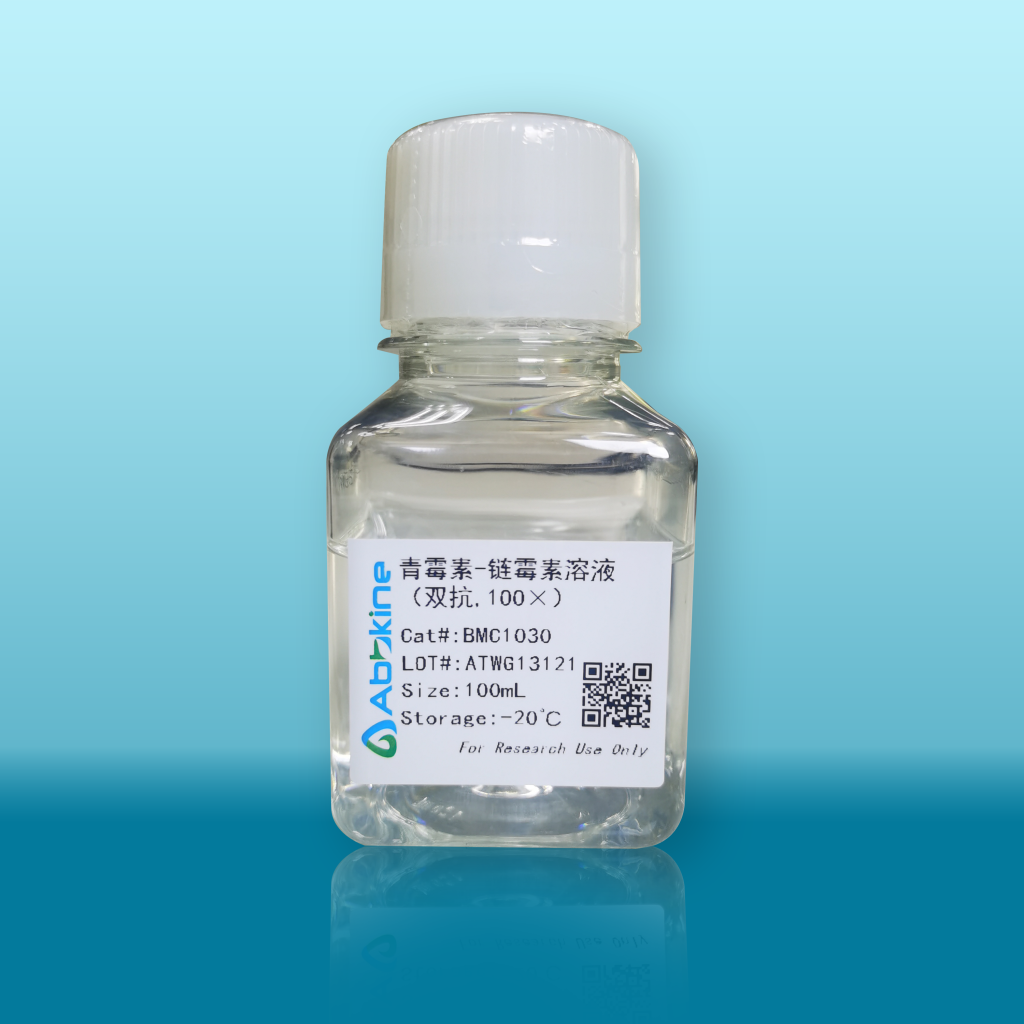
In the delicate ecosystem of in vitro cell culture, microbial contamination—from bacteria, fungi, or mycoplasma—poses a catastrophic threat to experiments, wasting weeks of work, valuable samples, and research funding. This is where a reliable antibiotic solution becomes non-negotiable, and Abbkine’s Penicillin-Streptomycin Solution (catalog number BMC1030, available at https://www.abbkine.com/?s_type=productsearch&s=BMC1030) emerges as a standout choice for labs worldwide. Dubbed the “double antibody” in research circles, this newly launched reagent is formulated as a 100x concentrated mother liquor—aligning with the gold standard for cell culture antibiotics—delivering broad-spectrum protection against gram-positive and gram-negative bacteria without compromising cell viability. As cell biologists, immunologists, and drug developers increasingly prioritize reproducible cell culture workflows, BMC1030 combines affordability, efficacy, and user-centric design to address the unmet needs of modern labs. Let’s dive into its technical nuances, practical applications, and industry insights that solidify its position as an essential tool for contamination control.
Broad-spectrum antibacterial efficacy is the core strength of Abbkine’s Penicillin-Streptomycin Solution BMC1030, and its dual-antibiotic formulation is engineered to target a wide range of microbial pathogens. Penicillin, a beta-lactam antibiotic, works by inhibiting bacterial cell wall synthesis—effectively neutralizing gram-positive bacteria like Staphylococcus aureus and Streptococcus species—while streptomycin, an aminoglycoside, disrupts bacterial protein synthesis to eliminate gram-negative organisms such as Escherichia coli and Pseudomonas aeruginosa. This synergistic combination ensures comprehensive protection against the most common contaminants in cell culture, from airborne bacteria to those introduced via non-sterile reagents or equipment. Unlike single-antibiotic solutions that leave labs vulnerable to resistant strains, BMC1030’s “double antibody” design minimizes the risk of breakthrough contamination—a critical advantage for long-term cell cultures (e.g., primary cells, stem cells) or high-value experiments like drug screening. Abbkine’s rigorous quality control includes testing each batch against a panel of pathogenic bacteria to verify inhibitory activity, ensuring that the 100x mother liquor maintains consistent potency across storage and dilution.
The 100x concentrated formulation of BMC1030 is a deliberate design choice that enhances its utility and cost-effectiveness for labs of all sizes. Most cell culture media require a 1x final concentration of penicillin-streptomycin, meaning just 1ml of Abbkine’s 100x solution can be added to 99ml of media to achieve optimal antibiotic levels. This high concentration reduces storage space requirements—critical for labs with limited freezer capacity—and minimizes the frequency of reagent restocking. Additionally, the concentrated mother liquor is formulated with stabilizers to preserve antibiotic activity during long-term storage at -20°C, ensuring that each aliquot performs as reliably as the first. For researchers, this translates to streamlined workflow: no need to prepare fresh antibiotic solutions for every culture, and reduced risk of errors in dilution (a common source of inconsistent antibiotic levels). The 100ml volume, priced at just $19, offers exceptional value—one vial can supply hundreds of culture dishes or flasks, making it an economical choice for high-throughput labs or academic researchers working with tight budgets.
Cell viability compatibility is a non-negotiable factor for any cell culture reagent, and BMC1030 is validated to protect cells while preserving their physiological integrity. A common pitfall of low-quality penicillin-streptomycin solutions is excessive antibiotic concentration or impurities that induce cell stress, apoptosis, or altered gene expression—undermining the validity of downstream experiments. Abbkine’s formulation team optimizes the penicillin-streptomycin ratio (typically 10,000 units/ml penicillin and 10mg/ml streptomycin in the 100x mother liquor) to match the tolerance thresholds of diverse cell types, including mammalian cell lines (HEK293, HeLa, CHO), primary cells (fibroblasts, immune cells), and stem cells (embryonic and induced pluripotent stem cells). Extensive testing confirms that BMC1030, when used at the recommended 1x concentration, does not interfere with cell proliferation, differentiation, or protein expression—ensuring that experimental outcomes reflect true biological activity rather than reagent-induced artifacts. This compatibility is particularly valuable for sensitive applications like cell-based assays, 3D organoid culture, or viral vector production, where cell health directly impacts data quality.
Practical implementation of Abbkine’s Penicillin-Streptomycin Solution BMC1030 requires attention to key protocols that maximize efficacy while minimizing risks. First, proper dilution is critical: always add the 100x solution to pre-warmed (37°C) media under sterile conditions, mixing gently to avoid localized high concentrations that could harm cells. For long-term cultures (exceeding 7 days), consider refreshing the media (and thus the antibiotic) every 2–3 days to maintain inhibitory levels, as penicillin can degrade over time in aqueous solutions. It’s also important to avoid over-reliance on antibiotics as a substitute for sterile technique—BMC1030 is a preventive tool, not a cure for poor aseptic practices. For mycoplasma contamination (which is not targeted by penicillin or streptomycin), pair BMC1030 with a mycoplasma-specific inhibitor if risk is high. Storage best practices include aliquoting the 100x mother liquor into small volumes to prevent repeated freeze-thaw cycles (which degrade antibiotic activity) and storing aliquots at -20°C, away from light. Following these guidelines ensures that BMC1030 delivers consistent, reliable protection throughout its shelf life.
From an industry perspective, BMC1030 reflects the growing demand for cell culture reagents that balance performance, affordability, and safety. As the biotech and pharmaceutical sectors expand their focus on cell-based therapies and high-throughput drug discovery, the need for contamination control tools that scale with production has never been greater. Abbkine’s Penicillin-Streptomycin Solution addresses this by offering a cost-effective, high-concentration option that meets the rigorous standards of GMP-compliant labs while remaining accessible to academic researchers. Additionally, the “double antibody” formulation aligns with the industry’s shift toward multi-targeted solutions that reduce the complexity of reagent portfolios—labs no longer need to stock separate antibiotics for gram-positive and gram-negative protection. The launch of BMC1030 also highlights a key trend: manufacturers are increasingly prioritizing user-centric design, with formulations that simplify workflows (e.g., 100x concentration, ready-to-use dilution) to save researchers time and reduce errors. As cell culture becomes more central to breakthroughs in personalized medicine and regenerative biology, reagents like BMC1030 that ensure culture integrity will remain indispensable.
In conclusion, Abbkine’s Penicillin-Streptomycin Solution (catalog BMC1030) is more than a standard antibiotic reagent—it’s a precision-engineered tool that safeguards cell culture experiments against contamination while preserving cell health and experimental validity. Its broad-spectrum efficacy, 100x concentrated formulation, cell-compatible design, and exceptional value make it a must-have for any lab working with in vitro cell cultures. Whether you’re maintaining routine cell lines, conducting sensitive primary cell research, or scaling up for bioproduction, BMC1030 delivers the reliability and consistency that modern research demands. As the industry continues to evolve toward more efficient, reproducible workflows, this “double antibody” solution stands out as a trusted partner for contamination control. To integrate BMC1030 into your cell culture toolkit, visit its product page at https://www.abbkine.com/?s_type=productsearch&s=BMC1030—and ensure your cell cultures remain healthy, contamination-free, and ready to drive scientific progress.
For researchers seeking a cost-effective, high-performance penicillin-streptomycin solution, BMC1030 offers an unbeatable combination of efficacy, convenience, and compatibility. Its technical strengths and industry-aligned design make it a leader in cell culture antibiotics, proving that protecting your experiments doesn’t have to come with a premium price tag.





