




Abbkine’s Live Cell Tracking Kit (Green Fluorescence) (Catalog KTA1002): Redefining Dynamic Cell Visualization for Modern Research
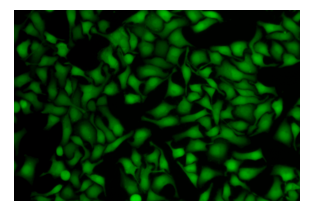
In the era of dynamic biological research, tracking live cells over time has become indispensable to understanding processes like migration, proliferation, differentiation, and response to stimuli—from drug screening to developmental biology. Traditional cell-tracking methods often fall short: fluorescent dyes that bleach quickly, toxic reagents that compromise cell viability, or complex protocols that introduce experimental variability. Enter Abbkine’s Live Cell Tracking Kit (Green Fluorescence) (catalog number KTA1002, available at https://www.abbkine.com/?s_type=productsearch&s=KTA1002), a all-in-one solution engineered to address these pain points. This promoted kit combines a photostable, low-toxicity green fluorescent probe with optimized buffers, delivering consistent, long-term tracking of live cells across hours or days. As the industry shifts toward high-throughput, reproducible live-cell imaging, KTA1002 emerges as a transformative tool—let’s explore its technical advantages, industry relevance, and the value it brings to diverse research workflows.
Central to KTA1002’s performance is its proprietary green fluorescent probe, designed explicitly for minimal cytotoxicity and maximal photostability. Unlike conventional dyes that disrupt cell metabolism or degrade under prolonged light exposure, this probe penetrates live cell membranes passively, binds to intracellular components without interfering with biological function, and retains fluorescence intensity for up to 72 hours of continuous imaging. Abbkine’s rigorous optimization ensures the probe’s excitation (≈490nm) and emission (≈515nm) spectra align with standard FITC filter sets, making it compatible with most fluorescence microscopes, confocal systems, and high-content screening (HCS) platforms—no specialized equipment required. For researchers studying sensitive cell types (e.g., stem cells, primary cultures, or immune cells), this low-toxicity profile is a game-changer: it eliminates the confounding variable of dye-induced cell stress, ensuring that observed dynamics reflect true biological behavior rather than reagent artifacts. This focus on cell viability aligns with a critical industry trend: as journals and funding agencies emphasize translational relevance, tools that preserve physiological cell function are becoming non-negotiable.
The all-in-one design of KTA1002 streamlines live-cell tracking workflows, eliminating the need for researchers to source and optimize individual components. Each kit includes the green fluorescent probe, a cell-friendly loading buffer, and a wash buffer—formulated to work in tandem for uniform staining and minimal background. Unlike DIY solutions that require precise reagent mixing and concentration testing, KTA1002’s pre-calibrated components simplify protocol execution: just dilute the probe in the provided loading buffer, incubate with cells for 15–30 minutes, and wash gently to remove unbound dye. This simplicity reduces human error, accelerates assay setup, and ensures consistency across experiments—critical for high-throughput labs or teams running parallel studies. Moreover, the kit’s compatibility with common cell culture media (DMEM, RPMI, MEM) and diverse cell types (adherent, suspension, 3D spheroids) enhances its versatility. For example, a researcher studying cancer cell migration can use KTA1002 to label cells, seed them in a transwell assay, and track movement over 48 hours with confidence—no need to adjust protocols for media composition or cell line specifics. This user-centric design addresses a core industry pain point: the time wasted on reagent optimization, which diverts resources from scientific discovery.
Long-term tracking capability sets KTA1002 apart from short-acting fluorescent tools, catering to the growing demand for time-lapse imaging of extended biological processes. Many live-cell dyes lose fluorescence within 24 hours or require repeated staining—disrupting experiments and risking cell damage. KTA1002’s photostable probe maintains bright, uniform fluorescence for up to 72 hours, enabling continuous monitoring of cell proliferation (e.g., stem cell expansion), migration (e.g., wound-healing assays), or drug response (e.g., apoptosis induction over time). The probe’s resistance to photobleaching also supports high-resolution imaging: even with repeated exposure to excitation light during time-lapse capture, signal intensity remains consistent, eliminating the need for post-processing adjustments. This reliability is particularly valuable for quantitative analysis—researchers can use image analysis software (e.g., ImageJ, CellProfiler) to measure cell movement speed, division rates, or fluorescence intensity changes with confidence in data accuracy. As live-cell imaging technologies advance (e.g., automated HCS systems, high-speed confocal microscopy), the demand for long-lasting, photostable probes like KTA1002 is accelerating—reflecting the industry’s shift toward dynamic, data-rich experimentation.
From an industry perspective, KTA1002 aligns with two key trends shaping live-cell research: the rise of high-throughput screening (HTS) and the prioritization of reproducible data. Biotech and pharmaceutical companies increasingly rely on HTS to evaluate drug candidates’ effects on cell behavior, requiring tools that scale efficiently and deliver consistent results across thousands of wells. KTA1002’s simple protocol, low toxicity, and compatibility with HCS platforms make it ideal for this use case—reducing assay development time and enabling rapid data generation. Academic labs, meanwhile, benefit from its affordability ($159 for 50 tests) and ease of use, making high-quality live-cell tracking accessible to researchers with limited budgets or technical expertise. The kit’s growing adoption—evidenced by its “Promoted” status and industry recognition—also reflects a broader shift away from niche, expensive tools toward democratized reagents that lower barriers to entry. As live-cell tracking becomes a standard technique in fields from developmental biology to immunology, KTA1002 fills a critical gap: a reliable, cost-effective solution that performs across diverse applications without compromising on quality.
Practical considerations for maximizing KTA1002’s performance further enhance its utility for researchers of all experience levels. For optimal staining, ensure cells are at 60–70% confluency (adherent) or 1–5×10⁵ cells/ml (suspension) to avoid overcrowding, which can cause uneven dye distribution. Incubate cells with the probe-loading buffer mixture at 37°C in a CO₂ incubator—this promotes passive membrane penetration and uniform intracellular binding. Avoid washing cells aggressively, as this can dislodge adherent cells or disrupt 3D spheroid structures; gentle rinses with the provided wash buffer are sufficient to remove unbound dye. For long-term time-lapse imaging, use a temperature- and CO₂-controlled microscope stage to maintain cell viability, and set exposure times to the minimum required for signal detection (typically 100–300 ms) to minimize photobleaching. Additionally, the kit’s probe is compatible with multiplex imaging—pair it with nuclear dyes like DAPI (for cell counting) or red fluorescent probes (for protein localization) to gain multi-dimensional insights into cell behavior. These practical guidelines, combined with KTA1002’s inherent technical strengths, ensure that researchers can achieve publication-quality results with minimal troubleshooting.
In conclusion, Abbkine’s Live Cell Tracking Kit (Green Fluorescence) (catalog KTA1002) is more than a staining tool—it’s a precision-engineered solution that empowers researchers to capture dynamic cell behavior with confidence. Its low-toxicity, photostable probe preserves cell viability for extended tracking, while its all-in-one design streamlines workflows and ensures reproducibility. Compatible with diverse cell types, imaging platforms, and applications, KTA1002 aligns with the industry’s evolving needs for efficient, high-quality live-cell research. Whether you’re conducting drug screening, studying cell migration, or monitoring stem cell differentiation, this kit delivers consistent, reliable results that drive meaningful scientific discovery. To integrate KTA1002 into your live-cell imaging workflow, visit its product page at https://www.abbkine.com/?s_type=productsearch&s=KTA1002—and unlock the full potential of dynamic cell visualization.
For researchers seeking a trustworthy, versatile, and cost-effective live-cell tracking solution, KTA1002 stands out as a leader in its class. Its technical advantages, user-centric design, and alignment with industry trends make it an essential asset for any lab invested in understanding the dynamic nature of biological systems—proving that when it comes to live-cell tracking, stability, simplicity, and compatibility are the keys to success.





