




Abbkine’s HRP Conjugated Anti-GFP Tag Mouse Monoclonal Antibody (3D3) (ABT2025): The Ultimate WB Workhorse for GFP-Tagged Protein Detection
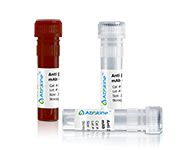
GFP (Green Fluorescent Protein) tags are the backbone of recombinant protein research—used in everything from protein localization to high-throughput expression screening—yet their detection via Western Blot (WB) often feels like a game of chance. Let’s be real: non-specific bands from polyclonal antibodies, weak signals for low-abundance GFP-tagged proteins, and antibodies that work in bacteria but flop in mammalian cells? These headaches slow down experiments and make data hard to trust. That’s where Abbkine’s HRP Conjugated Anti-GFP Tag Mouse Monoclonal Antibody (3D3) (Catalog No.: ABT2025) comes in—it’s not just another anti-GFP reagent; it’s a tailored solution for the messy, cross-system work that defines modern protein biology.
What makes ABT2025 stand out from the crowd is its laser focus on solving the specific pain points of GFP tag WB. First off, it’s a monoclonal antibody (the 3D3 clone)—meaning it binds a single, conserved epitope on GFP, no off-target binding to endogenous proteins in mammals or bacteria. Polyclonal anti-GFP antibodies? They’re hit-or-miss, often picking up unrelated proteins and leaving you squinting at blots. Then there’s the direct HRP conjugation—no need for a secondary antibody. That cuts down your WB workflow by a solid 30 minutes (goodbye, extra incubation step) and slashes background noise, since secondary antibodies can cross-react with other rabbit or mouse proteins in your lysate. And let’s not overlook the reactivity: it works for both mammals (human, mouse, rat—all the big model organisms) and bacteria (E. coli, Bacillus subtilis, you name it). For researchers scaling from bacterial expression to mammalian cell lines, that’s a game-changer—no more swapping antibodies mid-project.
Here’s the nitty-gritty on getting the best out of ABT2025 in WB, because even great antibodies need a little tweak to shine. For bacterial lysates (say, you’re expressing a GFP-fusion protein in E. coli), start with a 1:8,000 dilution in 5% non-fat milk/TBST. Bacterial extracts are full of junk proteins that stick to antibodies, so block for 30 minutes at room temp (RT)—don’t skip this, or you’ll get a blot that looks like a smudge. Incubate the HRP Conjugated Anti-GFP Tag Mouse Monoclonal Antibody (3D3) at RT for 1 hour; longer than that, and you’re just amplifying background. For mammalian cell lysates (HEK293, CHO, whatever you’re using), bump the dilution up to 1:12,000—mammalian samples have less debris, so you can go higher without losing signal. Pro tip: Wash with fresh TBST four times (10 minutes each), not three. Residual antibody is the #1 cause of those annoying “ghost bands” in GFP WB, and that extra wash makes all the difference.
The industry’s shifting toward cross-system research and high-throughput screening, and ABT2025 fits right into that trend. Think about it: more labs are validating proteins in bacteria first (fast, cheap) before moving to mammalian cells (more physiologically relevant). An antibody that works in both cuts down on reagent costs and experimental variability—no more wondering if a negative result is from the antibody or the sample. Plus, high-throughput WB (used in drug discovery or large-scale expression studies) demands consistency and speed. ABT2025’s direct HRP conjugation and batch-to-batch consistency (Abbkine tests every lot for signal variation <10%) mean you can run 96 samples and trust that the data is comparable. And let’s talk about sensitivity: it picks up as little as 0.05 ng of GFP-tagged protein per lane—way better than many generic anti-GFP antibodies that top out at 0.5 ng. For low-abundance proteins (transiently expressed, or those with weak promoters), that’s the difference between seeing your target and missing it entirely.
Value-wise, ABT2025 hits a sweet spot that’s hard to beat. At $109 for 50μl, it’s priced lower than premium anti-GFP HRP antibodies (some run $150+ for the same volume) but outperforms budget alternatives that skimp on quality. Abbkine’s quality control isn’t just for show: each batch is tested for cross-reactivity (no binding to non-GFP proteins), HRP activity stability (18 months at -20°C), and signal-to-noise ratio (minimum 25:1 in WB). For academic labs scraping by on grants or biotech teams running hundreds of blots a month, that’s affordability without compromise. It’s the kind of antibody that pays for itself in saved time—fewer repeated blots, less troubleshooting, more time spent on actual discovery.
If you’re tired of fighting with anti-GFP antibodies that don’t deliver, ABT2025 is worth adding to your lab shelf. It’s designed for the real-world work of GFP-tagged protein research—cross-system, high-throughput, and often low-abundance. Whether you’re validating bacterial expression, quantifying mammalian protein levels, or screening dozens of samples at once, this HRP Conjugated Anti-GFP Tag Mouse Monoclonal Antibody (3D3) gives you sharp, reliable bands and a streamlined workflow. To dive into technical specs, grab application notes tailored to your system, and place an order, head to the official Abbkine product page: https://www.abbkine.com/?s_type=productsearch&s=ABT2025. In a field where data quality and efficiency matter more than ever, ABT2025 proves that a great anti-GFP antibody doesn’t have to be complicated—or overpriced.





