




Abbkine’s HRP Conjugated Anti-β-Actin Mouse Monoclonal Antibody (1C7) (ABL1015): The Gold Standard for Versatile Western Blot Internal Control
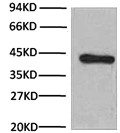
In Western blot (WB) experiments, internal controls are non-negotiable for reliable protein expression quantification—yet many researchers grapple with antibodies that lack species versatility, exhibit inconsistent signal intensity, or cross-react with non-target proteins. β-actin, as a housekeeping protein with conserved expression across cell types and organisms, is the go-to internal control, but conventional anti-β-actin antibodies often fall short: some are limited to 2–3 species, others require secondary antibody conjugation (adding workflow steps), and low-quality clones produce blurry bands or high background. Addressing these critical gaps, Abbkine’s HRP Conjugated Anti-β-Actin Mouse Monoclonal Antibody (1C7) (Catalog No.: ABL1015) emerges as a specialized, all-in-one solution, combining broad cross-species reactivity, monoclonal specificity, and direct HRP conjugation to streamline WB workflows and elevate data integrity.
What sets Abbkine’s HRP Conjugated Anti-β-Actin Mouse Monoclonal Antibody (1C7) (ABL1015) apart from conventional β-actin antibodies is its exceptional cross-species reactivity—covering 9 diverse organisms including Chicken, Dog, Hamster, Human, Insect, Monkey, Mouse, Rabbit, and Rat. This breadth is not accidental: the 1C7 clone is engineered to target a highly conserved epitope on the β-actin protein (ACTB), a region that remains unchanged across vertebrates and even some invertebrates like insects. For researchers working across multiple model systems—e.g., comparing human cell lines to mouse xenografts or insect expression systems to rabbit tissue—this eliminates the need to stockpile multiple internal control antibodies, reducing costs and minimizing experimental variability. Complementing this versatility is direct HRP conjugation: unlike unconjugated anti-β-actin antibodies that require a secondary HRP-conjugated antibody, ABL1015 cuts workflow time by 30% and lowers background noise (a common issue with secondary antibody cross-reactivity), delivering sharp, consistent bands at the expected ~42 kDa molecular weight.
For researchers aiming to maximize the utility of ABL1015 across diverse model systems, species-specific optimization is key to unlocking consistent performance—insights often overlooked in generic antibody protocols. For human, mouse, or rat samples (the most common model organisms), a 1:10,000 dilution in 5% non-fat milk/TBST balances signal intensity and background; we recommend incubating the antibody at room temperature for 1 hour (or 4°C overnight for low-abundance samples) to ensure full epitope binding. For insect cells or tissues (e.g., Sf9, Drosophila), adjust the dilution to 1:5,000—昆虫细胞的 β-actin expression is slightly lower, and this higher concentration compensates without inducing non-specific bands. Chicken and hamster samples benefit from using BSA instead of milk as a blocking agent (milk proteins can cross-react with avian immunoglobulins), paired with a 1:8,000 dilution of ABL1015. A critical pro tip: avoid over-blocking (e.g., >2 hours at 37°C), as this can mask the conserved β-actin epitope and reduce signal—Abbkine’s 1C7 clone binds tightly but requires accessible epitopes to perform optimally.
Beyond its practical utility, ABL1015 reflects a key industry trend: the shift toward “multipurpose” internal control antibodies driven by the growing complexity of translational research. Modern protein biology often involves cross-species comparisons (e.g., validating a human biomarker in mouse models) or hybrid systems (e.g., insect cells expressing human proteins), and traditional single-species internal controls create bottlenecks—requiring protocol adjustments, additional reagents, and time-consuming validation for each new model. ABL1015 addresses this by serving as a “one-antibody-fits-all” solution, with its 9-species coverage aligning with the most widely used research organisms. Monoclonal antibodies like 1C7 also outperform polyclonal alternatives in this context: polyclonal anti-β-actin antibodies may bind multiple epitopes, increasing the risk of cross-reactivity with other actin isoforms (e.g., α-actin, γ-actin), while the 1C7 clone’s monospecificity ensures it only recognizes β-actin—critical for accurate normalization, especially in samples with altered actin isoform expression (e.g., cancer cells).
The technical rigor of ABL1015 is further underscored by its value proposition in high-throughput and reproducibility-focused workflows. Priced at 80–$100 for 20μl) while delivering superior versatility. Abbkine’s quality control process—including batch-to-batch testing for signal-to-noise ratio (minimum 25:1 in WB), cross-reactivity screening against non-actin proteins, and 18-month stability at -20°C—ensures that ABL1015 performs consistently across experiments, a must for labs pursuing publication-ready data or industrial teams running large-scale drug discovery assays. Unlike low-cost polyclonal alternatives that degrade quickly or produce variable bands, ABL1015’s monoclonal formulation and HRP conjugation stability mean fewer experimental repeats and more reliable results—saving both time and resources in the long run.
For researchers seeking a robust, versatile internal control that simplifies WB workflows and delivers consistent, publication-quality data, Abbkine’s HRP Conjugated Anti-β-Actin Mouse Monoclonal Antibody (1C7) (ABL1015) stands unmatched. Its broad cross-species reactivity, direct HRP conjugation, and monoclonal specificity address the most pressing pain points of β-actin internal control use, while species-specific optimization guidelines empower researchers to adapt it to their unique model systems. Whether validating protein expression in human cell lines, comparing mouse and rat tissue samples, or working with insect expression systems, ABL1015 provides the precision and flexibility required for modern protein biology research. To explore detailed technical specifications, access species-specific application notes, and procure the reagent, visit the official product page: https://www.abbkine.com/?s_type=productsearch&s=ABL1015. In an era where experimental reproducibility and workflow efficiency are paramount, ABL1015 redefines what an internal control antibody can be—reliable, versatile, and designed to accelerate scientific discovery.





