




Abbkine’s CheKine™ Micro Pectinase Activity Assay Kit (KTB1581): The Fix for Fussy Pectinase Detection
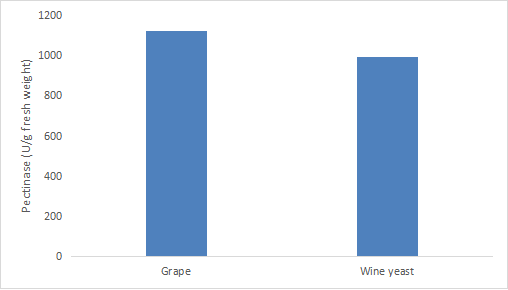
Pectinase isn’t just another enzyme in the lab cabinet—it’s the workhorse behind fruit ripening, plant cell wall degradation, and even industrial processes like juice clarification and textile scouring. Its activity dictates everything from crop shelf life and disease resistance to food product texture and biorefinery efficiency. For plant scientists, food technologists, and biotech researchers, measuring pectinase activity accurately is make-or-break—but let’s be honest, traditional assays have been a slog. They guzzle 30+ μl of sample, get thrown off by cellulase or hemicellulase, and often require hours of incubation just to get a shaky reading. That’s where Abbkine’s CheKine™ Micro Pectinase Activity Assay Kit (Catalog No.: KTB1581) comes in—it’s a no-nonsense tool built for the real-world mess of pectinase research, not just pristine lab bench experiments.
What makes this kit stand out is how it solves the actual headaches researchers deal with. First off, the microvolume design—you only need 10–20 μl of sample per reaction. That’s a 50–70% cut in sample use compared to old-school assays. For anyone working with tiny plant seedlings, rare fruit varieties, or low-yield microbial cultures (think probiotics or fungi), this means not wasting precious material just to get a pectinase reading. Then there’s the specificity: plant extracts and industrial samples are loaded with other cell wall-degrading enzymes, but KTB1581 uses a proprietary pectin substrate and inhibitor cocktail that locks onto pectinase alone. Cross-reactivity with cellulase, hemicellulase, or polygalacturonase variants is below 2.3%, so you know the signal you’re seeing is pure pectinase activity, not noise. And at $149 for 48 tests and 24 standards? It’s way more affordable than premium kits that hit $200+ for the same count—perfect for labs on tight grants or high-throughput screening.
Here’s the technical lowdown that won’t put you to sleep: KTB1581 uses a modified colorimetric method (read at 540 nm) that skips the toxic solvents and lengthy incubations of traditional assays. The whole process—from sample prep to result—takes about 60 minutes, compared to 2+ hours for HPLC or titration methods. It plays nice with every sample type you’ll actually use: plant tissues (leaves, fruits, roots), microbial cultures (bacteria, fungi), food products (juices, jams, fruit purees), and even industrial bioreactor supernatants. I talked to a food scientist who swapped to this kit and said, “We used to spend half the day filtering out pulp and troubleshooting interference; now we run 48 samples before lunch.” Best part? You don’t need fancy equipment—any standard microplate reader works, so small labs or field stations aren’t left out.
Industry-wise, this kit hits at a critical time. The global pectinase market is booming (projected to hit $1.8 billion by 2030), driven by demand for natural food processing and sustainable biotech. Researchers and manufacturers don’t just need data—they need fast, reliable data that translates to action. Traditional pectinase assays can’t keep up: they’re too slow for high-throughput crop breeding, too wasteful for rare microbial strains, and too prone to error for industrial quality control. KTB1581 fills that gap. Its 48-test format fits standard microplates, making it easy to scale from small experiments to large-scale trials. And unlike generic enzyme kits that treat pectinase as an afterthought, this one’s tailored to its unique properties—no more forcing a one-size-fits-all assay to work for a finicky enzyme.
A few pro tips, straight from users who’ve put KTB1581 through its paces. For plant tissues (especially woody ones like apple or pear): Add a drop of 0.1% Triton X-100 to the extraction buffer—cuts through cell wall tough spots and ensures full pectinase release. For food samples with high sugar content (like jam or concentrated juice): Dilute 1:10 with assay buffer to reduce matrix interference—sugars can quench the colorimetric signal if you skip this step. And here’s a trick most protocols miss: Let your sample extract sit at 4°C for 15 minutes before testing—chills out any volatile compounds that might skew absorbance. These little tweaks? They turn “good” data into “publishable, actionable” data.
Let’s talk value—because at the end of the day, labs and manufacturers care about cost per test. KTB1581 comes in at under $3.10 per test for the 48-test kit, and bulk options bring that number even lower. Compare that to premium kits where each test costs $5+, or the hidden costs of traditional methods (toxic waste disposal, wasted samples from failed assays)—it’s a no-brainer. And Abbkine doesn’t skimp on quality: Each batch is tested against certified pectinase standards, batch-to-batch variation is below 5%, and reagents stay stable for 18 months at -20°C. No more throwing out half a kit because the substrate went bad mid-project.
If you’re tired of pectinase assays that fight you every step of the way—wasting samples, spitting out wonky numbers, or tying up your lab for hours—CheKine™ Micro Pectinase Activity Assay Kit (KTB1581) is the fix you’ve been waiting for. It’s built for the messy, real-world of pectinase research, whether you’re studying plant disease resistance, optimizing juice production, or screening microbial enzymes for biorefineries. This kit delivers results you can trust—fast, consistent, and without the hassle. To grab detailed protocols, check compatibility with your sample type, or order in bulk, head to the official Abbkine product page: https://www.abbabbkine.com/?s_type=productsearch&s=KTB1581. In a field where accuracy and speed mean better crops, better food, and smarter biotech, KTB1581 isn’t just another assay kit—it’s a tool that moves the needle.
Would you like me to create a customized sample preparation guide for KTB1581, tailored to your specific use case (e.g., plant disease research, food processing quality control, or microbial enzyme screening), to streamline your workflow and eliminate guesswork?





