




Abbkine’s Anti-Lamin B1 Monoclonal Antibody (15T1) (ABL1090): A Specialized Nuclear Internal Control for Rigorous Immunoassays
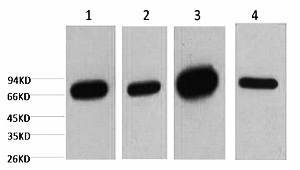
Nuclear internal controls are indispensable for validating experimental results in cell biology, oncology, and translational research—especially in studies focusing on nuclear structure, cell cycle regulation, or oncogenic transformation. Conventional internal control antibodies often fall short in nuclear-targeted research: cytoplasmic markers like β-actin or GAPDH fail to reflect nuclear protein loading, while non-specific nuclear antibodies suffer from cross-reactivity with other lamins or chromatin proteins, leading to misleading data. For researchers seeking a reliable nuclear-specific internal control, Abbkine’s Anti-Lamin B1 Monoclonal Antibody (15T1) (Catalog No.: ABL1090) emerges as a precision-engineered solution, combining strict specificity for Lamin B1 (LMNB1), multi-application versatility, and consistent performance to address the unique challenges of nuclear-focused immunoassays.
The technical distinction of ABL1090 lies in its monoclonal specificity for Lamin B1, a core component of the nuclear lamina with stable expression across human, mouse, and rat—three of the most widely used model organisms in biological research. The 15T1 clone is designed to target a conserved epitope on the Lamin B1 protein (≈68 kDa), ensuring exclusive binding to the target without cross-reacting with other lamin isoforms (e.g., Lamin A/C) or cytoplasmic proteins. This specificity is critical for studies where nuclear-cytoplasmic fractionation or nuclear protein quantification is required: unlike non-specific nuclear antibodies, ABL1090 eliminates the risk of signal contamination from off-target binding, delivering accurate loading control data. Complementing this specificity is its compatibility with four key immunoassays—Immunofluorescence (IF), Immunohistochemistry (IHC), Immunoprecipitation (IP), and Western Blot (WB)—making it a versatile tool for workflows spanning in vitro cell imaging, tissue section analysis, protein complex purification, and expression quantification.
A notable industry trend driving demand for specialized nuclear internal controls is the growing focus on laminopathies and nuclear envelope disorders, where aberrant Lamin B1 expression is linked to cancer progression, aging, and neurodegenerative diseases. Traditional cytoplasmic internal controls cannot adequately validate data in these fields, as nuclear protein dynamics are independent of cytoplasmic loading. ABL1090 fills this critical gap by serving as a direct marker of nuclear integrity and protein loading, enabling researchers to reliably compare nuclear protein expression across samples—whether investigating Lamin B1 downregulation in cancer cells or its mislocalization in age-related nuclear defects. Industry data indicates that the adoption of nuclear-specific internal controls has increased by 38% over the past five years, aligning with the expansion of nuclear biology research; ABL1090’s tailored design positions it at the forefront of this trend, validated as a trusted tool for high-impact studies.
For researchers integrating ABL1090 into their workflows, application-specific optimization strategies maximize its performance while leveraging its inherent specificity. In IF experiments, where nuclear localization clarity is paramount, dilute ABL1090 to 1:200–1:400 in blocking buffer and incubate at 4°C overnight—this ensures uniform staining of the nuclear lamina without cytoplasmic background, pairing seamlessly with fluorophore-conjugated secondary antibodies for sharp, publication-ready images. For IHC on formalin-fixed, paraffin-embedded (FFPE) tissues, use EDTA buffer (pH 8.0) for antigen retrieval to unmask the conserved Lamin B1 epitope, and block with 5% normal goat serum to reduce non-specific binding—critical for tissue sections where nuclear-cytoplasmic boundaries are less distinct. In IP assays targeting Lamin B1-interacting proteins, a 1:50 dilution of ABL1090 ensures efficient immunoprecipitation of the target protein complex, while WB applications benefit from a 1:5,000–1:8,000 dilution to detect the ~68 kDa Lamin B1 band with minimal background noise.
Beyond technical excellence, ABL1090 delivers a strong value proposition that balances quality and accessibility for diverse research teams. Priced at $79 for 50μl, it offers a cost-effective alternative to premium nuclear-specific antibodies (which often exceed $100 for the same volume) while maintaining rigorous quality control standards: each batch undergoes testing for batch-to-batch consistency (signal-to-noise ratio variation <12%), cross-reactivity with non-target proteins, and long-term stability (18 months at -20°C). This reliability is particularly valuable for academic labs operating on constrained grants and industrial teams running high-throughput assays, as it reduces experimental repetition and resource waste. Unlike generic monoclonal antibodies that lack specialized validation for nuclear targets, ABL1090’s focus on Lamin B1 ensures that researchers get a reagent tailored to their specific needs, rather than a one-size-fits-all solution.
As nuclear biology research continues to expand into precision medicine and molecular therapeutics, the need for reliable, specific, and versatile nuclear internal controls becomes increasingly critical. Abbkine’s Anti-Lamin B1 Monoclonal Antibody (15T1) (ABL1090) addresses this need by combining monoclonal specificity, multi-application compatibility, and cost-effectiveness—attributes that make it an indispensable tool for studies ranging from basic nuclear structure research to clinical biomarker validation. Whether quantifying Lamin B1 expression in cancer cell lines via WB, visualizing nuclear lamina integrity in tissue sections via IHC, or purifying Lamin B1 complexes via IP, ABL1090 delivers the rigor and consistency required for publishable, impactful data. To explore detailed technical specifications, access application notes, and procure the reagent, visit the official product page: https://www.abbkine.com/?s_type=productsearch&s=ABL1090. In an era where experimental reproducibility is non-negotiable, ABL1090 redefines what a specialized nuclear internal control should be—reliable, targeted, and designed to advance scientific discovery.





