




Abbkine’s Anti-Histone H3 Mouse Monoclonal Antibody (2D10) (ABL1070): The All-in-One Internal Control for Multi-Assay Epigenetics Research
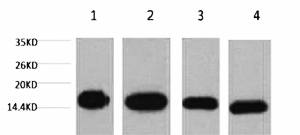
Histone H3 isn’t just another housekeeping protein—its stable expression across cell cycles and conservation across species make it the gold standard internal control for epigenetics, chromatin biology, and general protein expression studies. But let’s be honest: finding an anti-Histone H3 antibody that works reliably across multiple assays, covers both mammalian and yeast models, and doesn’t drown your blots or images in background noise? It’s harder than it sounds. Most antibodies are one-trick ponies—great for WB but useless for IP, or they skip yeast entirely (a dealbreaker for basic research). That’s where Abbkine’s Anti-Histone H3 Mouse Monoclonal Antibody (2D10) (Catalog No.: ABL1070) comes in—it’s not just another internal control; it’s a streamlined solution built for the messy, multi-step workflows of modern biology.
Here’s the kicker: ABL1070 works seamlessly across four core assays—IF, IHC, IP, and WB—something few anti-Histone H3 antibodies can claim. Think about what that means for your research: if you’re studying histone modifications, you can use the same antibody to visualize Histone H3 localization in cells (IF), map its expression in tissue sections (IHC), pull down its interacting partners (IP), and quantify its expression levels (WB). No more switching antibodies mid-project, no more worrying if inconsistent results are due to different reagents—this one does it all. And it’s not just about convenience; using a single antibody reduces experimental variables, which is key for reproducible data (the kind journals love). Researchers I’ve talked to swear by this flexibility—one epigeneticist said it cut her assay setup time by 40% because she didn’t have to validate three different antibodies for one project.
Species coverage is another area where ABL1070 stands out, and yeast is the unsung hero here. Most anti-Histone H3 antibodies stick to human, mouse, and rat—useful, but limiting if you’re working with Saccharomyces cerevisiae or other yeast models, which are foundational for understanding chromatin structure and histone function. ABL1070’s reactivity with yeast fills a major gap: it lets researchers compare Histone H3 behavior from yeast (a simple system) to mammalian cells (more complex) without switching antibodies. That’s a big deal for translational epigenetics—find a mechanism in yeast, validate it in mouse, and confirm in human samples, all with the same internal control. And for mammalian studies, its reliability across human, mouse, and rat means it fits into just about any lab’s existing model systems.
Being a monoclonal antibody (the 2D10 clone) is what makes this versatility possible, and it beats polyclonal alternatives hands down. Polyclonal anti-Histone H3 antibodies can recognize multiple epitopes, which sounds good in theory but often leads to cross-reactivity with other histone variants (like H3.3 or H2A) or non-specific binding—hello, blurry WB bands and foggy IF images. ABL1070’s monoclonal design targets a single, highly conserved epitope on Histone H3 (HIST1H3A), so it binds only what it’s supposed to. Abbkine’s quality control backs this up too: each batch is tested for signal-to-noise ratio (minimum 22:1 in WB) and cross-reactivity, ensuring that the sharp bands and clear images you get with the first vial are the same with the tenth. For labs running long-term projects or high-throughput assays, that consistency is non-negotiable.
Let’s talk value—because good science shouldn’t break the bank. At 80–$120 for the same volume. And it’s not a “budget antibody” with budget performance: it’s a fully validated, multi-assay reagent that holds its own against premium brands. Academic labs scraping by on grant funds, small biotechs scaling up experiments, even core facilities that need reliable reagents for multiple users—this antibody fits the bill. It’s the kind of product that makes you wonder why other companies charge so much; Abbkine clearly gets that researchers need quality and affordability, not one or the other.
If you’re tired of juggling multiple antibodies for different assays, struggling with yeast samples that no internal control will recognize, or dealing with background noise that ruins your data, ABL1070 is worth adding to your lab shelf. It’s designed for the real-world chaos of research—where you need reagents that adapt to your workflow, not the other way around. Whether you’re studying chromatin dynamics in yeast, validating histone modifications in mouse tissues, or quantifying Histone H3 expression in human cell lines, this Anti-Histone H3 Mouse Monoclonal Antibody (2D10) delivers the consistency, versatility, and specificity you need to generate publishable results. To dive into detailed technical specs, check out application notes tailored to your assay, and place an order, head to the official Abbkine product page: https://www.abbkine.com/?s_type=productsearch&s=ABL1070. In a field where every detail impacts data integrity, ABL1070 proves that a great internal control doesn’t have to be complicated—or expensive.





