




Abbkine KTB2350 CheKine™ Micro Betaine Content Detection Kit: Resolving Industry Pain Points in Precise Betaine Quantification
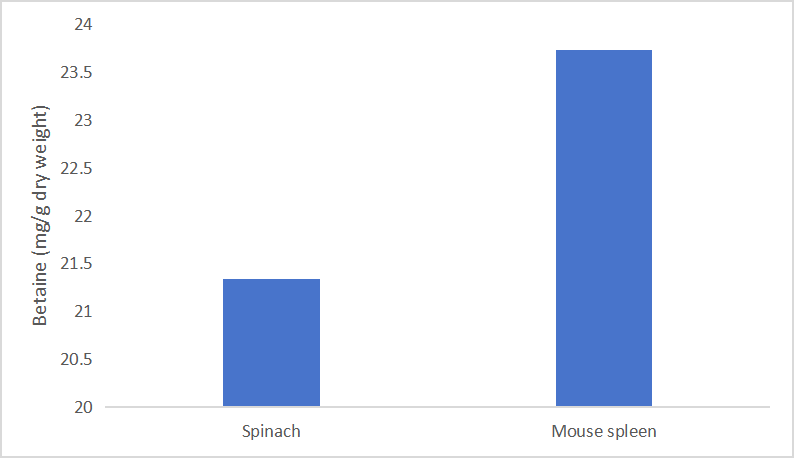
Betaine, a trimethylated amino acid with pivotal roles in osmotic regulation, methyl group metabolism, and lipid homeostasis, has become a focal point in research spanning agriculture, food science, pharmaceuticals, and clinical diagnostics—yet the industry grapples with persistent pain points that undermine the accuracy and efficiency of betaine content analysis. Traditional betaine detection methods, such as HPLC or GC-MS, require expensive specialized equipment, complex sample derivatization steps, and extensive technical expertise, making them inaccessible to small-to-mid-sized labs or facilities with limited budgets. Generic assay kits, on the other hand, often suffer from poor selectivity, cross-reacting with structurally similar compounds like choline or carnitine, and fail to deliver consistent results across diverse sample matrices. Compounding these challenges is the lack of user-friendly, scalable solutions that balance sensitivity with practicality, forcing researchers to compromise either on data quality or workflow efficiency. It is within this landscape that Abbkine’s CheKine™ Micro Betaine Content Detection Kit (Catalog No.: KTB2350) emerges as a targeted solution, engineered to address the core pain points plaguing betaine quantification workflows.
A defining advantage of the KTB2350 CheKine™ Micro Betaine Content Detection Kit is its exceptional specificity, directly addressing the industry’s long-standing struggle with cross-reactivity. The kit leverages a proprietary enzymatic reaction system that selectively recognizes betaine, catalyzing a cascade that generates a stable colorimetric product—eliminating interference from common confounding molecules in complex samples. This specificity is particularly critical for analyzing matrices like food products (grains, meat, dairy), plant tissues, cell lysates, and clinical specimens (serum, plasma), where betaine coexists with a cocktail of structurally similar metabolites. Researchers can now trust that measured values reflect true betaine content, eliminating the need for time-consuming sample purification steps (such as column chromatography) that are mandatory with traditional methods. For food scientists verifying betaine enrichment in functional foods or clinical researchers studying betaine deficiency in metabolic disorders, this level of accuracy is not merely convenient—it is indispensable for generating reliable, actionable data that drives research and product development.
Industry research highlights a growing demand for assay kits that offer accessibility without sacrificing performance, and the KTB2350 kit delivers on this front with remarkable practicality. Unlike HPLC or GC-MS, which require specialized training and maintenance, this kit uses a colorimetric detection system compatible with standard microplate readers—equipment already present in most research and quality control labs. The protocol is streamlined and time-efficient, with the entire assay (from sample preparation to data readout) completed in under 90 minutes, and no labor-intensive derivatization or extraction steps. All reagents are pre-aliquoted and ready to use, reducing the risk of human error and ensuring batch-to-batch consistency—a critical concern for labs relying on reproducible results for publications, regulatory submissions, or product quality assurance. This user-friendly design lowers the barrier to entry for betaine analysis, enabling researchers and technicians with varying levels of expertise to obtain precise results without extensive training.
Scalability and cost-effectiveness are additional key strengths that address pressing industry needs. The KTB2350 kit offers a 48-test/48-sample format, ideal for both small-scale academic projects (e.g., studying betaine’s role in plant stress tolerance) and medium-throughput applications (e.g., quality control for betaine-fortified supplements). Priced at $79 per kit, it provides exceptional value compared to premium alternatives or traditional instrumental methods—whose setup and operational costs can run into thousands of dollars. For labs operating on constrained budgets or facilities looking to integrate betaine testing into routine workflows, this affordability does not equate to compromised quality. Instead, it represents a democratization of precise betaine quantification, making it accessible to academic labs, small biotechs, and food manufacturers that were previously priced out of robust betaine analysis. This cost-to-performance ratio fills a critical market gap, as generic kits often cut corners on specificity or sensitivity to meet low price points.
Reliability is non-negotiable in scientific research and industrial quality control, and Abbkine’s commitment to rigorous quality control sets the KTB2350 CheKine™ Micro Betaine Content Detection Kit apart from generic competitors. Each production batch undergoes comprehensive testing to validate reaction linearity, reagent stability, and detection accuracy across a range of betaine concentrations—ensuring consistent performance across experiments and labs. This batch-to-batch consistency is particularly valuable for long-term studies (e.g., tracking betaine levels in clinical trials) or collaborative research, where data comparability is essential. The kit’s robust performance across diverse sample types further enhances its utility: it performs reliably with mammalian cells, plant tissues, microbial cultures, and processed food products, eliminating the need for multiple specialized kits and simplifying lab inventory management. This versatility addresses another industry pain point—the inefficiency of using different assays for different sample matrices, which increases costs and complicates workflow.
As the scientific and industrial communities deepen their understanding of betaine’s multifaceted roles—from its role in mitigating homocysteinemia to enhancing athletic performance and plant stress resistance—the demand for reliable, accessible quantification tools will only grow. The Abbkine KTB2350 CheKine™ Micro Betaine Content Detection Kit aligns with this trend by resolving the core pain points of traditional betaine analysis: poor specificity, inaccessibility due to cost or complexity, and lack of scalability. By combining exceptional selectivity, user-friendly design, and cost-effectiveness, it empowers researchers and industry professionals to overcome these barriers and unlock the full potential of betaine research and applications.
To learn more about how the CheKine™ Micro Betaine Content Detection Kit can transform your betaine quantification workflow, visit the official Abbkine product page: https://www.abbkine.com/?s_type=productsearch&s=KTB2350. For labs and facilities seeking a reliable, accessible, and cost-effective solution to betaine detection, this kit represents a strategic investment in data quality, workflow efficiency, and research impact.





