




Abbkine KTB1470 CheKine™ Micro Lysine (LYS) Assay Kit: Addressing Industry Pain Points in Precise Lysine Quantification
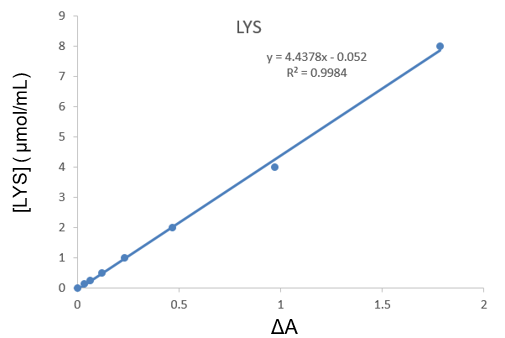
Lysine (LYS), an essential amino acid critical to protein synthesis, nutritional biochemistry, and metabolic regulation, has become a focal point in research spanning food science, pharmaceuticals, and clinical diagnostics—yet the industry grapples with persistent pain points that undermine the accuracy and efficiency of lysine detection. Traditional lysine assay methods often suffer from poor selectivity, cross-reacting with other amino acids in complex samples and producing misleading concentration readings. Many require labor-intensive sample purification steps, lengthy incubation periods, or specialized instrumentation (such as HPLC or mass spectrometry) that are cost-prohibitive for small to mid-sized labs. Compounding these issues is the lack of scalable, user-friendly kits that balance sensitivity with accessibility, forcing researchers to choose between data quality and workflow practicality. It is within this challenging landscape that Abbkine’s CheKine™ Micro Lysine (LYS) Assay Kit (Catalog No.: KTB1470) emerges as a targeted solution, engineered to resolve the core pain points plaguing lysine quantification workflows.
A defining strength of the KTB1470 CheKine™ Micro Lysine Assay Kit is its exceptional specificity, a direct response to the industry’s long-standing struggle with cross-reactivity. The kit’s proprietary reagent formulation leverages a highly selective enzymatic reaction that targets lysine exclusively, minimizing interference from other amino acids (such as arginine or ornithine) that commonly contaminate results in generic assays. This specificity is particularly valuable for analyzing complex sample matrices—including food products (grains, dairy, and protein supplements), cell lysates, tissue homogenates, and clinical specimens like serum or plasma—where lysine is often present alongside a cocktail of competing biomolecules. Researchers can now trust that the readings reflect true lysine content, eliminating the need for time-consuming sample preprocessing to remove interferents. For food scientists verifying protein quality or clinical researchers studying lysine deficiency-related disorders, this level of accuracy isn’t just convenient—it’s indispensable for generating reliable, actionable data.
Industry research reveals a growing demand for assay kits that offer both sensitivity and scalability, and the KTB1470 kit delivers on both fronts. Optimized for microscale analysis, it can detect lysine concentrations as low as picomolar levels, making it suitable for samples with limited lysine abundance—such as primary cell cultures, rare tissue biopsies, or low-protein food matrices. At the same time, its 96-test/96-sample format aligns with the high-throughput needs of industrial labs and large research facilities, enabling efficient processing of hundreds of samples per run. This scalability addresses a key industry grievance: the lack of kits that can adapt to both small-scale academic projects and large-scale industrial quality control. Unlike traditional methods that require separate protocols for low-volume and high-throughput applications, the CheKine™ Micro Lysine Assay Kit streamlines workflows, reducing the need for multiple reagents or equipment setups. This versatility not only saves time but also cuts down on lab costs, a critical advantage in an era where research budgets are increasingly constrained.
Practicality and accessibility are central to addressing industry pain points, and the KTB1470 kit excels in both areas. Its colorimetric detection system is compatible with standard microplate readers—equipment already present in most labs—eliminating the need for expensive, specialized tools like HPLC or fluorometers. The protocol is straightforward and time-efficient, with the entire assay (from sample preparation to data readout) completed in under 2 hours. All reagents are pre-aliquoted and ready to use, reducing the risk of human error and ensuring batch-to-batch consistency—a major concern for labs relying on reproducible results for publications or regulatory submissions. For researchers new to lysine quantification or labs with limited technical expertise, this user-friendly design lowers the barrier to entry, making precise lysine analysis accessible to a broader range of users. At $139 per kit, it also offers exceptional cost-effectiveness compared to premium alternatives that can cost 2–3 times more, without sacrificing performance. This balance of affordability and functionality directly addresses the industry’s frustration with overpriced, overly complex assay solutions.
The scientific credibility of the CheKine™ Micro Lysine (LYS) Assay Kit is further reinforced by its track record in peer-reviewed research, with one publication to date validating its performance in real-world applications. This is a significant differentiator in a market saturated with unvalidated, generic kits that often fail to deliver on their promises. Abbkine’s rigorous quality control processes—including testing for reagent stability, reaction linearity, and detection accuracy—ensure that each kit performs as expected, providing researchers with the confidence to rely on their data. For industries like food manufacturing, where lysine quantification is critical for product labeling and quality assurance, or pharmaceuticals, where lysine is used as a excipient in drug formulations, this reliability is non-negotiable. The kit’s ability to consistently produce accurate results helps labs avoid costly mistakes, such as mislabeling products or advancing flawed research hypotheses.
In an industry where lysine quantification is increasingly important across diverse fields, the Abbkine KTB1470 CheKine™ Micro Lysine (LYS) Assay Kit stands out as a solution that directly addresses the most pressing pain points: poor specificity, lack of scalability, inaccessibility due to cost or complexity, and inconsistent results. By combining exceptional selectivity, sensitivity, and user-friendliness, it empowers researchers and industry professionals to overcome these challenges and focus on advancing their work—whether that’s improving food nutrition, developing new therapeutics, or diagnosing metabolic disorders.
To learn more about how the CheKine™ Micro Lysine (LYS) Assay Kit can transform your lysine quantification workflow, visit the official Abbkine product page: https://www.abbkine.com/?s_type=productsearch&s=KTB1470. For labs seeking a reliable, accessible, and cost-effective solution to lysine detection, this kit is a game-changer that delivers on the promise of precise, efficient analysis.





