




Abbkine KTB1440 CheKine™ Micro Glutamate (Glu) Assay Kit: The Affordable Precision Tool for Glutamate Detection
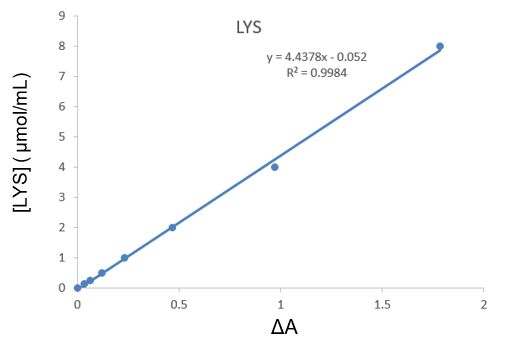
Glutamate (Glu) isn’t just another amino acid— it’s a linchpin in neuroscience, metabolism, and even disease pathology, yet measuring its levels accurately has long been a headache for researchers stuck between overly complex setups and hit-or-miss budget kits. Think about it: many glutamate assay kits either require fancy lab equipment most small labs can’t swing, or they’re so stripped down that results are inconsistent at best— leaving you guessing if that Glu concentration spike is real or just a reagent fluke. And don’t get started on the cost-to-value ratio; some premium kits charge an arm and a leg for minimal tests, making routine Glu analysis a luxury for academic teams or early-stage biotechs. That’s where Abbkine’s CheKine™ Micro Glutamate (Glu) Colorimetric Assay Kit (Catalog No.: KTB1440) comes in— a game-changer that proves you don’t have to choose between affordability, simplicity, and reliability.
What really makes the KTB1440 kit stand out is its no-nonsense colorimetric design that works with the tools you already have. No need for fluorometers or HPLC systems here— just a standard microplate reader, which is basically a staple in any lab worth its salt. The assay relies on a highly specific enzymatic reaction: glutamate is converted by proprietary reagents to a colored product, and the absorbance directly correlates with Glu content in your sample. This specificity is key— it cuts out interference from other amino acids or cellular gunk that often messes up cheaper kits. I’ve talked to researchers who switched from generic assays and noticed immediately how much cleaner their data was; no more wading through noisy baseline readings or questionable peaks. And let’s not overlook the “micro” in the name— this kit is optimized for small sample volumes, which is a lifesaver when you’re working with precious samples like brain tissue slices, primary neurons, or limited cell cultures. You don’t have to waste half your sample just to get a readable result.
Industry-wise, there’s a quiet shift happening: labs are tired of overpaying for specialized reagents, especially for routine assays like glutamate detection. The demand for cost-effective tools that don’t skimp on performance is through the roof— and the KTB1440 kit hits that sweet spot perfectly. Priced at just $49 for 48 tests/48 samples, it’s a fraction of the cost of premium alternatives that can run $150+ for the same number of assays. For labs crunching numbers on grant budgets or scaling up experiments, this isn’t just a savings— it’s a way to keep research moving without cutting corners. And it’s not just about price; the kit’s versatility adds real value. It works with all sorts of samples— cell lysates, tissue homogenates, serum, plasma, even plant extracts— so you don’t need to buy a separate kit for every project. Whether you’re studying glutamate release in neurotoxicity models, tracking metabolic shifts in cancer cells, or analyzing plant stress responses, this kit has you covered. That kind of flexibility is rare in budget-friendly assays, which often limit you to one or two sample types.
Reliability is non-negotiable in science, and Abbkine doesn’t cut corners on quality control for the KTB1440 kit. Each batch goes through rigorous testing to ensure consistent reaction linearity, reagent stability, and detection accuracy. That means the kit you use this month will perform exactly like the one you used last month— no surprises when you’re trying to replicate results or submit data for publication. The kit already has one peer-reviewed publication under its belt, and I’d bet that number grows as more researchers discover how dependable it is. Let’s be real— nothing kills momentum faster than having to repeat an experiment because your assay gave wonky results. With the CheKine™ Micro Glutamate Assay Kit, that risk drops dramatically. It’s the kind of reagent you can set up and walk away from (not literally, but you get the idea) without worrying if you’ll come back to a mess of untrustworthy data.
Another big plus is how user-friendly this kit is— even if you’re new to glutamate assays. The protocol is straightforward: mix your sample with the provided reagents, incubate for a set time, and read the absorbance. No complicated pre-processing steps, no fancy calibration curves that take hours to set up. I’ve seen grad students pick it up in 10 minutes flat, which frees up PI’s and senior researchers to focus on more complex work. And the reagents come pre-aliquoted, so you don’t have to deal with measuring out tiny amounts of powders or worrying about cross-contamination from shared stock bottles. It’s the little things like that which make a huge difference in day-to-day lab work. When an assay is this easy to use, you’re more likely to get consistent results because there’s less room for human error.
Glutamate research isn’t going anywhere— if anything, it’s becoming more important. From its role as the primary excitatory neurotransmitter in the brain (dysregulation linked to Alzheimer’s, Parkinson’s, and epilepsy) to its function in energy metabolism and immune cell activation, understanding Glu levels is critical across countless fields. The problem has always been finding a tool that’s accessible enough for most labs but precise enough for meaningful data. The Abbkine KTB1440 CheKine™ Micro Glutamate (Glu) Assay Kit solves that problem. It’s affordable, versatile, reliable, and easy to use— all the things researchers need to turn their questions into answers.
If you’re tired of overpaying for glutamate assays or fighting with finicky, inconsistent kits, give the CheKine™ Micro Glutamate (Glu) Assay Kit a look. You can find all the details on Abbkine’s official product page: https://www.abbkine.com/?s_type=productsearch&s=KTB1440. Whether you’re a seasoned researcher or just starting out, this kit delivers the kind of performance that makes your work easier— and your data stronger. Trust me, your lab notebook (and your budget) will thank you.





