




Abbkine KTA4002 Mitochondrial Permeability Transition Pore Assay: Redefining MPTP Detection with Direct, Reliable Insights
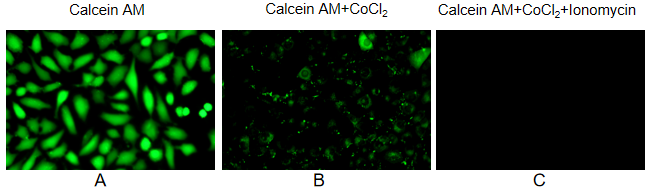
In the intricate world of mitochondrial biology—where these organelles aren’t just “powerhouses” but key regulators of cell survival, apoptosis, and disease pathogenesis—studying the mitochondrial permeability transition pore (MPTP) has always been a double-edged sword. Researchers know MPTP opening is linked to everything from neurodegenerative disorders and cardiac ischemia to cancer progression, but traditional detection methods? They’ve long relied on indirect readouts like mitochondrial membrane potential (ΔΨm) changes, which can be noisy, prone to interference, and fail to capture the true dynamics of pore opening. That’s where Abbkine’s Mitochondrial Permeability Transition Pore Assay Kit (Catalog No.: KTA4002) steps in—no more guessing, no more extrapolating from secondary signals. This kit cuts through the ambiguity with a direct detection approach that’s game-changing for anyone serious about MPTP research, and it’s quickly becoming a must-have for labs chasing meaningful, publication-ready data.
What makes this assay stand out from the crowd is its unapologetic focus on directness—something the field has been craving for years. Unlike methods that only infer MPTP opening by tracking ΔΨm loss (which can be triggered by other factors, let’s be real), Abbkine’s KTA4002 kit targets the pore itself, measuring its opening through a mechanism that bypasses confounding variables. How? It leverages a proprietary detection system that responds specifically to the structural and functional changes of MPTP when it opens, ensuring that the signal you’re seeing is actually MPTP activity—not some off-target effect. This level of specificity isn’t just nice to have; it’s critical for translational research, where distinguishing between MPTP-mediated cell damage and other pathways can mean the difference between advancing a potential therapy or hitting a dead end. For graduate students troubleshooting experiments or senior researchers designing large-scale studies, this directness translates to less time spent validating results and more time making discoveries.
Let’s talk practicality, too—because even the most scientifically sound assay falls flat if it’s a nightmare to use. Priced at $159 for 50 tests, Abbkine’s KTA4002 kit strikes a sweet spot between performance and affordability, especially for labs running multiple experiments or working with limited funding. The protocol is streamlined enough for new lab members to pick up quickly, but robust enough to stand up to the rigors of high-impact research. Whether you’re working with isolated mitochondria, cultured cells, or tissue samples, the kit adapts without skipping a beat—no need to tweak reagents or adjust protocols for different sample types. And let’s not overlook the value of consistency: batch-to-batch variability is minimized, so the data you get in week one is comparable to what you’ll see in week ten. That’s a big deal when you’re building a body of work or submitting results for peer review.
Here’s the industry insight that matters: as mitochondrial research grows more central to understanding human disease, the demand for reliable, direct MPTP detection is skyrocketing. Traditional indirect methods are increasingly being flagged in peer reviews as a limitation, pushing researchers to adopt tools that offer more definitive answers. Abbkine’s KTA4002 kit isn’t just keeping up with this trend—it’s leading it. By focusing on direct detection, it addresses a key pain point in the field and positions researchers to produce more impactful work. Think about it: if your study uses direct MPTP measurements, it’s more likely to be cited, more likely to attract funding, and more likely to drive real progress in understanding diseases where MPTP plays a role. This isn’t just a kit—it’s an investment in the credibility and reach of your research.
At the end of the day, research success hinges on having tools that you can trust to deliver accurate, actionable data. Abbkine’s Mitochondrial Permeability Transition Pore Assay Kit (KTA4002) checks all those boxes and then some. It’s direct, reliable, adaptable, and priced to be accessible—all while addressing a critical gap in current MPTP research methods. Whether you’re unraveling the mechanisms of Parkinson’s disease, studying cardiac cell survival after ischemia, or exploring novel cancer therapeutics, this kit gives you the clarity you need to move forward with confidence. Don’t settle for indirect measurements that leave room for doubt. Visit the official product page today (https://www.abbkine.com/?s_type=productsearch&s=KTA4002) to learn how KTA4002 can elevate your mitochondrial research—and help you stand out in a crowded field. Because when it comes to MPTP detection, direct is always better.





