




Abbkine KTA1001 Live and Dead Cell Double Staining Kit: A Premier Solution for Quantitative Cell Viability Assessment
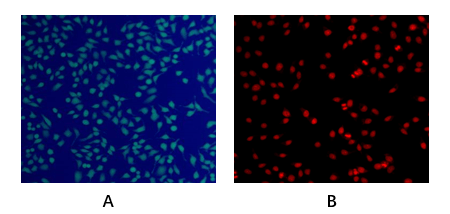
In the intricate landscape of biological research, the accurate quantification of cell viability serves as a fundamental parameter for validating experimental outcomes across diverse disciplines—encompassing drug discovery, toxicology screening, stem cell research, and tissue engineering. Researchers and laboratory professionals consistently seek reagents that combine exceptional specificity, reproducibility, and operational efficiency to meet the rigorous demands of modern scientific inquiry. The Abbkine Live and Dead Cell Double Staining Kit (Catalog No.: KTA1001) emerges as a gold-standard tool in this domain, engineered to deliver precise, reliable results while optimizing experimental workflows, making it an indispensable asset for advancing impactful research.
What distinguishes the KTA1001 from conventional cell viability assays is its advanced dual-fluorochrome staining mechanism, which addresses the limitations of single-stain methods by enabling unambiguous differentiation between live and dead cells. The kit incorporates a cell-permeant fluorophore that freely penetrates the intact plasma membranes of viable cells, where it binds to intracellular components and emits a distinct fluorescence signal—typically in the green spectrum—for clear visualization. In contrast, dead or dying cells with compromised membrane integrity are selectively labeled by a cell-impermeant fluorochrome, which accumulates in the cytoplasm and emits a contrasting fluorescence (often red), ensuring minimal cross-reactivity and maximum signal-to-noise ratio. This sophisticated design not only detects overt cell death but also captures subtle changes in membrane permeability associated with early-stage cell damage, providing researchers with a comprehensive view of cell health that is critical for interpreting experimental data with confidence.
Crafted by Abbkine, a brand synonymous with excellence in the development of high-performance research tools, the KTA1001 adheres to stringent quality control standards to guarantee batch-to-batch consistency and reproducibility. Each component of the kit—including the fluorochromes, buffers, and stabilizers—is meticulously optimized to maintain stability under a wide range of experimental conditions, from room-temperature staining to prolonged incubation periods. The kit exhibits exceptional versatility, with various cell types such as adherent and suspension cell lines, primary cultures, and even difficult-to-stain samples like transfected cells or 3D cell spheroids. This adaptability eliminates the need for multiple specialized assays, streamlining laboratory operations and reducing the risk of experimental variability associated with switching between different reagents.
A key advantage of the KTA1001 lies in its user-centric protocol, which minimizes technical complexity and hands-on time without compromising data quality. Unlike labor-intensive assays that require extensive sample preparation or specialized equipment, this kit enables straightforward staining: simply dilute the provided reagents according to the protocol, incubate with cells for a short period (typically 15–30 minutes), and proceed to detection. The bright, photostable fluorescence signals generated by the kit are compatible with a range of imaging and analytical platforms, including fluorescence microscopes, flow cytometers, and microplate readers, allowing for both qualitative visualization and quantitative analysis of cell viability. This flexibility empowers researchers to tailor the assay to their specific experimental needs, whether conducting high-throughput screening or detailed single-cell analysis.
Beyond its performance and usability, the KTA1001 offers exceptional cost-effectiveness, priced at $99 for 100 tests—a value proposition that stands out in the competitive landscape of research reagents. This affordability makes it accessible to laboratories of all sizes, from academic institutions with limited budgets to large-scale biotech and pharmaceutical companies conducting high-volume experiments. Moreover, Abbkine’s commitment to customer support ensures that researchers have access to comprehensive technical resources, including detailed protocols, troubleshooting guides, and direct assistance from scientific experts. This level of support not only enhances the user experience but also helps to maximize the reliability and reproducibility of experimental results, a critical factor in advancing scientific knowledge.
In addition to its core functionality, the KTA1001 is designed with sustainability and safety in mind—key considerations for modern laboratory practices. The kit’s reagents are formulated to minimize environmental impact, with reduced toxic components and recyclable packaging. Furthermore, the staining process is non-toxic to viable cells at recommended concentrations, allowing for downstream applications such as cell sorting, RNA extraction, or continued cell culture if needed. This feature adds a layer of versatility to the assay, enabling researchers to maximize the utility of their samples and reduce experimental waste.
For researchers seeking to elevate the rigor and efficiency of their cell viability assessments, the Abbkine KTA1001 Live and Dead Cell Double Staining Kit represents more than just a reagent—it is a trusted partner in scientific discovery. Its advanced design, consistent performance, versatility, and cost-effectiveness make it a standout choice for laboratories worldwide. To explore the full capabilities of this kit, access detailed technical specifications, or place an order, visit the official product page at https://www.abbkine.com/?s_type=productsearch&s=KTA1001. Invest in a tool that delivers accurate, reproducible results and unlocks new possibilities for your research.





