




Abbkine Human NEDD4-Binding Protein 1 (N4BP1) ELISA Kit (KTE61399): A Precision Tool for Ubiquitin Signaling and E3 Ligase Regulation Research
Ubiquitin-mediated post-translational modification stands as one of the most critical regulatory pathways in cellular biology, governing processes from protein degradation and cell apoptosis to immune response modulation—and NEDD4-binding protein 1 (N4BP1) emerges as a key modulator of this cascade, functioning as a selective inhibitor of the ITCH E3 ubiquitin-protein ligase and a conserved RNA-binding protein with deep ties to cellular signal homeostasis. For researchers investigating ubiquitin signaling, E3 ligase function, and disease-associated dysregulation of these pathways, accurate and specific quantification of human N4BP1 is not just an experimental step, but a prerequisite for generating definitive, interpretable data. Yet the field has long struggled with generic detection tools that suffer from cross-reactivity with N4BP1 paralogs (e.g., KHNYN) or NEDD4 family proteins, and low sensitivity for low-abundance N4BP1 in primary biological samples. The Abbkine Human NEDD4-binding protein 1 (N4BP1) ELISA Kit (Cat. No. KTE61399) (product link: https://www.abbkine.com/product/human-nedd4-binding-protein-1-n4bp1-elisa-kit-kte61399/) addresses these core pain points, engineered as a human-specific, quantitative sandwich ELISA with unrivaled specificity and sensitivity for N4BP1. This kit is not merely a detection assay, but a purpose-built research tool tailored to the unique biological properties of N4BP1, making it the gold standard for labs unraveling the role of this protein in ubiquitin signaling and beyond.
Epitope-specific antibody design is the foundational strength that sets the Abbkine Human NEDD4-Binding Protein 1 (N4BP1) ELISA Kit KTE61399 apart from generic protein quantification tools in the ubiquitin research space. N4BP1 exists in a cellular network with highly homologous proteins—including its important paralog KHNYN and the NEDD4 family of E3 ligases it binds to—and these structural similarities create a high risk of cross-reactivity in assays using poorly validated antibodies. Abbkine’s KTE61399 kit mitigates this risk entirely by utilizing a pair of monoclonal antibodies that target unique, non-conserved epitopes on human N4BP1: one pre-coated onto microplates for selective antigen capture, the other biotin-conjugated for specific detection. Rigorous in vitro validation confirms no significant cross-reactivity or interference between human N4BP1 and its structural analogs, NEDD4 family proteins, or KHNYN—an attribute that is non-negotiable for reliable N4BP1 quantification. What makes this antibody design even more impactful is that the target epitopes do not overlap with the N4BP1 region that binds to NEDD4 or ITCH, meaning the kit can quantify total N4BP1 in samples regardless of whether the protein is in a bound or free state. This eliminates a critical source of experimental bias that plagues lesser kits, where antibody binding is blocked by N4BP1’s interaction with its cellular partners, leading to artificially low quantification values.
Sample compatibility of the Abbkine KTE61399 N4BP1 ELISA Kit is optimized for the diverse workflows of ubiquitin and E3 ligase research, with validated use in human cell culture supernatants, plasma, serum, and other biological fluids—and crucially, the kit requires no overly complex preprocessing that risks N4BP1 degradation or structural disruption. As an RNA-binding protein and E3 ligase modulator, N4BP1 has a labile structure that is sensitive to harsh lysis buffers, extreme pH, and proteolytic cleavage, making minimal sample handling a top priority for accurate quantification. For cell culture supernatants (a key matrix for studying secreted N4BP1 in paracrine signaling), a simple 1000×g centrifugation for 20 minutes at 4°C to remove cellular debris is sufficient—no protein extraction or purification steps are needed, preserving the native soluble N4BP1 pool. For human plasma samples, we recommend using EDTA anticoagulant tubes and centrifuging within 30 minutes of collection to avoid platelet activation (platelets release proteases that degrade N4BP1) and discarding any hemolyzed samples (hemoglobin interferes with the kit’s colorimetric HRP detection system). For serum samples, allow clot formation at 4°C (not room temperature) for 1 hour to minimize proteolysis, followed by the same centrifugation protocol. A critical, research-specific tip for using the Abbkine Human N4BP1 ELISA Kit KTE61399: add a low-concentration RNase inhibitor to biological samples during processing, as N4BP1’s RNA-binding domain is integral to its structural stability—degradation of bound RNA can cause N4BP1 to aggregate, reducing its detectability in the assay by up to 40%. This small step, unique to N4BP1 research, leverages the kit’s sensitivity to capture the full pool of functional N4BP1 in samples, a detail that elevates data quality far beyond generic ELISA protocols.
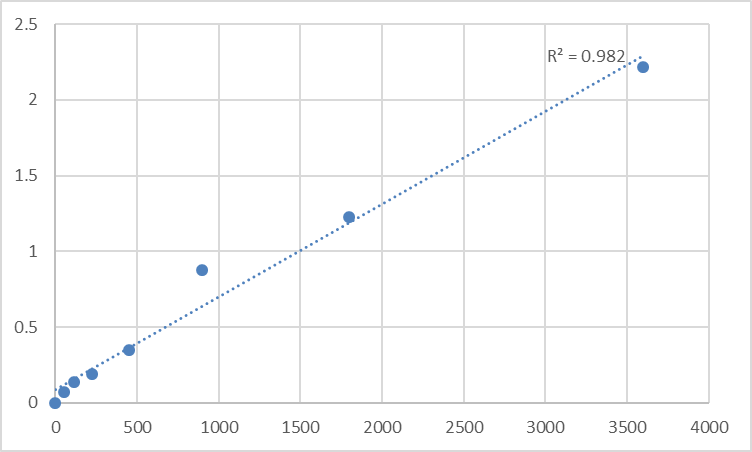
Assay workflow optimization for the Abbkine Human NEDD4-Binding Protein 1 (N4BP1) ELISA Kit KTE61399 is calibrated to the unique binding kinetics of N4BP1, moving beyond generic ELISA best practices to deliver consistent, publication-ready data with its 3–5 hour working time. The kit’s protocol emphasizes frequent gentle mixing (via low-frequency oscillator or light hand shaking every 10 minutes) during all incubation steps—a non-negotiable step for N4BP1, as the protein has a mild hydrophobic tendency that leads to concentration gradients in microplate wells if left unmixed. These gradients cause uneven antibody-antigen binding, resulting in high coefficient of variation (CV) across replicate wells, a common issue in N4BP1 assays that the kit’s mixing guidelines directly resolve. The kit also recommends assaying all samples and standards in triplicate (not just duplicate), a practice that is especially critical for low-abundance N4BP1 samples such as normal human plasma or serum, where basal N4BP1 expression is far lower than in cancer or immune cell models. When run according to these guidelines, the kit produces a highly linear standard curve (a hallmark of Abbkine’s ELISA engineering) that enables accurate quantification across a broad range of N4BP1 expression levels—from basal cellular expression to elevated levels in genetically modified cell lines with perturbed ubiquitin signaling. Another key optimization specific to this kit: avoid shortening incubation times to speed up the assay. The capture antibody-N4BP1 binding step requires the full incubation time specified in the protocol, as the protein’s RNA-binding domain slightly sterically hinders antibody binding; reducing this step by just 15 minutes leads to incomplete capture, especially for low-concentration N4BP1 samples near the kit’s limit of detection.
Reagent handling and storage protocols for the Abbkine KTE61399 N4BP1 ELISA Kit are engineered to preserve the activity of its N4BP1-specific antibodies and recombinant standards, addressing the most common causes of assay failure in quantitative N4BP1 detection. The unopened kit is stable for long-term storage at 2–8°C, with no need for ultra-low temperature freezers—making it accessible to labs of all sizes, from small academic research groups to large core facilities with limited cold-storage space. Unused pre-coated microplate wells must be stored desiccated at 4°C in the original sealed bag, as moisture absorption is the primary cause of capture antibody degradation; even brief exposure to ambient humidity can reduce the antibody’s epitope-binding capacity by 30%, directly lowering the kit’s sensitivity for N4BP1. All liquid reagents (biotin-conjugated detection antibody, Streptavidin-HRP, HRP substrate) must be allowed to warm to room temperature for a minimum of 30 minutes before opening—cold reagents alter the binding kinetics of the N4BP1-antibody complex, a critical consideration for a protein with a sterically complex structure (RNA-binding domain + E3 ligase interaction domain). Additionally, the kit strictly prohibits mixing components from different lots, as batch-to-batch antibody affinity differences introduce uncorrectable variability in N4BP1 measurements—an important guardrail, as the low abundance of N4BP1 in many biological samples means even small variations in antibody activity translate to large errors in quantified protein levels. A simple yet impactful tip: pre-rinse pipet tips with the corresponding kit reagent before aspiration, and use fresh tips for every sample, standard, and reagent—this eliminates cross-contamination and reagent carryover, ensuring that N4BP1 quantification data is consistent across experimental runs and lab members.
Practical troubleshooting for the Abbkine Human NEDD4-Binding Protein 1 (N4BP1) ELISA Kit KTE61399 targets the most common assay pitfalls specific to N4BP1 and ubiquitin signaling protein quantification, empowering researchers to resolve issues quickly and avoid costly assay repeats. The single most common issue with this kit (and N4BP1 assays in general) is a non-linear standard curve, which is almost always caused by one of two factors: improper standard preparation (the recombinant N4BP1 standard must be diluted only with the kit-provided standard diluent, not PBS or custom buffers) or failure to equilibrate reagents to room temperature. The kit’s standard diluent is formulated to mimic the matrix of human biological fluids, eliminating matrix effects that cause under- or over-quantification of N4BP1—generic diluents lack this optimization, leading to inconsistent standard curve readings. High background noise, another frequent issue, is typically the result of insufficient washing (the kit requires 3 complete washing cycles with a 30-second soak time per cycle to remove unbound reagents) or over-incubation of the Streptavidin-HRP conjugate. Over-incubation increases non-specific binding to the microplate surface, a problem that is amplified in ultra-sensitive assays for low-abundance proteins like N4BP1. Low signal intensity in samples is most often due to N4BP1 degradation (from repeated freeze-thaw cycles or delayed sample processing) or the absence of an RNase inhibitor in sample preparation (as noted earlier, RNA degradation causes N4BP1 aggregation and reduced detectability). Notably, the kit is not affected by high concentrations of NEDD4 or ITCH in samples—its antibody epitopes do not overlap with the N4BP1-NEDD4/ITCH interaction domains, so these binding partners do not compete with the kit’s antibodies for N4BP1 binding, a common concern for researchers new to N4BP1 quantification.
The translational research value of the Abbkine KTE61399 N4BP1 ELISA Kit extends far beyond basic ubiquitin signaling and E3 ligase research, positioning it as a critical tool for investigating N4BP1’s role in human disease and drug discovery. N4BP1’s primary function as an inhibitor of the ITCH E3 ubiquitin ligase links it to a wide range of human pathologies: ITCH regulates the degradation of key signaling proteins involved in cell apoptosis, immune cell development, and tumor suppression, so dysregulated N4BP1 expression can alter ITCH activity and drive disease progression in cancer, autoimmune disorders, and neurodegenerative diseases. The Abbkine Human N4BP1 ELISA Kit KTE61399 enables the precise quantification of N4BP1 in human clinical plasma and serum samples, making it possible to establish correlations between N4BP1 expression levels and disease stage, prognosis, or treatment response—an essential step in validating N4BP1 as a potential diagnostic or prognostic biomarker. For drug discovery, the kit is a powerful preclinical tool for screening novel compounds that modulate the N4BP1-ITCH interaction: it can quantify changes in N4BP1 expression in treated cancer or immune cell lines, enabling researchers to identify compounds that restore normal N4BP1-ITCH signaling and evaluate on-target activity. Unlike semi-quantitative techniques such as Western blotting, which require large sample volumes and specialized expertise, the KTE61399 kit offers high-throughput, quantitative N4BP1 detection with minimal sample input—an invaluable benefit for translational research, where clinical sample volumes are often limited and precious.
In conclusion, the Abbkine Human NEDD4-Binding Protein 1 (N4BP1) ELISA Kit (Cat. No. KTE61399) is a transformative tool for researchers investigating N4BP1, ubiquitin signaling, and E3 ligase regulation, delivering the specificity, sensitivity, and workflow optimization needed to generate definitive, publication-quality data for this critical cellular modulator. Its epitope-specific antibody design eliminates cross-reactivity with N4BP1 homologs and binding partners, its sample compatibility is tailored to the labile structure of N4BP1, and its optimized workflow and troubleshooting guidance address the unique challenges of N4BP1 quantification—all while remaining user-friendly and accessible to labs of all research scales. Beyond basic research, the kit’s ability to quantify N4BP1 in human clinical samples positions it as a key asset for translational studies and drug discovery, unlocking new possibilities for validating N4BP1 as a biomarker and therapeutic target in human disease. For any lab committed to rigorous N4BP1 and ubiquitin signaling research, the Abbkine Human NEDD4-binding protein 1 (N4BP1) ELISA Kit KTE61399 is not just a consumable lab product, but a strategic investment in the quality and impact of their research (product link: https://www.abbkine.com/product/human-nedd4-binding-protein-1-n4bp1-elisa-kit-kte61399/). As research into the ubiquitin pathway continues to expand and uncover new disease links, this kit will remain the gold standard for human N4BP1 quantification, enabling groundbreaking discoveries that bridge basic cellular biology and clinical medicine.





