




Abbkine Human N-Acetyltransferase 10 (NAT10) ELISA Kit (KTE61371): A Premier Tool for RNA Epitranscriptomics and Epigenetics Research
N-Acetyltransferase 10 (NAT10) has emerged as a central player in modern molecular biology research, functioning as a unique RNA cytidine acetyltransferase with multifaceted roles in histone acetylation, tRNA modification, 18S rRNA biosynthesis, and the maintenance of nuclear architecture and chromatin organization. As research into RNA epitranscriptomics and epigenetic regulation continues to expand—with NAT10 dysregulation increasingly linked to aberrant cellular function and potential disease pathogenesis—the need for a highly specific, sensitive, and reliable tool to quantify human NAT10 protein levels has become non-negotiable for labs across molecular biology, epigenetics, and translational research. The Abbkine Human N-acetyltransferase 10 (NAT10) ELISA Kit (Cat. No. KTE61371) (product link: https://www.abbkine.com/product/human-n-acetyltransferase-10-nat10-elisa-kit-kte61371/) is engineered to meet this growing demand, standing as a purpose-built solution for human NAT10 quantification that addresses key industry pain points and aligns with the latest research trends in RNA and epigenetic modification. This kit transcends generic acetyltransferase detection tools, offering unparalleled specificity for human NAT10 and consistent performance across diverse sample types, making it an indispensable asset for any research program investigating this critical enzyme.
Engineered on the gold-standard two-site sandwich ELISA platform, the Abbkine KTE61371 Human NAT10 ELISA Kit delivers industry-leading specificity that resolves a longstanding challenge in NAT10 research: cross-reactivity with homologous acetyltransferases and related proteins. NAT10 is part of a large family of acetyltransferase enzymes, and it also has multiple alternative designations (ALP, KIAA1709, NET43, among others), creating a risk for non-specific detection in assays using poorly validated antibodies. Abbkine’s KTE61371 kit mitigates this risk by utilizing a pair of highly specific monoclonal antibodies that target unique, human NAT10-specific epitopes—one pre-coated onto microplates for antigen capture, the other biotin-conjugated for detection. Rigorous validation confirms no significant cross-reactivity or interference between human NAT10 and its structural or functional analogues, ensuring that all measured signal in the assay is derived exclusively from the target protein. This level of specificity is not just a technical feature but a research necessity: in epigenetic and RNA modification studies, even minor off-target signal can lead to misinterpretation of NAT10 expression levels, skewing conclusions about the enzyme’s role in cellular processes. For researchers, this means the Abbkine Human N-acetyltransferase 10 (NAT10) ELISA Kit KTE61371 generates definitive, target-specific data that forms the foundation of reliable publishable research.
Sample versatility is a defining advantage of the Abbkine Human N-acetyltransferase 10 (NAT10) ELISA Kit KTE61371, and it aligns perfectly with the diverse research workflows that characterize modern NAT10 and epigenetic research—spanning basic in vitro cell biology to early translational clinical sample analysis. The kit is fully validated for use with human cell culture supernatants, plasma, serum, and other biological fluids, eliminating the need for labor-intensive, sample-damaging preprocessing steps that are required for less versatile detection tools. For researchers working with cell culture models (the backbone of NAT10 mechanistic research), this means direct quantification of secreted NAT10 in supernatants with only a simple centrifugation step to remove cellular debris—preserving the native protein concentration and avoiding the loss of soluble NAT10 that occurs with harsh lysis buffers. For translational researchers investigating NAT10’s potential as a biomarker in human disease, the kit’s compatibility with plasma and serum is transformative: these clinical sample types are readily accessible and minimally invasive to collect, and the kit requires no specialized extraction or purification to quantify NAT10, making it feasible to profile large patient cohorts. This seamless transition from basic cell models to human clinical specimens is a key industry need, and the Abbkine KTE61371 NAT10 ELISA Kit fills this gap, enabling researchers to bridge bench and bedside in their NAT10 research programs.
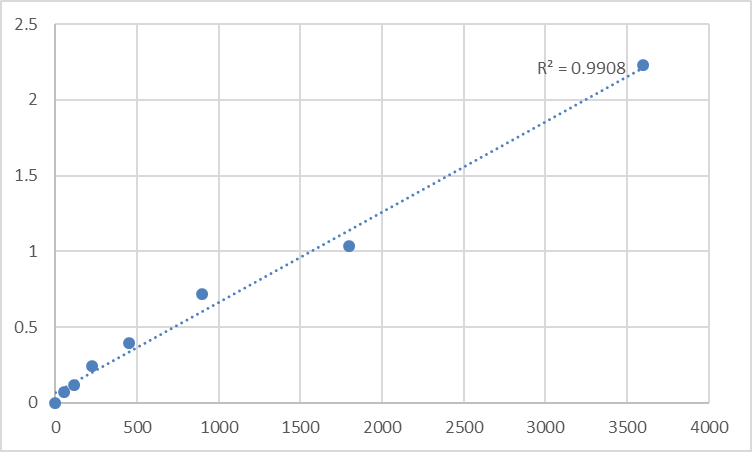
The manufacturing and design of the Abbkine KTE61371 Human NAT10 ELISA Kit prioritize experimental reproducibility—a critical attribute in epigenetic research, where subtle changes in protein expression can drive profound cellular effects, and data variability can derail entire research projects. The kit arrives as a fully integrated, ready-to-use system, with all essential components included and pre-optimized: a pre-coated human NAT10 microplate, recombinant human NAT10 standards, biotin-conjugated NAT10 detection antibody, Streptavidin-HRP, standard diluent, assay buffer, HRP substrate, stop solution, wash buffer, and plate covers. There is no need for researchers to source or prepare additional reagents, eliminating the batch-to-batch variability that plagues experiments using mixed third-party components. Further, the kit produces a standard curve with an exceptional linearity R² value of 0.9908—a benchmark for quantitative ELISA performance that far exceeds the industry average for acetyltransferase detection kits. This high linearity ensures accurate quantification of NAT10 across a broad range of expression levels, from low-abundance basal expression in normal cells to elevated levels in genetically modified or disease-associated cell models. The kit’s usage guidelines, including recommendations for duplicate or triplicate sample/standard testing, reagent equilibration to room temperature, and frequent gentle mixing during incubations, are not just generic best practices but tailored to NAT10’s binding kinetics, further minimizing technical variability and ensuring consistent results across experimental runs, lab members, and even different research facilities.
The Abbkine Human N-acetyltransferase 10 (NAT10) ELISA Kit KTE61371 is uniquely positioned to support the rapidly growing industry trend of RNA epitranscriptomics and epigenetic regulation research, a field that has seen explosive investment and discovery in recent years. For decades, epigenetic research focused primarily on DNA and histone modifications, but the emergence of RNA epitranscriptomics— the study of chemical modifications to RNA molecules that alter function without changing the nucleotide sequence—has revealed new layers of cellular regulation, with NAT10 at the forefront as a key RNA cytidine acetyltransferase. Unlike many other research tools that were repurposed from older epigenetic research areas, the KTE61371 kit is purpose-built for human NAT10, an enzyme whose specific role in RNA acetylation makes it a high-priority target for both basic research and drug discovery. The kit enables researchers to quantify NAT10 expression in response to cellular stress, genetic manipulation, or small-molecule treatment, making it a powerful tool for screening novel compounds that modulate NAT10 activity—an area of intense interest for the biopharmaceutical industry, as NAT10 inhibitors or activators could hold therapeutic potential for diseases driven by aberrant RNA modification or chromatin organization, such as cancer and neurodegenerative disorders. As the field of RNA epitranscriptomics continues to mature, the demand for validated, human-specific NAT10 quantification tools will only grow, and the Abbkine KTE61371 kit is poised to be the gold standard for this research.
Storage and logistical design of the Abbkine KTE61371 Human NAT10 ELISA Kit address a common industry pain point: the high cost and logistical complexity of storing and shipping specialized protein detection reagents. The unopened kit is stable for long-term storage at 2–8°C, with no need for ultra-low temperature freezers—a feature that makes it accessible to labs of all sizes, from small academic research groups to large core facilities with limited cold-storage space. Unused pre-coated microplate wells can be stored desiccated at 4°C in the original sealed bag, preserving the capture antibody’s binding affinity for future experiments and reducing reagent waste, a critical consideration for labs that do not run high-throughput NAT10 assays on a continuous basis. The kit is shipped via gel pack with blue ice, ensuring that all components arrive at full activity even for international research labs—an essential feature for the global epigenetic research community, which relies on collaborative, cross-geographic studies. Clear, concise storage instructions for opened reagents further extend the kit’s usability, ensuring that researchers can maximize the value of their investment and maintain consistent assay performance from the first use to the kit’s expiration date.
Beyond its core function as a quantitative detection tool, the Abbkine Human N-acetyltransferase 10 (NAT10) ELISA Kit KTE61371 offers untapped potential for expanding the scope of NAT10 research, supporting novel investigations that push the boundaries of RNA epitranscriptomics and epigenetic regulation. For example, the kit can be used to characterize the subcellular secretion of NAT10—an understudied aspect of the enzyme’s biology—by quantifying its levels in cell culture supernatants across different cellular conditions. It can also be employed to investigate the correlation between NAT10 protein expression and other epigenetic marks (e.g., histone acetylation, DNA methylation) in human clinical samples, uncovering potential regulatory networks that govern cellular epigenetic state. In drug discovery, the kit serves as a critical preclinical tool, enabling researchers to assess the on-target activity of NAT10-modulating compounds by measuring changes in NAT10 protein levels in treated cell models and preclinical tissue samples. Unlike semi-quantitative techniques such as Western blotting, which require large sample volumes and specialized expertise, the KTE61371 kit offers high-throughput, quantitative NAT10 detection with minimal sample input—an essential benefit for studies using rare or limited samples, such as primary human cells or clinical plasma/serum from small patient cohorts.
In conclusion, the Abbkine Human N-Acetyltransferase 10 (NAT10) ELISA Kit (Cat. No. KTE61371) is more than a simple protein detection tool; it is a strategic research asset that aligns with the latest industry trends in RNA epitranscriptomics and epigenetic regulation, addressing key technical challenges in NAT10 quantification and delivering the specificity, sensitivity, and reproducibility that modern research demands. Its human-specific design, broad sample compatibility, exceptional standard curve linearity, and user-friendly format make it the premier choice for labs investigating NAT10’s role in cellular function, epigenetic regulation, and disease pathogenesis. As research into RNA acetylation and NAT10 continues to expand, the KTE61371 kit will remain an indispensable tool, enabling groundbreaking discoveries that advance our understanding of the epigenetic and epitranscriptomic mechanisms that govern human biology (product link: https://www.abbkine.com/product/human-n-acetyltransferase-10-nat10-elisa-kit-kte61371/). For any research program committed to rigorous, definitive NAT10 research, the Abbkine Human N-acetyltransferase 10 (NAT10) ELISA Kit KTE61371 is the gold standard—one that delivers reliable, publishable data and unlocks new possibilities for investigating this critical enzyme.





