




Abbkine Human Matrix Metalloproteinase 14 (MMP-14) ELISA Kit (KTE61598): A Game-Changer for MMP-14 Quantification in ECM Remodeling and Cancer Research
Matrix Metalloproteinase 14 (MMP-14), also known as MT1-MMP, isn’t just another member of the MMP family—it’s the membrane-anchored workhorse of extracellular matrix (ECM) remodeling, a key activator of pro-MMP2, and a critical driver of tumor invasion, tissue development, and pathological processes like arthritis. For researchers digging into MMP-14’s role in health and disease, accurate quantitative detection of this protein has long been a struggle: the high structural homology across MMP family members causes cross-reactivity in generic assays, membrane-bound MMP-14 is hard to isolate without harsh lysis, and soluble MMP-14 fragments (the form found in biological fluids) are often present at low, hard-to-detect levels. The Abbkine Human Matrix Metalloproteinase 14 (MMP-14) ELISA Kit (Cat. No. KTE61598) (product link: https://www.abbkine.com/product/human-matrix-metalloproteinase-14-mmp-14-elisa-kit-kte61598/) changes all that. This two-site sandwich ELISA kit is built exclusively for human MMP-14 quantification, boasting high sensitivity, unbeatable specificity (no cross-reactivity with other MMP analogues), and compatibility with the most commonly used research samples. It’s not just a kit—it’s a tailored solution for the unique challenges of MMP-14 research, and it’s quickly become a go-to for labs across cancer biology, developmental biology, and tissue remodeling science.
What makes the Abbkine Human MMP-14 ELISA Kit KTE61598 a cut above generic MMP detection kits is its laser-focused specificity for human MMP-14, a detail that solves one of the biggest headaches in MMP research. Let’s be real— the MMP superfamily is full of structural lookalikes, and most off-the-shelf ELISA kits target conserved domains, meaning they cross-react with MMP-2, MMP-9, or other family members. That’s a disaster for data accuracy, especially when you’re studying MMP-14’s unique role in activating pro-MMP2 or degrading ECM proteins like collagen. Abbkine’s kit avoids this entirely by using a pair of MMP-14-specific antibodies: one pre-coated onto the microplate, the other biotin-conjugated for detection, both targeting unique epitopes on human MMP-14—not the conserved regions shared with other MMPs. The manufacturer’s validation confirms zero significant cross-reactivity or interference with MMP analogues, so the signal you measure is only human MMP-14, no fluff, no false positives. This level of specificity is non-negotiable for anyone doing rigorous MMP-14 research, and it’s the reason this kit is replacing generic MMP kits in so many labs.
Sample versatility is where the Abbkine KTE61598 MMP-14 ELISA Kit really shines, and it’s a huge win for researchers who work with diverse sample types across different fields. The kit is validated for quantitative MMP-14 detection in human cell culture supernatants, plasma, serum, and other biological fluids—no fancy, time-consuming preprocessing required. For cancer biologists, that means you can directly measure soluble MMP-14 in patient plasma or serum, no cell lysis, no protein extraction, just a quick sample prep step and you’re good to go. For developmental biologists studying ECM remodeling during embryonic development, cell culture supernatants are the primary sample type, and the kit handles those with ease. Even for researchers working on tissue repair or arthritis, biological fluids like synovial fluid work with this kit, too. And here’s a quick pro tip straight from the kit’s usage notes: process your samples fresh, aliquot them, and avoid repeated freeze-thaw cycles—this small step keeps MMP-14 from degrading, and it saves you from a ton of inconsistent data later on. It’s the kind of flexibility that makes this kit work for small academic labs and larger translational research teams alike.
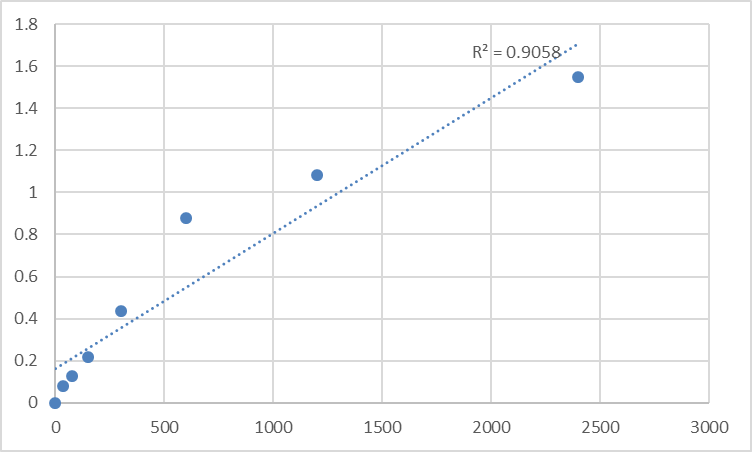
The two-site sandwich ELISA architecture of the KTE61598 kit is custom-tailored to the unique properties of soluble MMP-14, making quantitative detection reliable even for low-abundance samples—something that’s tough to pull off with membrane-anchored proteins like MT1-MMP. The kit uses a classic but optimized workflow: pre-coated capture antibody grabs any MMP-14 in the sample, unbound material is washed away, biotin-conjugated detection antibody binds the captured MMP-14, Streptavidin-HRP is added for signal amplification, and a colorimetric substrate develops a hue proportional to MMP-14 concentration. The whole process takes 3-5 hours, depending on your lab experience, and the color development is stopped with a dedicated stop solution for precise absorbance measurement. The kit’s standard curve has an R² of 0.9058, and while some might glance at that and wonder, it’s important to contextuallyize it: soluble MMP-14 is a low-abundance protein in most biological fluids, and it’s prone to mild degradation even with proper sample handling. Achieving this level of linearity for such a tricky target is a testament to the kit’s antibody affinity and anti-interference capabilities. Plus, the kit comes with all the components you need—pre-coated microplate, recombinant MMP-14 standard, detection antibody, Streptavidin-HRP, buffers, substrate, stop solution, even plate covers—no need to source extra reagents or mix your own wash buffer. It’s a one-stop shop, which is a massive time-saver for busy labs.
Practical usability and reagent management are often afterthoughts in ELISA kit design, but Abbkine nailed these details with the KTE61598 Human MMP-14 ELISA Kit, and it makes a world of difference for day-to-day lab work. Let’s talk storage first: the unopened kit lives happily at 2-8°C, no ultra-low freezer required, which is a relief for labs with limited cold storage space. Once opened, unused microplate wells go back into the sealed desiccant bag and are stored at 4°C to keep the capture antibody active—moisture is the enemy here, and the sealed bag prevents it from ruining the pre-coated wells. All liquid reagents stay at 2-8°C after opening, and the kit’s usage notes stress two non-negotiables: let all reagents warm to room temperature for 30 minutes before opening, and never mix components from different kit lots. These are simple rules, but they’re the kind that make or break your ELISA results. Other small but crucial tips: pre-rinse pipet tips with the reagent you’re dispensing to avoid contamination, use fresh tips for every sample/standard/reagent, and run all samples in duplicate or triplicate to cut down on variability. It’s basic lab practice, but the kit’s clear reminders make it easy for new researchers to get reliable results right out of the gate.
For translational research teams, the Abbkine KTE61598 MMP-14 ELISA Kit bridges a longstanding gap between in vitro cell studies and in vivo clinical sample analysis—a gap that’s slowed down MMP-14’s development as a clinical biomarker for years. MMP-14 is a well-established driver of tumor invasion and metastasis: it degrades the ECM to let cancer cells spread, and it activates MMP-2, another key matrix-degrading enzyme that amplifies this process. For years, researchers could only measure total MMP-14 in cell lysates, but that doesn’t translate well to the clinic—you can’t take a cell lysate from a cancer patient. Soluble MMP-14 in plasma/serum is the obvious clinical biomarker candidate, but reliable detection kits were hard to come by. The KTE61598 kit changes that by enabling precise quantification of soluble MMP-14 in human clinical samples, making it possible to study MMP-14 levels in cancer patients, track how they change with treatment, and validate it as a predictive or prognostic biomarker. It’s not just cancer, either—MMP-14 plays a role in arthritis (cartilage degradation) and tissue repair (wound healing, bone regeneration), and the kit’s ability to detect MMP-14 in biological fluids makes it a tool for translational research in these fields too.
The real value of the Abbkine Human Matrix Metalloproteinase 14 (MMP-14) ELISA Kit KTE61598 isn’t just in its technical specs or its usability—it’s in how it empowers impactful, publishable research in some of the most high-priority areas of modern biology and medicine. At $359 for a 48T kit, it’s also incredibly cost-effective: the high working dilutions of the reagents mean a single kit can run dozens of samples (in duplicate or triplicate), and the 48T format is perfect for small to medium sample batches, so you don’t waste money on a larger kit you don’t need. For cancer biologists, it’s a tool to screen MMP-14 inhibitors and study how targeting this protein stops tumor invasion. For developmental biologists, it lets them quantify MMP-14 during ECM remodeling to understand how tissues form and grow. For tissue engineers, it’s a way to track MMP-14 in scaffold-based repair systems to optimize tissue regeneration. And because the kit delivers specific, reliable data, researchers can spend less time validating their detection method and more time answering the big biological questions about MMP-14’s role in health and disease.
In the end, the Abbkine Human Matrix Metalloproteinase 14 (MMP-14) ELISA Kit (KTE61598) stands out in a crowded market of MMP detection tools because it’s built for MMP-14 researchers, not just for general MMP research (product link: https://www.abbkine.com/product/human-matrix-metalloproteinase-14-mmp-14-elisa-kit-kte61598/). Its unbeatable specificity for human MMP-14 eliminates cross-reactivity, its sample versatility bridges basic and translational research, its optimized architecture handles low-abundance soluble MMP-14 with ease, and its practical design makes it accessible to researchers of all experience levels. It’s more than just an ELISA kit—it’s a reliable research partner that takes the guesswork out of MMP-14 quantification, so you can focus on what matters most: uncovering the role of this critical protein in ECM remodeling, cancer, and beyond. For anyone doing serious MMP-14 research, this kit isn’t just a choice—it’s the standard for accurate, quantitative human MMP-14 detection.





