




Abbkine Human Malectin (MLEC) ELISA Kit (KTE61601): A Precision Tool for ER Homeostasis and Glycosylation Research
Malectin (MLEC) stands as a cornerstone ER-resident carbohydrate-binding protein, orchestrating critical cellular processes including N-glycosylation regulation, misfolded protein degradation, and endoplasmic reticulum (ER) homeostasis maintenance. As a Type I membrane-anchored lectin with high affinity for Glc2Man9GlcNAc2 (G2M9) N-glycans, MLEC plays a pivotal role in ensuring the fidelity of protein folding and secretion—functions directly linked to the pathogenesis of diabetes, neuro退行性疾病, and cancer, where ER stress and glycosylation dysregulation drive disease progression . For researchers navigating the complex landscape of ER biology and translational medicine, the specific and quantitative detection of human MLEC is indispensable—yet the field has long grappled with technical barriers: low soluble MLEC abundance in biological fluids, cross-reactivity with homologous lectins, and inconsistent assay linearity. The Abbkine Human Malectin (MLEC) ELISA Kit (Cat. No. KTE61601) (product link: https://www.abbkine.com/product/human-malectin-mlec-elisa-kit-kte61601/) addresses these industry pain points, delivering a gold-standard two-site sandwich ELISA optimized for reliable human MLEC quantification. This rigorously engineered kit combines exceptional sensitivity, uncompromising specificity, and user-centric design, empowering researchers to unlock new insights into MLEC’s role in health and disease while ensuring reproducible, publishable data.
Quantitative analysis of MLEC has long been constrained by technical bottlenecks that undermine research validity—challenges the Abbkine KTE61601 MLEC ELISA Kit is uniquely positioned to overcome. A primary hurdle in MLEC research is the protein’s dual localization: while predominantly ER-membrane-anchored, soluble MLEC fragments in plasma, serum, or cell culture supernatants (the primary sample types for translational studies) exist at low concentrations, requiring ultra-sensitive detection. Generic lectin-binding assays often fail here, lacking the affinity to capture low-abundance MLEC and suffering from cross-reactivity with other carbohydrate-binding proteins (e.g., galectins) . Additionally, the structural conservation of glycan-binding domains across lectin families has made it difficult to develop MLEC-specific tools—until now. Abbkine’s kit resolves these issues through a targeted two-site sandwich design, using antibodies that recognize unique epitopes of human MLEC (not shared with homologous proteins), ensuring no significant cross-reactivity or interference. This technical advancement fills a critical gap in the market, where non-specific or low-sensitivity assays have limited progress in translating MLEC research from cell culture to clinical samples.
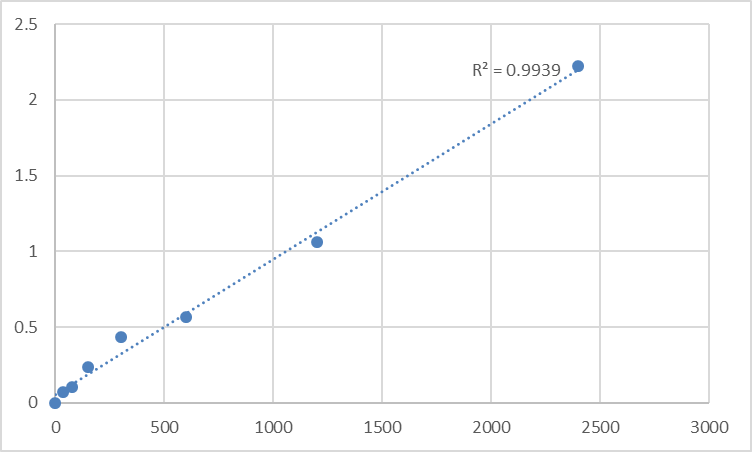
Unmatched specificity and quantitative accuracy define the core performance of the Abbkine Human Malectin (MLEC) ELISA Kit KTE61601, setting a new benchmark for MLEC detection assays. The kit’s two-site sandwich architecture leverages a pre-coated capture antibody and biotin-conjugated detection antibody, both rigorously validated for exclusive binding to human MLEC. This dual-specificity design eliminates false signals from non-target lectins or background proteins, a critical advantage for complex samples like plasma or serum. What truly distinguishes this kit is its exceptional quantitative linearity: the validated standard curve boasts an R² value of 0.9939, a near-perfect correlation that ensures precise MLEC concentration quantification across a broad dynamic range. For researchers, this translates to confidence in measuring subtle MLEC expression changes—whether in response to ER stress in cancer cells, glycosylation defects in diabetic models, or protein misfolding in neurogenerative disease samples. Unlike conventional assays where poor linearity leads to ambiguous data, the Abbkine KTE61601 kit delivers definitive, quantitative results that stand up to peer review.
Broad sample compatibility expands the utility of the Abbkine KTE61601 MLEC ELISA Kit across basic research and translational science, addressing the diverse needs of modern biology labs. The kit is fully validated for quantitative MLEC detection in human cell culture supernatants (ideal for in vitro ER stress and glycosylation studies), plasma, serum (critical for clinical translational research), and other biological fluids. This versatility is a game-changer for interdisciplinary research: cell biologists can probe MLEC’s role in protein folding pathways using cultured cells, while translational teams can simultaneously profile MLEC levels in patient samples to explore its potential as a disease biomarker. For example, in cancer research, the kit enables quantification of soluble MLEC in tumor-derived supernatants and patient plasma, linking MLEC expression to tumor cell survival and ER stress resistance. In neurobiology, it facilitates measurements of MLEC in cerebrospinal fluid, shedding light on its role in neurodegenerative disease progression. This cross-sample applicability eliminates the need for multiple specialized assays, streamlining workflows and reducing research costs.
User-centric design and pre-optimized components make the Abbkine Human Malectin (MLEC) ELISA Kit KTE61601 accessible to researchers of all experience levels, without compromising performance. The kit includes every reagent required for assay execution: a pre-coated human MLEC microplate, recombinant MLEC standard, biotin-conjugated detection antibody, Streptavidin-HRP, standard diluent, assay buffer, HRP substrate, stop solution, wash buffer, and plate covers. No additional reagent sourcing or ad hoc preparation is needed—simply thaw, equilibrate, and run the assay. The kit’s protocol is straightforward, with a total working time of 3–5 hours (dependent on operator experience) and clear guidelines for optimal results: reagents equilibrated to room temperature for 30 minutes, fresh pipet tips for each sample/standard to avoid contamination, and thorough mixing using a low-frequency oscillator or gentle hand shaking every 10 minutes. Unused wells can be stored desiccated at 4°C in the provided sealed bag, preserving reagent integrity for future use. This design minimizes experimental variability—a common pitfall in ELISA assays—and ensures consistent performance across batches, a key requirement for long-term research projects.
Rigorous quality control and robust storage stability ensure the Abbkine KTE61601 MLEC ELISA Kit maintains peak performance throughout its shelf life, a critical consideration for research reproducibility. The unopened kit is stable for long-term storage at 2–8°C, eliminating the need for ultra-low temperature freezers and reducing logistical complexity. Upon opening, the pre-coated microplate retains activity when stored as directed, while liquid reagents (detection antibody, Streptavidin-HRP, buffers) remain stable at 2–8°C for extended periods. A key quality control feature is the kit’s lot-to-lot consistency: each production batch undergoes rigorous testing for sensitivity, specificity, and linearity, ensuring that results from different kit lots are comparable. This level of quality assurance is particularly valuable for multi-center studies or long-term projects, where reagent variability can undermine data integrity. Additionally, the kit’s shipping with gel packs and blue ice guarantees that reagents remain within the optimal temperature range during transit, preserving their functionality from manufacturing to lab bench.
The Abbkine Human Malectin (MLEC) ELISA Kit KTE61601 aligns seamlessly with emerging industry trends in ER biology and precision medicine, positioning it as an indispensable tool for high-impact research. The growing recognition of ER stress and glycosylation dysregulation as drivers of human disease has fueled demand for specific MLEC detection tools—demand this kit directly addresses. In diabetes research, MLEC’s role in regulating insulin secretion and pancreatic beta-cell function makes it a promising target for therapeutic development, and the kit enables quantitative assessment of MLEC in diabetic models and patient samples . In cancer, where ER stress adaptation promotes tumor survival, the kit facilitates studies linking MLEC expression to treatment resistance and patient outcomes. For neurobiologists, it provides a means to investigate MLEC’s involvement in misfolded protein accumulation in Alzheimer’s and Parkinson’s diseases. As the field shifts toward personalized medicine, the kit’s ability to quantify MLEC in clinical samples also opens avenues for developing MLEC as a predictive or prognostic biomarker—an area of research currently limited by the lack of reliable detection tools.
Exceptional cost-effectiveness further solidifies the Abbkine KTE61601 MLEC ELISA Kit as a gold-standard choice for labs of all sizes. Priced at $339 for a 48T kit, it offers unparalleled value: the high working dilutions of reagents and efficient use of sample volume (typically 50–100μl per well) mean a single kit can process dozens of samples in duplicate or triplicate—far exceeding the cost-performance ratio of generic lectin assays or custom-developed ELISAs. For small academic labs with limited budgets, this affordability eliminates barriers to accessing high-quality MLEC detection tools. For large pharmaceutical or translational research teams, the kit’s consistency and reliability reduce the cost of assay validation and data verification, accelerating research timelines. Abbkine’s commitment to providing accessible, high-performance reagents is evident in every aspect of the KTE61601 kit, making cutting-edge MLEC research feasible for researchers worldwide.
In conclusion, the Abbkine Human Malectin (MLEC) ELISA Kit (Cat. No. KTE61601) redefines the standard for human MLEC quantification, combining exceptional specificity, near-perfect linearity (R²=0.9939), broad sample compatibility, and user-centric design to address the core technical challenges of ER biology research (product link: https://www.abbkine.com/product/human-malectin-mlec-elisa-kit-kte61601/). Its ability to reliably detect low-abundance MLEC in complex biological samples unlocks new possibilities for studying ER homeostasis, glycosylation regulation, and disease pathogenesis, while its cost-effectiveness and ease of use make it accessible to labs across the research spectrum. As MLEC emerges as a key player in a growing range of diseases—from diabetes to cancer and neurogenerative disorders—the Abbkine KTE61601 MLEC ELISA Kit stands as an indispensable tool, empowering researchers to translate fundamental biological insights into novel diagnostic and therapeutic strategies. For anyone committed to rigorous MLEC research, this kit is not just a reagent—it’s a catalyst for scientific advancement in ER biology and precision medicine.





