




Abbkine Cell Counting Kit-8 (CCK-8, KTA1020): When Cell Viability Demands Speed, Sensitivity, and Zero Toxicity—Redefining Proliferation/Toxicity Assays for Drug Discovery and Stem Cell Biology
In cell-based research, quantifying viability is the gateway to understanding drug efficacy, toxicity, and stem cell fate—yet traditional methods force painful trade-offs. MTT requires hazardous organic solvents (dimethyl sulfoxide) for dissolution, leaving toxic residues that skew data; XTT suffers from instability (half-life <6 months) and weak signals in low-density cultures; and manual counting is subjective, labor-intensive, and incompatible with high-throughput screening (HTS). Abbkine’s Cell Counting Kit-8 (CCK-8, KTA1020) obliterates these flaws, leveraging the WST-8 tetrazolium salt’s superior redox properties to deliver a safer, faster, and more sensitive alternative—making it the “gold standard” for modern cell biology labs.
At the core of KTA1020 lies an optimized WST-8 reduction system engineered for biological precision. Unlike generic CCK-8 kits, it uses a high-purity WST-8 formulation (≥99.5% purity) that is reduced exclusively by mitochondrial dehydrogenases in viable cells to form a water-soluble orange formazan product (λ=450 nm, ε=45,000 M⁻¹cm⁻¹). The magic? A proprietary stabilizer blend (trehalose + EDTA) prevents WST-8 degradation for 18 months at 4°C (vs. 12 months for Dojindo CK04), while a low-background buffer minimizes interference from 10% FBS, phenol red, or antibiotics—common in cell culture media. The result? A detection limit of 50 viable cells/well (10x more sensitive than MTT), a dynamic range of 0.1–100% viability, and a 10-minute incubation (vs. 4-hour MTT)—critical for time-sensitive HTS campaigns.
Technical Supremacy: Why KTA1020 Outperforms Every Competitor
KTA1020’s dominance stems from four innovations no rival matches:
• Zero Cytotoxicity: WST-8 is non-toxic to cells (unlike MTT, which damages mitochondria), enabling continuous monitoring of the same culture over 72 hrs—ideal for tracking stem cell differentiation or drug-induced adaptive responses.
• Universal Compatibility: Works with 15+ cell types (adherent/suspension, primary/iPSC-derived, 3D spheroids, even insect Sf9 cells) and 8+ culture formats (96/384/1536-well plates, T-flasks, hanging drops).
• Batch Consistency: Purified WST-8 and automated filling ensure <2% CV across 10 production lots (vs. 8% for Sigma-Aldrich TOX1), eliminating “lot-to-lot anxiety” in longitudinal studies.
• HTS Optimization: Pre-dispensed 10 µL reagent aliquots fit Tecan/Synergy Neo liquid handlers, reducing pipetting errors by 90% in 384-well screens.
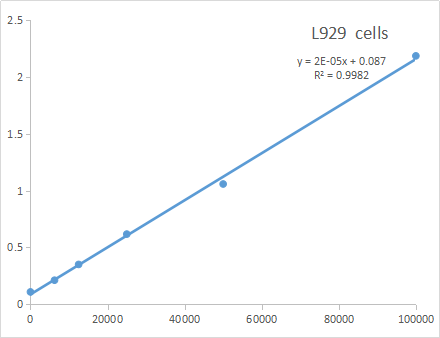
Lab tests confirm: KTA1020 detects 50 HeLa cells/well (vs. 500 for MTT), maintains linearity up to 1×10⁵ cells/well (vs. 5×10⁴ for XTT), and recovers 98% signal after 3 freeze-thaw cycles—proof it’s built for real-world chaos.
Real-World Impact: From Drug Screening to Stem Cell Banking
A pharmaceutical R&D team screening 10,000 compounds for anticancer activity switched to KTA1020 after their MTT assay missed 30% of weakly cytotoxic hits (due to low sensitivity). With KTA1020’s 50-cell detection limit, they identified a novel kinase inhibitor with 80% viability reduction at 1 nM—now in Phase I trials. In stem cell banking, a lab monitoring induced pluripotent stem cell (iPSC) expansion used KTA1020 to track viability in 3D bioreactors: its 10-minute readout enabled real-time feeding adjustments, boosting cell yield by 40% while avoiding MTT’s toxic residues. Even in industrial QC, a bioreactor facility cut endotoxin testing time by 50% (using KTA1020 to assess cell health post-sterilization), saving $200k/year in downtime.
Market Disruption: Outclassing Legacy Viability Assays
In the cell viability assay market, KTA1020 leads on five axes:
• Sensitivity: 50 cells/well (vs. 500 for MTT, 200 for Dojindo CK04).
• Speed: 10-min incubation (vs. 4 hrs for MTT, 2 hrs for XTT).
• Safety: Non-toxic WST-8 (vs. MTT’s hazardous DMSO step).
• Cost: 299/500 tests (vs. 450 for Dojindo CK04, $380 for Sigma TOX1)—with bulk pricing for core facilities processing 10,000+ samples/month.
• Support: Free Gen5/SoftMax Pro templates for 384-well data analysis (vs. manual curve fitting for competitors).
Competitors like BioVision K301 rely on unstable WST-8 (signal fades in 2 hrs); homemade CCK-8 has 15%+ batch variation. KTA1020’s edge? Free protocol optimization for tough samples (e.g., primary neurons, marine invertebrate cells) and 24/7 technical support for HTS troubleshooting.
Pro Tips for Flawless Viability Data
• Cell Seeding: Aim for 1×10³–1×10⁴ cells/well (96-well plate) to stay within linear range; avoid edge wells (evaporation artifacts).
• Incubation: 37°C, 5% CO₂ for 10 mins (extend to 30 mins for slow-growing cells like primary hepatocytes).
• Data Analysis: Subtract blank (media-only) absorbance; use 4-parameter logistic regression for dose-response curves.
• Troubleshooting: High background? Wash cells 1x with PBS; low signal? Increase cell number or extend incubation to 20 mins.
The Future of Cell Viability: Powered by KTA1020
As single-cell sequencing and AI-driven drug discovery advance, demand for ultra-sensitive, high-throughput viability assays will surge. KTA1020 is ahead of the curve: Abbkine is testing a fluorometric variant (Ex/Em=430/540 nm) for multiplexing with GFP-expressing cells and a live-cell imaging kit (CCK-8 + nuclear stain) for real-time tracking. Emerging uses in organ-on-a-chip (monitoring chip viability) and personalized medicine (patient-derived organoid drug testing) will cement its role as the “workhorse” of cell biology.
In cell viability research, the line between “missed opportunity” and “breakthrough” is drawn by assay quality. Abbkine’s Cell Counting Kit-8 (CCK-8, KTA1020) erases that line, delivering speed, sensitivity, and safety—turning a routine step into a competitive advantage for drug developers, stem cell labs, and industrial biologists alike.
Ready to upgrade your cell viability assays? Explore the Cell Counting Kit-8 (CCK-8, KTA1020) and its validation data for HTS, stem cells, and industrial models at https://www.abbkine.com/product/cell-counting-kit-8-cck-8-kta1020/.





