




A Practical Guide to Precise mCherry Tag Detection with Abbkine’s Anti-mCherry Tag Mouse Monoclonal Antibody (9D3) (ABT2080)
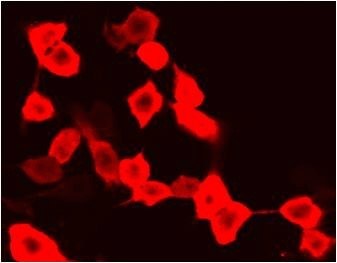
mCherry, a red fluorescent protein tag, has become indispensable in modern biological research—powering studies on protein localization, protein-protein interactions, and dynamic cellular processes via Immunofluorescence (IF) and Western Blot (WB). Yet researchers frequently encounter roadblocks with anti-mCherry antibodies: inconsistent performance across IF and WB, non-specific binding to endogenous proteins in mammals or bacteria, weak signal for low-abundance mCherry-tagged constructs, and poor compatibility with diverse sample types. These challenges undermine data reproducibility and delay research progress, especially for teams working across both imaging and protein quantification workflows. Abbkine’s Anti-mCherry Tag Mouse Monoclonal Antibody (9D3) (Catalog No.: ABT2080) addresses these critical pain points, blending monoclonal specificity, dual-application versatility, and cross-species reliability to deliver a streamlined solution for mCherry tag research.
The core strength of ABT2080 lies in its tailored design for both IF and WB—two complementary techniques that form the backbone of tag-based protein studies. As a mouse monoclonal antibody, the 9D3 clone binds exclusively to a conserved epitope of the mCherry protein, eliminating cross-reactivity with endogenous proteins in mammalian (human, mouse, rat) and bacterial (E. coli, Bacillus subtilis) samples—a common flaw in polyclonal alternatives that recognize off-target epitopes. Unlike antibodies optimized for only one application, ABT2080 is rigorously validated for both IF (subcellular localization) and WB (expression quantification), ensuring consistent performance when switching between imaging and blotting. This dual compatibility is no accident: it aligns with the reality that researchers often validate protein expression via WB before visualizing localization via IF, eliminating the need for multiple anti-mCherry reagents and reducing experimental variability.
For WB applications—where accurate quantification of mCherry-tagged proteins is critical—ABT2080’s optimization guidelines address key pitfalls of tag detection. Start with a 1:6000–1:10,000 dilution of the Anti-mCherry Tag Mouse Monoclonal Antibody (9D3) in 5% non-fat milk/TBST for bacterial lysates; bacterial extracts are rich in contaminating proteins, so a 30-minute blocking step at room temperature (RT) is essential to minimize background. For mammalian cell lysates (e.g., HEK293, CHO cells), adjust the dilution to 1:8000–1:12,000—mammalian samples have lower non-specific protein interference, allowing for higher dilutions without sacrificing signal. A critical technical insight: mCherry runs at ~28 kDa, so use a 12% SDS-PAGE gel to ensure proper separation from smaller proteins, and wash blots 4× with TBST (10 minutes each) to remove unbound antibody—this step reduces smearing and enhances band sharpness. For low-abundance targets, pair ABT2080 with an enhanced chemiluminescent (ECL) substrate to boost detection sensitivity to as low as 0.08 ng per lane.
IF experiments—focused on visualizing subcellular localization of mCherry-tagged proteins—require targeted adjustments to leverage ABT2080’s specificity and signal clarity. Dilute the Anti-mCherry Tag Mouse Monoclonal Antibody (9D3) to 1:200–1:400 in PBS with 1% BSA and 0.1% Triton X-100; Triton permeabilizes the plasma membrane (critical for intracellular mCherry-tagged proteins) without disrupting the antibody-epitope interaction. Incubate samples at 4°C overnight to reduce non-specific binding—shorter incubations at RT often lead to background fluorescence. For bacterial cells (e.g., E. coli expressing mCherry fusions), skip Triton permeabilization (bacterial cell walls are sufficiently porous) and use a 1:300 dilution to compensate for lower protein expression levels. Pair ABT2080 with a fluorophore-conjugated anti-mouse secondary antibody (e.g., DyLight 488 or Alexa Fluor 594) with minimal cross-reactivity, and mount samples with DAPI-containing media to enable nuclear counterstaining—this combination produces clear, publication-ready images of mCherry localization.
Beyond application-specific performance, ABT2080’s value proposition is reinforced by Abbkine’s rigorous quality control and market positioning. Priced at $79 for 50μl, it offers a cost-effective alternative to premium anti-mCherry monoclonal antibodies (which often exceed $100 for the same volume) while maintaining strict standards: each batch is tested for batch-to-batch consistency (signal variation <10%), cross-reactivity (no binding to non-mCherry fluorescent proteins like GFP or RFP), and stability (18 months at -20°C when stored in aliquots). This reliability is particularly valuable for academic labs operating on constrained grants and industrial teams running high-throughput assays, as it reduces experimental repetition and resource waste. Unlike generic anti-mCherry antibodies that lack clone-specific validation, the 9D3 clone is optimized exclusively for mCherry, ensuring that researchers receive a reagent tailored to their specific tag detection needs.
For researchers seeking a robust, versatile tool to streamline mCherry tag detection across IF and WB, Abbkine’s Anti-mCherry Tag Mouse Monoclonal Antibody (9D3) (ABT2080) stands as a benchmark solution. Its monoclonal specificity, dual-application compatibility, cross-species reactivity, and actionable optimization guidelines address the most pressing pain points of mCherry research, enabling consistent, publishable results. Whether quantifying protein expression via WB in bacterial or mammalian systems, or visualizing subcellular localization via IF, ABT2080 delivers the precision and efficiency required for modern biological research. To explore detailed technical specifications, access application-specific protocol templates, and procure the reagent, visit the official product page: https://www.abbkine.com/?s_type=productsearch&s=ABT2080. In an era where experimental reproducibility and workflow efficiency are paramount, ABT2080 redefines what a specialized tag antibody should be—targeted, reliable, and designed to accelerate discovery.
Would you like me to compile a concise application optimization checklist for ABT2080, summarizing key dilution ratios, blocking conditions, and troubleshooting tips for both IF and WB?





