




A Practical Guide to Optimizing Assays with Abbkine’s Dylight 680 Goat Anti-Rabbit IgG (A23720)
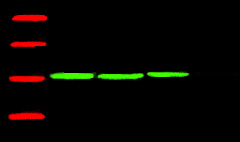
Rabbit IgG-targeted research remains a cornerstone of immunological and translational studies, with applications spanning from protein expression profiling to in vivo imaging. A key challenge in these workflows—particularly for near-infrared (NIR) detection—is balancing signal sensitivity, target specificity, and compatibility with multiplexed assays. Many researchers encounter hurdles such as weak NIR signals lost to biological autofluorescence, cross-reactivity with non-rabbit immunoglobulins, or inconsistent performance across batch runs, which can compromise data reproducibility and delay publication. Addressing these critical pain points, Abbkine’s Dylight 680-conjugated Goat Anti-Rabbit IgG (H+L) secondary antibody (Catalog No.: A23720) offers a specialized solution, combining the unique advantages of Dylight 680’s NIR fluorescence with rigorous immunological engineering to elevate FCM, ICC, and IF assays.
The performance of a secondary antibody hinges on the synergy between its fluorophore properties and immunological specificity—and Abbkine’s Dylight 680 Goat Anti-Rabbit IgG (H+L) (A23720) excels on both fronts. Dylight 680, a near-infrared fluorophore with an emission wavelength of ~680 nm, addresses a critical limitation of shorter-wavelength alternatives: its NIR spectrum minimizes background autofluorescence from tissues, cells, and buffers, a major source of signal interference in sensitive assays. This property is especially valuable for in vitro studies involving thick tissue sections, whole-mount samples, or high-autofluorescence cell types (e.g., adipocytes, hepatocytes) where visible-wavelength fluorophores struggle to resolve specific signals. Complementing this, the antibody’s (H+L) specificity ensures binding to both heavy and light chains of all rabbit IgG subclasses (IgG1, IgG2a, IgG2b, IgG3), eliminating the risk of missed targets that plagues Fc-region-specific secondary antibodies. Abbkine’s strict quality control—including batch-to-batch testing for signal-to-noise ratio (minimum 18:1 in validated assays) and cross-reactivity screening against mouse, rat, and human IgG—further reinforces the reliability of A23720 for rabbit-focused research.
Translating the theoretical advantages of A23720 into consistent, high-quality data requires adherence to assay-specific best practices tailored to Dylight 680’s unique characteristics. For flow cytometry (FCM) applications, where rabbit IgG-targeted cell populations may be rare or low-abundance, start with a 1:500–1:800 dilution of the Dylight 680 Goat Anti-Rabbit IgG (A23720), adjusting based on primary antibody concentration and cell type. Pre-block samples with 10% normal goat serum in FACS buffer for 20 minutes at 4°C to block Fc receptors, a critical step to reduce non-specific binding in rabbit IgG-immunized samples. In immunocytochemistry (ICC) for adherent rabbit-derived cells or tissue sections, opt for 4% paraformaldehyde fixation (avoiding methanol, which can quench NIR fluorescence) and permeabilize with 0.2% Triton X-100 to facilitate antibody penetration; incubate A23720 at 4°C overnight for thick sections (15–25 μm) to ensure uniform staining. For immunofluorescence (IF) multiplexing, pair the Dylight 680-conjugated secondary antibody with shorter-wavelength fluorophores (e.g., DyLight 488 anti-mouse IgG, Alexa Fluor 555 anti-rat IgG) — their non-overlapping emission spectra (680 nm vs. 488/555 nm) eliminate signal crosstalk, enabling simultaneous detection of three targets without spectral unmixing.
Beyond basic protocol adherence, strategic optimization of experimental parameters can further enhance the utility of the Dylight 680-conjugated Goat Anti-Rabbit IgG (A23720) in complex assays. To mitigate background noise in NIR imaging, use low-autofluorescence mounting media and avoid prolonged exposure to ambient light during sample preparation—Dylight 680 is photostable but not immune to photobleaching under harsh conditions. For in vitro studies requiring quantitative analysis (e.g., protein expression quantification via IF), normalize antibody concentration to primary antibody affinity: high-affinity primaries (KD < 1 nM) pair optimally with 1:800–1:1000 dilutions of A23720, while moderate-affinity primaries (KD 1–10 nM) benefit from 1:300–1:500 dilutions to boost signal intensity. Additionally, store A23720 at -20°C in aliquots to avoid repeated freeze-thaw cycles, which can degrade the fluorophore-antibody conjugate and reduce performance over time—Abbkine’s formulation ensures 24-month stability under proper storage, a key advantage for long-term research projects.
For researchers seeking to leverage the full potential of near-infrared detection in rabbit IgG-focused studies, Abbkine’s A23720 Dylight 680 Goat Anti-Rabbit IgG emerges as a reliable, performance-driven tool. Its unique combination of Dylight 680’s NIR advantages (minimal autofluorescence, deep tissue penetration), (H+L) subclass coverage, and rigorous quality control directly addresses the most pressing challenges in rabbit IgG assays. Whether optimizing FCM for rare cell populations, enhancing ICC staining in thick tissues, or designing multiplexed IF experiments, the practical methodologies outlined here empower researchers to generate robust, publishable data. To explore detailed technical specifications, access application notes, and procure the reagent, visit the official product page: C. In an era where precision and reproducibility are paramount in immunological research, Abbkine’s Dylight 680 Goat Anti-Rabbit IgG (A23720) stands as a valuable asset for advancing discoveries in immunology, cell biology, and translational medicine.





