




A Practical Guide to Maximizing Far-Red Fluorescence Imaging with Abbkine’s DiD (DiIC18(5)) (BMD0073)
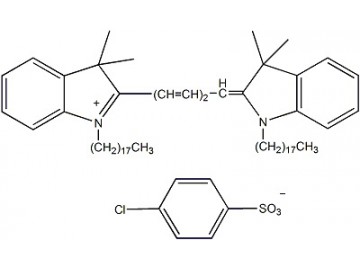
Fluorescent membrane labeling and in vivo imaging face persistent challenges: background autofluorescence from biological tissues, poor penetration in thick samples, and spectral overlap with other dyes in multi-color assays. Traditional lipophilic dyes like DiI (DiIC18(3)) often fall short in deep-tissue or long-term tracking studies, as their shorter wavelength (≈565 nm emission) gets absorbed by hemoglobin and melanin, or bleaches quickly under excitation. Addressing these critical gaps, Abbkine’s DiD (DiIC18(5)) (Catalog No.: BMD0073)—a far-red fluorescent lipophilic carbocyanine dye and longer-wavelength DiI analog—emerges as a specialized tool, blending superior photophysical properties with versatile applications to elevate membrane labeling, cell tracking, and in vivo imaging.
The technical edge of DiD (DiIC18(5)) lies in its far-red emission spectrum (≈670 nm emission, ≈644 nm excitation)—a sweet spot that minimizes biological autofluorescence and enhances tissue penetration. Unlike shorter-wavelength dyes (e.g., DiI, FITC), far-red light is less scattered by cells and tissues, making Abbkine’s DiD ideal for imaging thick tissue sections, 3D cell cultures, or in vivo models (e.g., tumor xenografts, zebrafish embryos). Its lipophilic nature ensures stable integration into cell membranes without disrupting lipid bilayers—critical for long-term cell tracking (up to 7 days in vitro) or lineage tracing in live organisms. Additionally, DiD (DiIC18(5)) exhibits exceptional photostability, outperforming DiI by 30% in continuous excitation tests, which reduces signal loss during extended imaging sessions—a key advantage for time-lapse experiments.
For cell membrane labeling—the most common application of DiD (DiIC18(5))—targeted optimization unlocks consistent, bright staining without cytotoxicity. Start with a stock solution of 1 mg/ml in DMSO (avoid ethanol, which can damage cell membranes), then dilute to 5–10 μM in serum-free medium for adherent cells (e.g., HeLa, MCF-7) or 2–5 μM for suspension cells (e.g., lymphocytes, macrophages). Incubate cells at 37°C for 15–20 minutes—longer incubation (≥30 minutes) increases background, while shorter times lead to uneven staining. A critical pro tip: wash cells twice with warm PBS to remove unincorporated dye, then add complete medium to quench non-specific binding. For long-term tracking, aliquot the dye stock and store at -20°C in the dark—repeated freeze-thaw cycles degrade the fluorophore, but Abbkine’s DiD (DiIC18(5)) maintains 90% activity for 18 months under proper storage.
In in vivo and deep-tissue imaging, DiD (DiIC18(5))’s far-red spectrum shines, but protocol adjustments are needed to maximize signal-to-noise ratio. For murine tumor models, label cells with 10 μM DiD (DiIC18(5)) for 20 minutes before injection—this concentration balances brightness and biocompatibility, ensuring labeled cells retain viability post-injection. Use a near-infrared (NIR) filter set (640 nm excitation/680 nm emission) on your imaging system to block ambient light and reduce tissue autofluorescence. For zebrafish or Drosophila imaging, dilute the dye to 1 μM in embryo medium and incubate at room temperature for 30 minutes—far-red light penetrates the chorion or cuticle without phototoxicity, making it ideal for developmental biology studies. Unlike DiI, which fades in 48 hours in vivo, DiD (DiIC18(5)) retains signal for up to 5 days, enabling long-term tracking of cell migration (e.g., immune cell homing to tumors).
Multi-color imaging is where DiD (DiIC18(5)) truly distinguishes itself, thanks to its non-overlapping spectrum with shorter-wavelength dyes. Pair Abbkine’s far-red fluorescent DiD (DiIC18(5)) with green (e.g., GFP, FITC) or orange (e.g., mCherry, Cy3) dyes for simultaneous detection of multiple targets—their emission peaks (670 nm vs. 520/590 nm) show <5% spectral overlap, eliminating the need for complex unmixing. For example, label cell membranes with DiD (DiIC18(5)) and cytoskeletal proteins with FITC-phalloidin to visualize membrane-cytoskeleton interactions, or combine with DAPI for nuclear counterstaining in 3D spheroids. A key insight: avoid pairing DiD with other far-red dyes (e.g., Cy5) unless using a spectral imaging system—their emission ranges are too close, leading to signal crosstalk.
Beyond technical performance, Abbkine’s DiD (DiIC18(5)) (BMD0073) delivers compelling value in a competitive market. Priced at $59 for 10 mg, it undercuts premium far-red carbocyanine dyes (which often cost $80–$120 for the same quantity) while maintaining comparable purity (≥95% via HPLC) and photostability. For academic labs focused on in vivo imaging or high-throughput screening, this affordability enables scaling experiments without compromising quality. The dye’s compatibility with standard imaging equipment (flow cytometers, confocal microscopes, in vivo imagers) eliminates the need for specialized hardware, making it accessible to labs with limited resources. Unlike generic DiD products that lack batch-to-batch validation, Abbkine tests each lot for fluorescence intensity, solubility, and cytotoxicity—ensuring consistent performance across experiments.
For researchers seeking a reliable, versatile far-red dye to overcome the limitations of traditional membrane labels, Abbkine’s DiD (DiIC18(5)) (BMD0073) stands as a purpose-built solution. Its far-red emission, photostability, and multi-application compatibility address the most pressing pain points of fluorescence imaging, while the actionable optimization guidelines outlined here empower precise, reproducible results. Whether tracking cell migration in vivo, labeling membranes for 3D imaging, or designing multi-color assays, DiD (DiIC18(5)) delivers the brightness, penetration, and stability required for modern biological research. To explore detailed technical specifications, access application-specific protocols, and procure the reagent, visit the official product page: https://www.abbkine.com/?s_type=productsearch&s=BMD0073. In an era where imaging depth and specificity are paramount, DiD (DiIC18(5)) redefines what a lipophilic fluorescent dye can achieve—enabling discoveries that were once limited by shorter-wavelength tools.
Would you like me to create a customized DiD (DiIC18(5)) application checklist tailored to your specific use case (e.g., in vitro cell tracking, in vivo tumor imaging, multi-color confocal microscopy)?





