




A Practical Guide to Maximizing Assay Reliability with Abbkine’s Anti-GAPDH Rabbit Polyclonal Antibody (ABL1021)
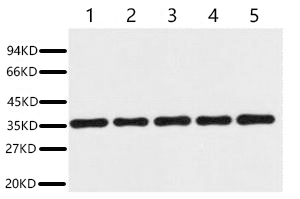
Glyceraldehyde-3-phosphate dehydrogenase (GAPDH) remains the gold standard internal control for protein expression analysis, yet researchers frequently encounter roadblocks that undermine data validity—from limited cross-species reactivity that restricts multi-model studies to suboptimal performance across key applications like Western Blot (WB) and Immunohistochemistry (IHC-P). Generic anti-GAPDH antibodies often fail to deliver consistency: some work for human samples but not Xenopus laevis or sheep, others produce weak signals in IHC-P, and low-quality polyclonals suffer from high background or batch-to-batch variability. Designed to address these critical pain points, Abbkine’s Anti-GAPDH Rabbit Polyclonal Antibody (Catalog No.: ABL1021) combines broad species compatibility, dual-application versatility, and rigorous quality control to serve as a reliable workhorse for protein biology research.
A defining strength of Abbkine’s Anti-GAPDH Rabbit Polyclonal Antibody (ABL1021) lies in its exceptional cross-species reactivity, covering 8 diverse organisms—Xenopus laevis, Chicken, Human, Monkey, Mouse, Rabbit, Rat, and Sheep. This breadth stems from the antibody’s targeting of a highly conserved epitope in the GAPDH protein, a region critical to its enzymatic function and thus unchanged across vertebrates (and even aquatic models like Xenopus laevis). For researchers working across multiple model systems—e.g., comparing human cell lines to mouse xenografts, or studying developmental biology in Xenopus to sheep tissue—this eliminates the need to source and validate separate internal control antibodies, streamlining workflows and reducing experimental variability. Complementing this versatility is its dual-application compatibility: ABL1021 performs reliably in both WB (the most common protein quantification technique) and IHC-P (for tissue-level expression analysis), making it a flexible tool for studies spanning in vitro cell cultures to in vivo tissue sections.
To unlock optimal performance in WB assays with ABL1021, species-specific optimization and protocol fine-tuning are essential—insights that go beyond generic antibody guidelines. For human, mouse, or rat samples (the most widely used models), start with a 1:5,000–1:8,000 dilution in 5% non-fat milk/TBST; this balance ensures strong signal at the expected ~37 kDa molecular weight while minimizing background. For non-mammalian models like Xenopus laevis or Chicken, adjust to a 1:3,000–1:5,000 dilution—these species have slightly lower GAPDH expression in some tissues, and the higher antibody concentration compensates without inducing non-specific bands. Incubate the Anti-GAPDH Rabbit Polyclonal Antibody (ABL1021) at 4°C overnight for low-abundance samples (e.g., primary cells) or 1 hour at room temperature for standard cell lines; avoid over-incubation (exceeding 16 hours) as it can lead to signal saturation. A critical tip: use fresh TBST for washing (3×10 minutes each) to remove unbound antibody—this simple step reduces background noise that often plagues WB results with polyclonal antibodies.
For IHC-P applications, ABL1021 requires targeted adjustments to account for tissue fixation and epitope accessibility, a key distinction from WB protocols. Begin with antigen retrieval: use citrate buffer (pH 6.0) for formalin-fixed, paraffin-embedded (FFPE) human, monkey, or mouse tissues, as it effectively unmask GAPDH epitopes without damaging tissue morphology. For Chicken or Sheep tissues, EDTA buffer (pH 8.0) is preferred—these tissues have higher cross-linking density from fixation, and EDTA’s stronger chelating properties improve epitope exposure. Block endogenous peroxidase with 3% H₂O₂ for 10 minutes, then use 5% normal goat serum (not BSA) to block non-specific binding—serum matches the antibody’s rabbit origin, reducing background better than generic blockers. Dilute ABL1021 to 1:200–1:400 in blocking buffer and incubate at 4°C overnight; this slow incubation allows the polyclonal antibody to bind conserved epitopes evenly across tissue sections, ensuring consistent staining from the tissue surface to deeper layers. Finally, control the chromogenic time strictly (3–5 minutes with DAB substrate) to avoid overstaining, which can obscure subtle expression differences.
The polyclonal nature of ABL1021 offers unique advantages over monoclonal anti-GAPDH antibodies—when paired with Abbkine’s quality control—making it a standout choice for reproducible research. Unlike monoclonals that bind a single epitope (risking failure if the epitope is damaged by fixation or species variation), polyclonal antibodies recognize multiple epitopes on the GAPDH protein, enhancing binding robustness and signal intensity. Abbkine reinforces this with rigorous QC: each batch of ABL1021 is tested for cross-reactivity against non-GAPDH proteins (no binding to actin, tubulin, or other housekeeping proteins), batch-to-batch consistency (signal-to-noise ratio variation <10%), and stability (18 months at -20°C). Priced at 100+ for the same volume) while offering broader species coverage— a critical benefit for labs with diverse research focuses or limited budgets.
For researchers seeking a versatile, reliable internal control that transcends species and application boundaries, Abbkine’s Anti-GAPDH Rabbit Polyclonal Antibody (ABL1021) is an indispensable tool. Its broad cross-species reactivity, dual-application performance, and polyclonal robustness directly address the most common pain points of GAPDH antibody use, while the species- and application-specific guidelines outlined here empower researchers to generate consistent, publication-ready data. Whether quantifying protein expression in WB across human and Xenopus samples, or visualizing tissue-specific GAPDH levels via IHC-P in sheep or chicken tissues, ABL1021 delivers the precision and flexibility required for modern protein biology. To explore detailed technical specifications, access application notes tailored to your model system, and procure the reagent, visit the official product page: https://www.abbkine.com/?s_type=productsearch&s=ABL1021. In an era where experimental reproducibility is non-negotiable, ABL1021 redefines what an internal control antibody should be—reliable, versatile, and designed to support discovery across diverse research contexts.





