




A Practical Guide to Mastering Membrane Protein Detection with Abbkine’s Na+/K+-ATPase α1 Rabbit Polyclonal Antibody (ABL1141)
Membrane protein research—especially for key transporters like Na+/K+-ATPase α1 (Sodium potassium-transporting ATPase subunit alpha-1)—faces unique hurdles that often derail experimental reproducibility: poor antibody specificity for membrane-embedded epitopes, limited compatibility across core immunoassays, and inconsistent performance across human, mouse, and rat model systems. Many antibodies targeting Na+/K+-ATPase α1 excel in one application (e.g., WB) but fail in others (e.g., ELISA or IHC-P), forcing researchers to validate multiple reagents and complicate workflows. Abbkine’s Na+/K+-ATPase α1 Rabbit Polyclonal Antibody (Catalog No.: ABL1141) addresses these critical gaps, blending polyclonal versatility, multi-assay compatibility, and cross-species reliability to become a cornerstone tool for membrane protein studies.
What sets ABL1141 apart isn’t just a laundry list of applications—ELISA, IF, IHC-P, and WB—it’s the intentional engineering that makes it perform consistently across each. Membrane proteins like Na+/K+-ATPase α1 present unique challenges: their extracellular and transmembrane domains are often conformationally unstable, and epitopes can be masked by lipid bilayers. The Na+/K+-ATPase α1 Rabbit Polyclonal Antibody is raised against a conserved region of the α1 subunit (Sodium potassium-transporting ATPase subunit alpha-1), ensuring recognition across human, mouse, and rat—three species that dominate translational research. Unlike monoclonal antibodies that bind a single epitope (risking failure if the epitope is masked), ABL1141’s polyclonal design targets multiple epitopes, increasing binding robustness even in denatured (WB) or native (ELISA, IF) states. This flexibility is no accident; it’s tailored to the reality that membrane protein studies rarely rely on a single assay.
To unlock ABL1141’s full potential, application-specific optimization is critical—insights that go beyond generic antibody protocols and address the unique demands of membrane protein detection. For ELISA (a workhorse for quantitative protein analysis), use a 1:500 dilution of the Na+/K+-ATPase α1 Rabbit Polyclonal Antibody in carbonate-bicarbonate buffer (pH 9.6) for coating, and a 1:1000 dilution for detection; block with 5% BSA (not milk) to avoid nonspecific binding to the antibody’s rabbit origin, and incubate at 37°C for 1 hour to enhance interaction with the membrane protein’s extracellular epitopes. For IF (visualizing subcellular localization), dilute ABL1141 to 1:200 in PBS with 1% BSA and 0.1% Triton X-100—Triton permeabilizes the plasma membrane without disrupting the Na+/K+-ATPase α1’s transmembrane structure—incubate at 4°C overnight to reduce background, and pair with a fluorophore-conjugated anti-rabbit secondary antibody with minimal cross-reactivity.
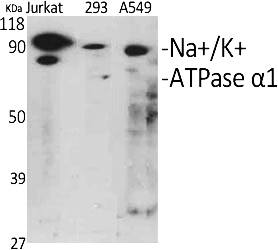
For IHC-P (tissue-level analysis), antigen retrieval is make-or-break for membrane proteins: use EDTA buffer (pH 8.0) for formalin-fixed, paraffin-embedded (FFPE) human or mouse tissues—formalin cross-links membrane proteins heavily, and EDTA’s chelating properties effectively unmask the α1 subunit’s epitopes. Dilute the Sodium potassium-transporting ATPase subunit alpha-1 antibody to 1:150, block with 5% normal goat serum, and incubate at 4°C overnight to ensure penetration into tissue layers. For WB (qualitative expression analysis), a 1:1000 dilution in 5% non-fat milk/TBST works best for cell lysates; note that Na+/K+-ATPase α1 runs at ~110 kDa—avoid overloading samples (≤30 μg per lane) to prevent signal saturation, and use fresh TBST washes (3×10 minutes) to remove unbound antibody, a common source of background in membrane protein blots.
A key industry insight often overlooked: polyclonal antibodies remain unmatched for membrane protein detection, despite the rise of monoclonals in other areas. Membrane proteins like Na+/K+-ATPase α1 have complex, folded structures, and their epitopes can be hidden by lipids or post-translational modifications. ABL1141’s polyclonal design recognizes multiple epitopes, increasing the likelihood of binding even if some epitopes are masked—critical for samples with variable protein folding (e.g., primary cells or diseased tissues). Abbkine reinforces this advantage with rigorous quality control: each batch of ABL1141 is tested for cross-reactivity against non-target ATPase subunits (e.g., α2, β1) and unrelated membrane proteins, ensuring specificity; batch-to-batch consistency is validated with signal-to-noise ratio variation <10% across all four applications, a standard few multi-assay membrane protein antibodies meet.
Priced at $109 for 30μl, ABL1141 delivers exceptional value for a specialized membrane protein antibody—especially when compared to premium monoclonals that cost 2–3x more and lack multi-assay compatibility. For labs focused on ion transporters, cardiovascular research, or neurobiology (fields where Na+/K+-ATPase α1 is a key marker), this antibody eliminates the need to stockpile multiple reagents for different assays, reducing costs and experimental variability. Its 18-month stability at -20°C further enhances its utility for long-term projects, ensuring consistent performance from the first experiment to the last.
For researchers seeking a reliable, versatile tool to tackle the unique challenges of Na+/K+-ATPase α1 detection, Abbkine’s Na+/K+-ATPase α1 Rabbit Polyclonal Antibody (ABL1141) stands out as a purpose-built solution. Its polyclonal design, multi-assay compatibility, cross-species reactivity, and application-specific optimization guidelines empower researchers to generate robust, publishable data—whether quantifying protein levels via ELISA, visualizing subcellular localization via IF, mapping tissue expression via IHC-P, or validating expression via WB. To explore detailed technical specifications, access application-specific protocols, and procure the reagent, visit the official product page: https://www.abbkine.com/?s_type=productsearch&s=ABL1141. In an era where membrane protein research drives breakthroughs in therapeutics and physiology, ABL1141 proves that the right antibody doesn’t just detect a protein—it simplifies workflows and accelerates discovery.





